Why 5-Amino-1MQ matters
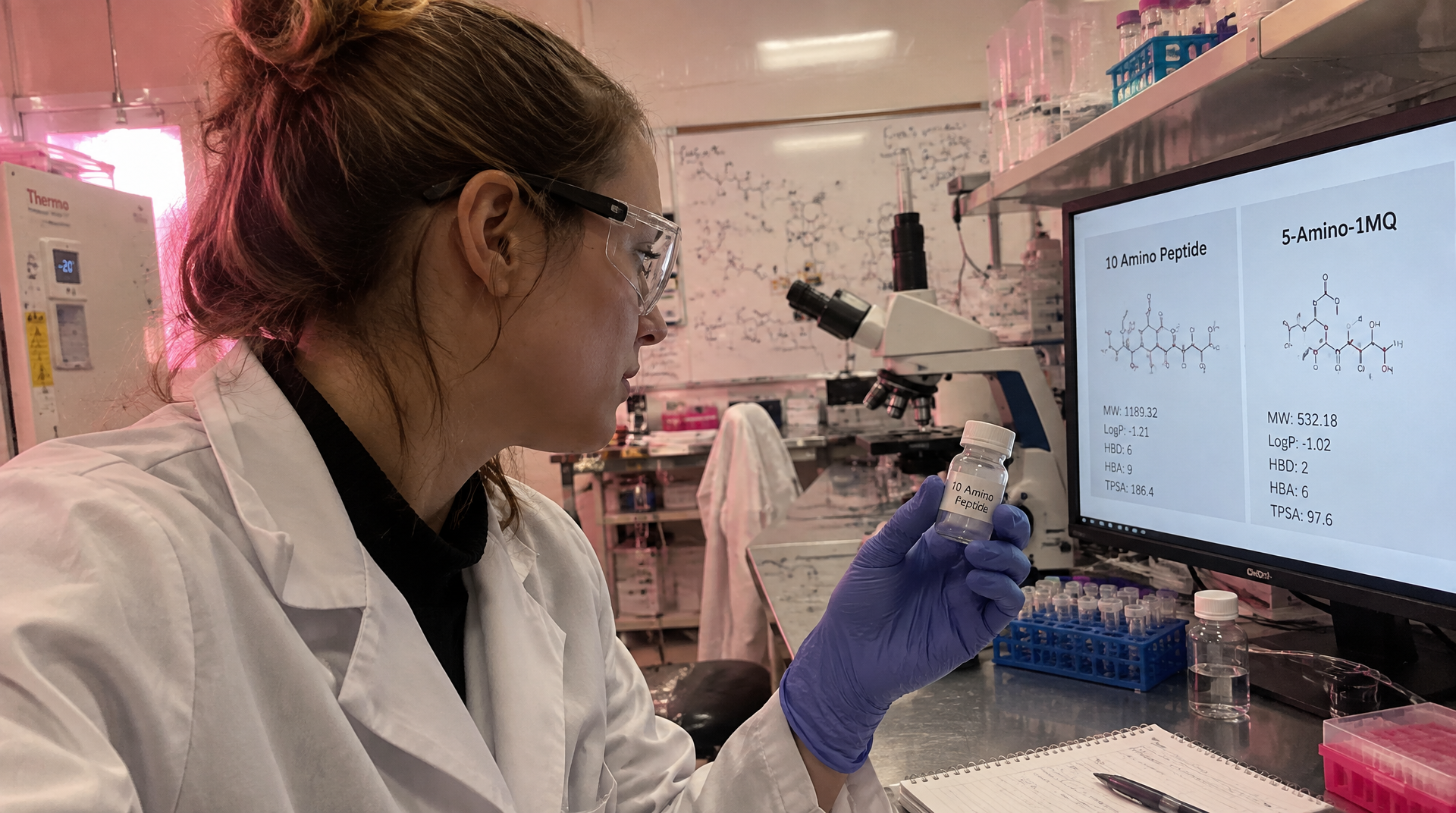
If you searched for a „10 amino peptide“ and landed here, the first thing to know is that 5-Amino-1MQ isn’t actually a peptide. It’s a small molecule, a methylquinolinium salt. But the search term follows it for a reason: it sits at the same intersection of NAD+ optimization and metabolic control where a lot of peptide researchers spend their time.
We see three groups asking about it. Competitive athletes who want body-composition changes without appetite suppression. Professionals trying to reverse a metabolic slowdown. Longevity-focused people who have already tried NAD+ precursors and hit a plateau. All three are circling the same enzyme: nicotinamide N-methyltransferase, or NNMT.

NNMT creates two metabolic drains at once. It attaches a methyl group to nicotinamide, producing 1-methylnicotinamide. That diverts nicotinamide away from NAD+ synthesis. It also spends S-adenosylmethionine, or SAM, the cell’s main methyl donor. In adipose tissue, elevated NNMT activity tracks with insulin resistance and fat storage. The 2018 mouse study is the one people cite: 20 mg/kg/day of 5-Amino-1MQ for 11 days produced a 35% reduction in epididymal white adipose tissue and 30% smaller adipocytes, without changing food intake. The loss came from energy expenditure, not calorie restriction.
Why athletes and professionals are investigating it
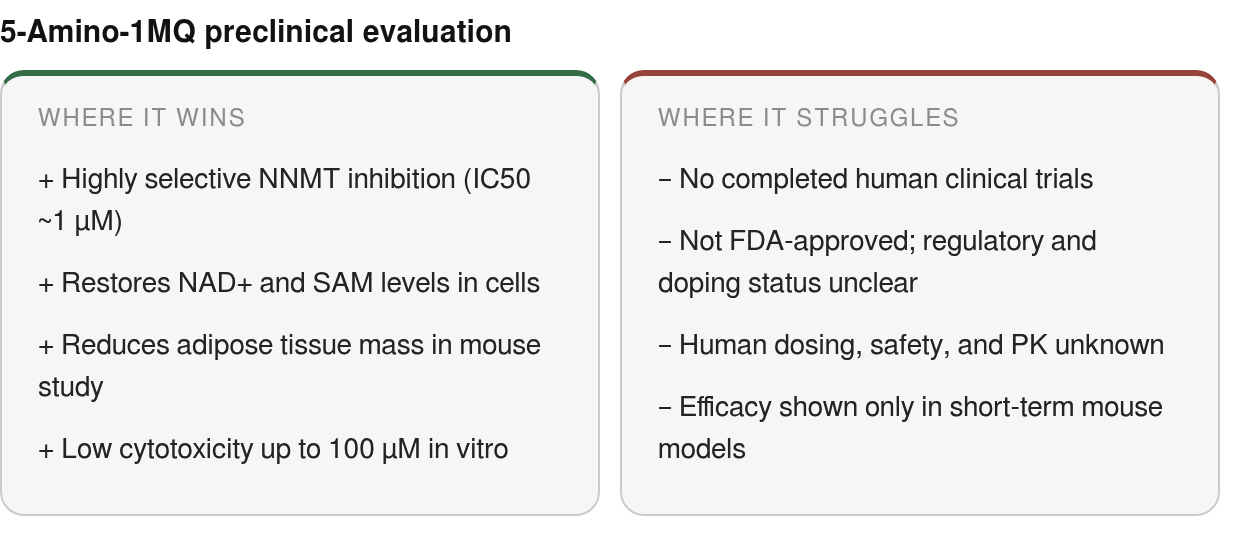
The molecule’s selectivity is what matters. Up to 100 µM, it didn’t inhibit related methyltransferases (DNMT1, PRMT3, COMT) or NAD+ salvage enzymes (NAMPT, SIRT1). Its IC50 for NNMT sits around 1 µM, and its EC50 for lowering intracellular 1-MNA in adipocytes is 2.3 µM. That narrow target profile means it hits a metabolic bottleneck without disrupting the broader methyl-donor or NAD+ machinery.
Plasma 1-MNA, the product of the NNMT reaction, can be measured by LC/MS/MS. That might offer a pharmacodynamic marker. If the enzyme is inhibited, the product should fall. Since NNMT expression in white adipose tissue is elevated in human obesity and correlates with BMI and waist circumference, the enzyme draws interest as a metabolic target. A measurable readout could, in theory, give a feedback loop that oral NAD+ precursors don’t provide: you dose to a metabolic signal rather than a fixed milligram amount.
The evidence stage and regulatory reality
Skip this for routine fat loss if you want an FDA-approved option. No human clinical trial has been completed or registered. The 2018 mouse result used subcutaneous injections three times daily. Compelling, yes. But it doesn’t establish a human dose, safety profile, or efficacy estimate.
It’s not approved for any indication. Absence from WADA’s named-substance list does not mean permission. S0 prohibits pharmacological substances without governmental approval for human therapeutic use. If you compete under WADA, assume it’s banned until your anti-doping organization confirms otherwise.
What the mechanism suggests for a data-driven protocol
In cultured adipocytes, 10 µM 5-Amino-1MQ reduced intracellular 1-MNA to about 40% of control. It raised NAD+ by 1.2- to 1.6-fold and SAM by about 1.5-fold. The Caco-2 permeability data (34.2 × 10⁻⁶ cm/s apical-to-basolateral, efflux ratio 1.33) showed no obvious efflux pump liability. MTT assays found no cytotoxicity up to 100 µM. Those numbers suggest a theoretical window: enough NNMT inhibition to restore NAD+ and SAM without approaching the 600 µM cytotoxicity threshold seen in vitro.
The synthesis opportunity here is tailoring dose to context. Research has also examined NNMT inhibition in muscle strength, where blocking the enzyme is proposed to support NAD+ synthesis, though the dose and effect sizes sit outside the obesity data. For active individuals, lower sustained doses timed around training windows might preserve NAD+ during metabolic stress. For sedentary users, higher doses could compensate for the lack of exercise-induced mitochondrial biogenesis.
We don’t recommend extrapolating mouse protocols to humans. Aged muscle (sarcopenia, intramyocellular lipid accumulation resistant to mobilization) differs metabolically from the expanding adipose tissue seen in diet-induced obesity. Systemic NNMT inhibition may act differently across tissues, and we lack the human data to predict which outcomes translate.
Where personalized oversight fits
Many vendors list 5-Amino-1MQ alongside traditional peptides without addressing its regulatory status or the absence of human trials. We take a different approach: any interest in a research-stage compound starts with a consultation and an honest read of where the evidence actually stands, not a fixed dose shipped with no follow-up. That fixed-dose, no-follow-up model is the norm in gray-market distribution.
If you’re building a longevity stack around NAD+ precursors, understand that nicotinamide riboside or NMN won’t directly address NNMT-driven methylation depletion. The enzyme sits downstream of those interventions. 5-Amino-1MQ targets the SAM drain that NAD+ supplementation alone can’t fix. Whether that theoretical advantage translates to measurable human outcomes is still the open question.
The short version on 5-Amino-1MQ
5-Amino-1MQ is best understood as an NNMT inhibitor, not a peptide. The early evidence points to a mechanism that may matter for body composition, NAD+ availability, and methyl-donor balance, but the evidence base is still preclinical. Its strongest appeal is the possibility of tracking an on-target metabolite rather than guessing from symptoms alone. Its biggest limitation is just as clear: without completed human trials, dosing, duration, safety, and athlete eligibility remain unresolved. For now, it belongs in the research-stage and monitor carefully category, not the routine fat-loss tool category.
How NNMT inhibition changes the metabolic math
When a search for „10 amino peptide“ leads to 5-Amino-1MQ, the jump is real. It isn’t a peptide; it’s a methylquinolinium salt that sits at the intersection of NAD+ optimization and methyl-donor metabolism. NNMT is the enzyme it inhibits, and that inhibition sets off a cascade from fat oxidation to epigenetic regulation.
NNMT’s dual drain on NAD+ and SAM
NNMT transfers a methyl group from S-adenosylmethionine, SAM, onto nicotinamide, producing 1-methylnicotinamide and S-adenosylhomocysteine. That single reaction depletes two critical pools at once. Nicotinamide gets pulled away from the NAD+ salvage pathway, the route that would normally recycle it back into NAD+. SAM, the cell’s universal methyl donor, gets consumed.
SAM drives DNA methylation, histone methylation, and the synthesis of phosphatidylcholine for cell membranes. NAD+ fuels sirtuins, poly(ADP-ribose) polymerases, and the electron transport chain. When NNMT runs unchecked, as it does in obesity, it drains both currencies simultaneously, leaving cells metabolically sluggish and epigenetically locked into lipogenic gene expression. In hepatocytes from high-fat-diet mice, NNMT overexpression correlated with a 1.8-fold increase in triglyceride content and a measurable drop in mitochondrial oxygen consumption. That suggests the enzyme’s activity directly impairs cellular energy flux.
Binding selectivity and the nicotinamide pocket
Quinolinium-based NNMT inhibitors get their selectivity by targeting the nicotinamide-binding pocket, not the SAM-binding pocket shared by other methyltransferases. The 2018 Biochemical Pharmacology paper profiled the molecule against a panel that included methylation and NAD+ salvage enzymes. The narrow activity supports the idea that the compound is aimed at NNMT rather than broadly interfering with adjacent pathways. A nonselective methyltransferase inhibitor would create a much harder safety problem.
The transport data also helps explain the interest. Its Caco-2 profile suggested cellular access without a major efflux liability. Its hydrophilic log D at pH 7.4 didn’t prevent it from reaching intracellular NNMT in the experimental systems. That suggests the molecule may rely on passive diffusion or an uncharacterized transporter rather than active uptake, a distinction that could matter for future tissue-specific targeting.
Downstream metabolic shifts
After NNMT inhibition, the NAD+ and SAM surge appears to suppress lipogenesis through AMPK activation and altered histone methylation patterns. The 2018 study showed that 60 µM 5-Amino-1MQ dropped lipid accumulation by roughly 70% in 3T3-L1 cells, measured by oil-red-O staining. At 100 µM, the effect plateaued. That suggests a ceiling where further NNMT inhibition yields diminishing returns, which matters for dose optimization.
The muscle data runs on a parallel track and gets a closer look below.
The SAM cycle and epigenetic regulation
SAM isn’t just a methyl donor. It’s a regulatory hub. When SAM rises after NNMT inhibition, histone methyltransferases have more substrate to work with. In adipose tissue, that could shift chromatin states away from lipogenic gene programs. The 2018 study hypothesized that increased SAM could enhance SIRT1 activity indirectly through NAD+ and alter histone methylation, suppressing adipogenesis at the transcriptional level. There was no direct gene-expression data in that paper, but the 3T3-L1 lipid results suggest an epigenetic brake on fat-cell maturation.
That is also where monitoring becomes more than a nice-to-have. We don’t yet know what SAM:SAH ratio or 1-MNA concentration maps to optimal NNMT inhibition in humans. Tracking how those metabolites move could eventually make dose titration less arbitrary. The animal work did not show obvious acute toxicity at the tested exposure, but that isn’t the same as a chronic-use safety profile. Human trials would need to establish whether methylation markers normalize, drift into an unfavorable range, or trigger compensatory feedback through adenosylhomocysteinase or betaine-homocysteine methyltransferase.
Why this differs from NAD+ precursor monotherapy
If you already use NMN or nicotinamide riboside, you’ve addressed the NAD+ side of the equation. You haven’t touched the SAM drain. NNMT inhibition is a pincer move: it preserves NAD+ synthesis and restores methylation capacity. Blocking NNMT doesn’t just raise NAD+; it removes a metabolic brake that NAD+ precursors alone can’t lift.
Early evidence that NNMT inhibition may support muscle strength independent of exercise reinforces that pincer logic. The mechanisms appear complementary rather than redundant. But published dosing data comes from short-term mouse studies. There is no validated human dose, let alone a personalized one. Any strategy that adjusts dose by activity level or timing around training windows is speculative until human pharmacokinetic data exists.
The 2021 Nature Communications paper showed that genetic knockout of NNMT extended healthspan in mice through mechanisms distinct from caloric restriction. Whether pharmacological inhibition could mimic those effects without the metabolic rigidity of lifelong dietary intervention is still an open question.
What we still don’t know
No human trial has been registered or published for 5-Amino-1MQ as of late 2026, according to a regulatory review. Human pharmacokinetics, exposure-response relationships, and long-term safety remain unknown. The FDA issued a 2026 warning letter stating that 5-amino-1-methylquinolinium iodide does not appear on the 503B bulks list, so it isn’t eligible for compounding under that framework. Some clinics offer it off-label, but without published human data, any use is exploratory.
The mouse data is compelling, but metabolic research has a translation problem. We don’t know if the SAM:SAH ratio moves the same way in human adipocytes, or whether the epigenetic shifts seen in 3T3-L1 cells translate to human subcutaneous or visceral fat. The early muscle findings are equally provocative, but they came from aged mice, not a Phase 2 population.
What’s missing is a dose-escalation study in humans with biomarker tracking: plasma 1-MNA, NAD+, SAM, SAH, and metabolic endpoints like insulin sensitivity and resting energy expenditure. Until that exists, any protocol involving 5-Amino-1MQ is an informed guess built on extrapolated mouse data and in-vitro kinetics.
What the preclinical evidence actually shows
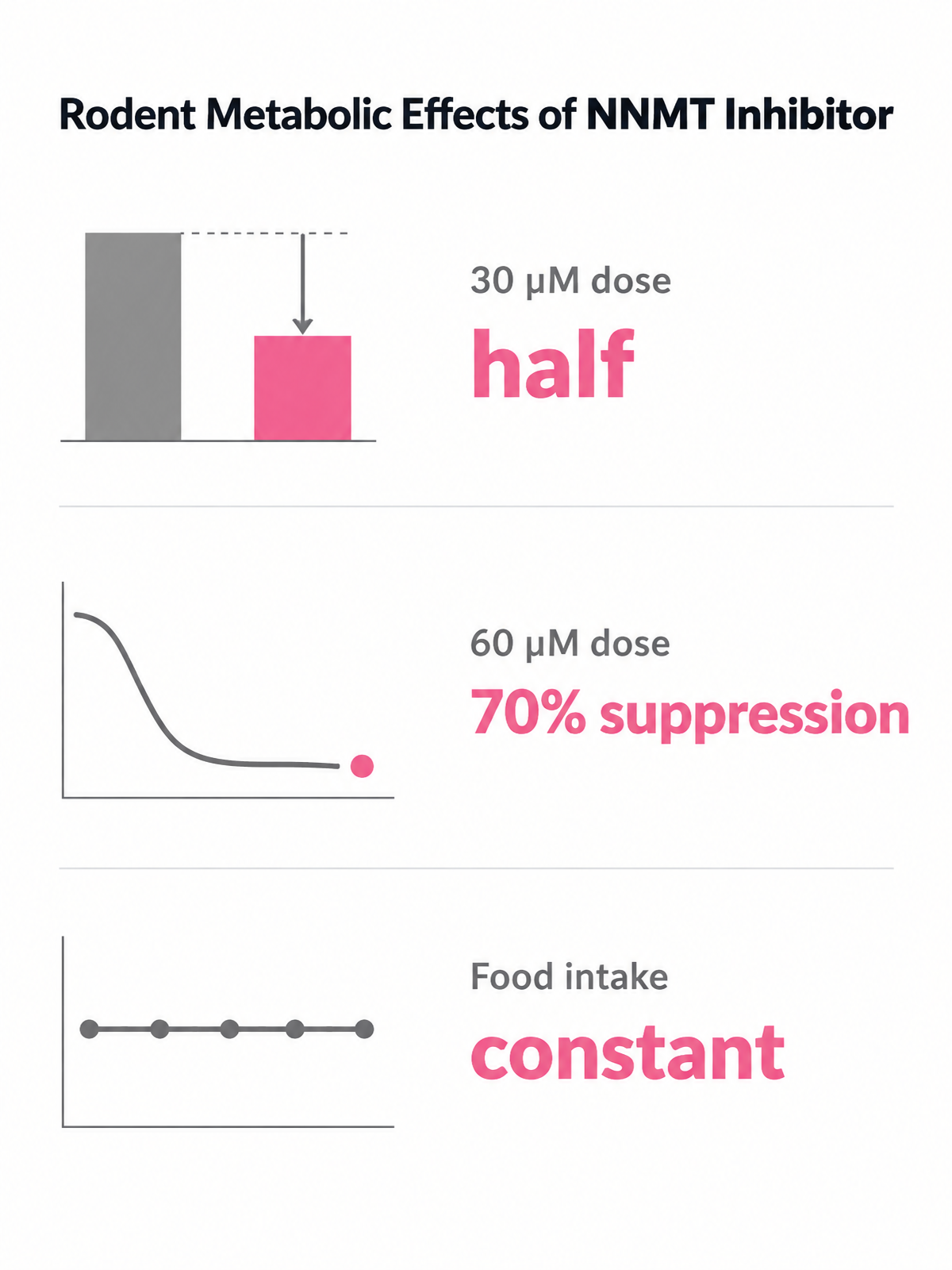
In rodent work, the compound delivered measurable metabolic shifts beyond scale weight. Treated diet-induced obese mice remodeled adipose tissue while maintaining voluntary food intake, a pattern distinct from appetite suppressants.
What makes the obesity protocol useful is that it ties body-composition change to cellular lipogenesis, not food avoidance. At 30 µM, the inhibitor cut lipid accumulation in adipocytes by half. At 60 µM, it reached 70% suppression. The specificity data supports the idea that downstream changes in NAD+ flux came from NNMT modulation itself rather than accidental hits on parallel pathways.
Muscle strength and recovery in aged mice
Researchers divided aged mice into sedentary, sedentary-plus-inhibitor, exercised, and exercised-plus-inhibitor groups. Both the inhibitor alone and exercise alone appeared to support grip strength. Combining the two produced a larger gain than either intervention on its own, suggesting an additive rather than redundant effect. Exercised mice increased their daily running distance before gains leveled off in later weeks. Adding the inhibitor appeared to extend endurance gains and blunt that late-stage plateau. The molecular changes tied to the combination looked distinct from exercise-alone changes, pointing toward separate underlying pathways.
That finding aligns with the mechanism behind NAD+-focused biology: preserving methylation capacity and NAD+ flux may help sustain muscle performance where exercise alone reaches a fatigue plateau. This remains a hypothesis drawn from animal work, not an effect we’ve documented in people. For clients exploring NAD+ modulation, our emphasis stays on personalized, biomarker-guided protocols. We’re direct about the fact that no human pharmacokinetic data yet exists to guide timing around training windows.
What the human-trial gap means for dosing
Published human efficacy and safety endpoints for 5-Amino-1MQ don’t exist. The regulatory vacuum leaves two practical constraints. Any human use remains off-label with unknown exposure-response relationships. Athletes under WADA face a separate anti-doping problem because unapproved pharmacological substances are captured under S0, whether named or not.
The mouse dose of 20 mg/kg translates to roughly 1.6 mg/kg in humans via allometric scaling, around 110 mg daily for a 70 kg adult. That conversion assumes similar absorption, distribution, and clearance. None of those have been measured. For personalized longevity protocols, that gap becomes critical. Without a therapeutic window defined by real human metabolite tracking, we can’t yet titrate dose to a target reduction in circulating 1-MNA or a threshold rise in NAD+.
What we do track in clients exploring NNMT modulation is baseline HOMA-IR, fasting insulin, and plasma 1-MNA when accessible through specialty metabolomics panels. The 2015 Diabetologia study across 314 participants found plasma 1-MNA inversely correlated with insulin sensitivity. So dropping that marker while monitoring glucose tolerance offers a proxy for NNMT activity, even when direct tissue NAD+ measurement isn’t feasible. That monitoring framework is where the data-driven angle matters: rodent studies show the biology is real, but translating dose and safety to humans requires real-time biomarker feedback, not blind extrapolation from mouse subcutaneous injections.
Safety: what we know and what we don’t
When people search for the 10 amino small molecule, they land on a compound with no published human safety data. The 2018 Biochemical Pharmacology study treated diet-induced obese mice with subcutaneous injections at 20 mg/kg daily for eleven days. The authors reported no observable adverse effects, normal food intake, and unchanged behavior. They measured body weight, adipose mass, plasma lipids, and histopathology on major organs. No mortality, no gross tissue damage. But eleven days in a mouse translates poorly to months or years in a human.
What the rodent work measured, and missed
The published mouse trial reported no adverse behavioral or histopathological signs across the treatment period. Organ histology showed normal architecture in liver, kidney, heart, and white adipose tissue. That suggests no acute structural damage at the tested dose.
What the study did not track: chronic methylation-cycle effects, potential SAM depletion in methylation-heavy tissues like liver and brain, or reproductive toxicity. NNMT sits at the junction of NAD+ salvage and the methionine cycle. Long-term inhibition could theoretically disturb homocysteine metabolism or methylation-dependent gene silencing. The published rodent work did not extend to longer dosing paired with organ-function panels. Duration and chronic-safety monitoring remain open questions.
Other rodent research has examined NNMT inhibition in muscle strength and NAD+ synthesis, but that work tracked performance-related outcomes rather than subclinical markers like liver transaminases, creatinine, or methylmalonic acid that might flag emerging toxicity. There are no dose-escalation studies, no maximum-tolerated-dose determinations, and no reproductive or developmental work in any species. Genotoxicity assays such as Ames tests or micronucleus studies haven’t been published, so mutagenic potential remains uncharacterized.
The human evidence gap
No registered human trial appears in ClinicalTrials.gov for 5-amino-1-methylquinolinium. The FDA letter did not cite adverse-event reports. It was a regulatory-category issue, not a safety signal. Absence of FDA approval means no formal Phase I dose-finding, no pharmacokinetic profiling, and no controlled cohort.
Despite this, some U.S. wellness clinics offer oral 5-Amino-1MQ. The doses being used are not publicly documented in peer-reviewed literature, and there is no systematic tracking of patient outcomes or side effects. Anecdotal claims on forums and clinic websites mention weight loss, improved energy, or body-composition changes, but those reports are uncontrolled and lack laboratory verification. Without baseline and follow-up methylation markers, NAD+ levels, or liver-function tests, it’s impossible to separate therapeutic effect from placebo or to detect subclinical harm.
Monitoring strategy for a data-driven protocol
If you choose to integrate NNMT inhibition into a longevity protocol, treat it as an experimental intervention requiring active surveillance. We recommend quarterly laboratory panels including:
- Methylation markers: plasma homocysteine, SAM-to-SAH ratio if available through specialized labs, and methylmalonic acid to catch methyl-donor depletion before it shows up clinically.
- Liver function: ALT, AST, GGT, and total bilirubin. The liver is the primary methylation hub, and NNMT inhibition could theoretically stress hepatic SAM pools.
- Kidney function: creatinine, eGFR, and uric acid. Nicotinamide and its methylated metabolite 1-MNA are renally excreted, so altered flux might affect kidney workload.
- Lipid panel: total cholesterol, LDL, HDL, and triglycerides. Shifts in lipid metabolism could reflect beneficial remodeling or disrupted steroid-hormone synthesis depending on baseline status.
- Complete blood count: watch for unexpected changes in red-cell indices or white-cell counts that might signal bone-marrow stress or immune perturbation.
Dose titration should follow a conservative ramp. Start at the low end of any anecdotal human range, monitor response through real-time metabolic testing such as continuous glucose monitors and frequent body-composition scans, and adjust upward only if laboratory values remain stable. We favor tracking plasma 1-MNA as a functional biomarker of NNMT inhibition. A substantial reduction from baseline suggests on-target activity without complete enzyme blockade.
Skip this compound entirely if you have pre-existing liver disease, impaired kidney function, or a history of methylation-cycle disorders such as MTHFR variants with elevated homocysteine. The mechanism demands strong methyl-donor reserves. People with compromised methylation capacity could see homocysteine rise or SAM depletion accelerate. Pregnancy or breastfeeding: avoid; there is zero reproductive-toxicity data. Competitive athletes under WADA jurisdiction should also abstain.
The gap most people overlook is the absence of chronic-exposure human data paired with real-time metabolic monitoring. Most protocols either avoid the compound entirely or dose it empirically without labs. A data-driven approach means treating NNMT inhibition as a monitored experiment: baseline labs, quarterly panels, and pulling back at the first sign of elevated homocysteine, rising liver enzymes, or unexpected lipid shifts. That level of surveillance is standard in clinical drug trials but rare in wellness contexts. It’s also the only responsible path forward given the current evidence base.
Dosing, monitoring, and when to skip it
You’ve read the animal data and you want a number: how many milligrams, how often, injected or oral. The honest starting point is less satisfying. No validated human dosing protocol exists for the compound sold as a „10 amino peptide.“ Every figure circulating in forums traces back to rodent work. Rodent milligrams-per-kilogram do not convert cleanly to a person.
That gap is where a data-driven approach matters. With an unproven molecule and no human dosing standard, your own measured response tells you more than a dose copied from a vendor page. That’s how we work: science-backed, data-driven, and personalized rather than one-size-fits-all.
What dose did the rodent studies actually use?
Two preclinical protocols get cited, and they point in different directions. The obesity work used a high-dose, short-course design. The aging-muscle work used a lower-dose, longer-course design. Neither was tested in humans.
| Protocol variable | Obesity model | Aging-muscle model |
|---|---|---|
| Dose | 20 mg/kg/day, split into 3 injections | lower dose, sustained |
| Route | Subcutaneous | Subcutaneous |
| Duration | 11 days | longer course |
| Group size | small mouse cohort | small aged-mouse cohort |
| Primary goal | Rapid fat-mass remodeling | NAD+ restoration, strength |
The distinction is the goal. One model was built around fast metabolic remodeling; the other around sustained support in an aging-performance context. A future human protocol will likely need to separate those use cases rather than pretend one schedule fits both.
Can real-time metabolic monitoring guide dosing?
The molecule’s biochemistry hands you a built-in readout: plasma 1-methylnicotinamide, the direct product of the enzyme it blocks. When NNMT inhibition works, 1-MNA falls.
The useful question isn’t simply what dose the animal paper used. It’s whether the human metabolite moved in the intended direction while safety labs stayed stable. In principle, 1-MNA gives a direct signal of whether the enzyme is being inhibited. That’s why a biomarker-led approach matters more than a fixed dose copied from a vendor page. It’s the same logic behind the data-driven, personalized protocols we favor: measure, then decide. If 1-MNA doesn’t move, the dose or formulation isn’t working.
The compound’s cellular-access data makes oral delivery plausible despite it being a charged salt. Confirming effect through labs still beats assuming it. You can read more about how we structure biomarker-led protocols.
When should you skip this entirely?
Skip it if you compete under anti-doping rules. Absence from a named list is not permission. Eligibility decisions should come from your governing anti-doping body, not a supplement vendor.
Skip it too if you expect a clean regulatory story. The compound lacks an approved label, established human safety endpoints, and a defined monitoring standard. Until those exist, monitoring is the floor, not a bonus.
How 5-Amino-1MQ compares to the usual fat-loss peptides
You’re weighing 5-Amino-1MQ against the names that dominate body-composition forums: CJC-1295, AOD-9604, Tesamorelin, and BPC-157. Most people searching for a „10 amino peptide“ land on 5-Amino-1MQ, so the first correction matters. It isn’t a peptide at all. It’s a small-molecule NNMT inhibitor. That single fact separates it from everything else on the list.

The others cluster around the growth-hormone axis. CJC-1295 and Tesamorelin are GHRH analogs that prompt the body to release more growth hormone. Tesamorelin is the only compound here with an FDA-approved indication, cleared for HIV-associated fat accumulation. AOD-9604 is a fragment of human growth hormone studied for fat metabolism. BPC-157 is a repair and anti-inflammatory peptide, not really a fat-loss tool. 5-Amino-1MQ works differently. It blocks one enzyme, raises intracellular NAD+ and SAM, and nudges fat cells toward oxidation without touching appetite or the GH cascade.
How the mechanisms and evidence actually stack up
| Compound | Primary mechanism | Evidence stage | Regulatory status |
|---|---|---|---|
| 5-Amino-1MQ | NNMT inhibition; raises NAD+ and SAM, shifts fat toward oxidation | Preclinical only (mouse and cell); no human trials | Not FDA-approved; not on the 503B bulks list |
| CJC-1295 | GHRH analog; stimulates growth-hormone release | Research and off-label use | Not FDA-approved |
| Tesamorelin | GHRH analog; stimulates growth-hormone release | Human clinical data; approved indication | FDA-approved for HIV-associated lipodystrophy |
| AOD-9604 | HGH fragment studied for fat metabolism | Largely research; limited human study | Not approved for fat loss |
| BPC-157 | Tissue repair and anti-inflammatory peptide | Preclinical; research use | Not FDA-approved |
Two things stand out. 5-Amino-1MQ is the only option whose human file is genuinely empty; no registered human trial exists. It’s also the only one acting on methyl-donor and NAD+ metabolism rather than hormones or tissue repair.
The muscle data most comparisons miss
Fat loss isn’t the whole story. Early preclinical work on NNMT inhibition has looked beyond fat toward muscle strength, exploring how raising NAD+ availability might support performance. These are animal and cell findings, so read them as signals rather than settled results. The pathway is distinct from the growth-hormone route the other compounds travel.
That distinct mechanism is the interesting part. Because 5-Amino-1MQ works on NAD+ and methyl-donor metabolism rather than the GH axis, early research hints it may complement, rather than duplicate, the effects of training. No GH-axis peptide on this list acts through that specific pathway in the sources we reviewed.
Where a monitored, personalized protocol earns its keep
5-Amino-1MQ asks more of the user and clinician than the usual peptide comparison suggests. A GH-axis peptide can often be evaluated through familiar endocrine markers. NNMT inhibition needs a metabolic lens: methylation status, insulin dynamics, body-composition change, and ideally 1-MNA movement.
That monitoring loop is where a data-driven protocol can provide value. It doesn’t make the compound proven, and it doesn’t erase the regulatory limits. It changes the conversation from „which bottle has the most exciting mechanism?“ to „can we verify on-target activity while staying inside safe laboratory boundaries?“
One limit worth naming. WADA-governed athletes should not treat this as a gray-area workaround. Until a substance has clear approval and sport-specific clearance, the risk sits with the athlete.
Quick Questions, Straight Answers
Can I use 5-Amino-1MQ if I’m already taking NMN or nicotinamide riboside?
Mechanistically, they target different parts of the same metabolic neighborhood. NMN and nicotinamide riboside are NAD+ precursor strategies; 5-Amino-1MQ is aimed at the enzyme that diverts nicotinamide and consumes methyl-donor capacity. That makes the combination biologically plausible, but plausibility is not proof. No human study has tested the stack, so any combined use should be treated as experimental and monitored rather than assumed safe or synergistic.
Why isn’t 5-Amino-1MQ approved if the mouse study looked promising?
Promising animal data is only the beginning of drug development. Approval requires human pharmacokinetics, dose-finding, controlled safety data, and efficacy endpoints that reproduce across people-not just cells or mice. 5-Amino-1MQ has not cleared that sequence, which is why its current status remains exploratory rather than approved therapy.
How would I know if NNMT inhibition is actually working in my body?
The cleanest practical signal is movement in NNMT-related metabolites, especially 1-MNA, interpreted alongside methylation and metabolic labs. A clinician would want to see whether the intended biomarker shifts without a concerning rise in homocysteine, liver enzymes, kidney markers, or other safety signals. Symptom changes alone are too noisy to confirm enzyme inhibition.
Does blocking NNMT affect my liver’s methylation capacity long-term?
That is one of the main unanswered safety questions. The liver relies heavily on SAM for detoxification and methylation reactions, so chronic NNMT inhibition could theoretically alter methyl-donor balance. Short animal studies cannot rule out slow changes over months. If someone is going to explore this pathway, liver enzymes, homocysteine, methylmalonic acid, and SAM-to-SAH ratio are the kinds of markers that make the risk visible sooner.
Free 15-Minute Discovery Call
Ready to take the guesswork out of your health?
Book a free 15-minute call with Monika to talk through your goals, what testing makes sense for you, and the right next step. No pressure, just clarity.
Book Your Free CallFor educational purposes only. Not medical advice.