
Key Takeaways
- Many CJC-1295 “allergies” are not allergies at all.
- Product-quality problems, especially endotoxin contamination, often cause them.
- HPLC can report above 98% purity.
- The vial may still contain endotoxin.
- Switching vendors can point to contamination, not sensitization.
- A true CJC-1295 allergy is IgE-mediated.
- It worsens with each exposure.
- It can cause hives, respiratory distress, or anaphylaxis.
- Independent testing of gray-market peptides has found endotoxin positivity.
- CJC-1295 can be more inflammatory than many peptides.
- Even low endotoxin levels can signal manufacturing problems.
Is it an allergy, or is your vial dirty?!

Redness, swelling, or systemic symptoms after a CJC-1295 shot raise a question. Is the peptide even clean? There is a real difference between a physiological reaction and true allergy.
People mix them up constantly. A localized inflammatory response often looks like a systemic allergy. The actual culprit may be product quality or preparation.
HPLC can show >98% purity while the vial still harbors endotoxin contamination. That contamination may never appear on the supplier’s Certificate of Analysis. Endotoxin can trigger inflammation that looks like an allergic reaction.
Watch how you respond across batches. One vial reacts, another at the same dose does not? Then it is probably not the peptide itself. That inconsistency points to batch-to-batch variability.
Independent testing has found meaningful endotoxin positivity across gray-market samples. Even levels below the fever-causing threshold still suggest poor manufacturing. CJC-1295 is also more inflammatory than many peptides. Separating baseline tissue reaction from contamination takes targeted digging.
Immunologic, or just chemical?
A true allergy to CJC-1295 means IgE-mediated immune recognition of the peptide sequence itself. You would expect it to worsen with each exposure. It can spread beyond the injection site, causing hives, respiratory symptoms, or anaphylaxis within minutes to hours.
Most localized reactions are different. Redness, swelling, and itching confined to the site usually clear within 24 to 48 hours. They often come from histamine release, technique errors, or formulation acidity, not a peptide allergy.
Mild, local symptoms during your first week may reflect normal acclimation to subcutaneous peptide delivery. Symptoms that escalate with repeated doses, or spread past the site, point to either true sensitization or a contaminated batch driving inflammation.
Purity testing cannot confirm you actually got CJC-1295. It only measures how much of something is in the vial. That is why identity and endotoxin testing matter alongside a purity screen. A mislabeled peptide can pass purity and still cause a severe reaction. Your body may be responding to a completely different molecule. Confirm the molecular weight matches the target compound before assuming the peptide itself is the problem.
Test the peptide before you call it an allergy
Verify what you are injecting first. Independent testing should cover HPLC purity analysis (target >98%), LC-MS identity confirmation (verifies the molecular weight matches CJC-1295), and endotoxin screening with LAL or recombinant Factor C assays. Endotoxins are heat-stable and invisible to standard purity tests, so a peptide can read pure while still carrying inflammatory contaminants.
When bacterial endotoxin hits subcutaneous tissue, it binds local immune receptors and triggers inflammatory cytokines. That response produces warmth, swelling, and redness that can mimic a classic histamine-driven allergic reaction. Because these bacterial cell-wall fragments are so stable, sterile filtration will not remove them, even if the liquid looks clear.
If testing confirms a clean product, a challenge-rechallenge protocol under medical supervision is the next step. Stop the peptide for a week. Let symptoms fully clear. Then reintroduce at half dose with proper sterile technique and a fresh injection site. Log the timing, severity, and location of anything that appears. A true allergy reproduces consistently. Contamination or technique issues produce variable responses.
Don’t forget the excipients
The reconstitution fluid and preservatives deserve attention too. Bacteriostatic water often contains benzyl alcohol or phenol, both known to irritate injection sites in sensitive people. An acidic reconstitution buffer can also trigger localized inflammation at low pH.
Switch to sterile water for injection, without preservatives, for one cycle. See if symptoms ease. If they disappear, you have found an excipient sensitivity, not a CJC-1295 allergy. Proper dilution and buffering reduce irritation from acidic solutions, so double-check that your reconstitution protocol matches the peptide’s specs.
At BiohackNow, protocols are built on data and tailored to the person. If you are working through a suspected reaction, a wellness consultation can help you assess your actual position instead of guessing.
Which test, and when to run it
Once symptoms consistently follow CJC-1295 injections, and you have ruled out technique or storage, formal testing helps separate a genuine peptide allergy from everything else. The tests below differ in speed, safety, and how much they actually tell you. Pick your starting point based on how bad the reaction was and how fast you need an answer.
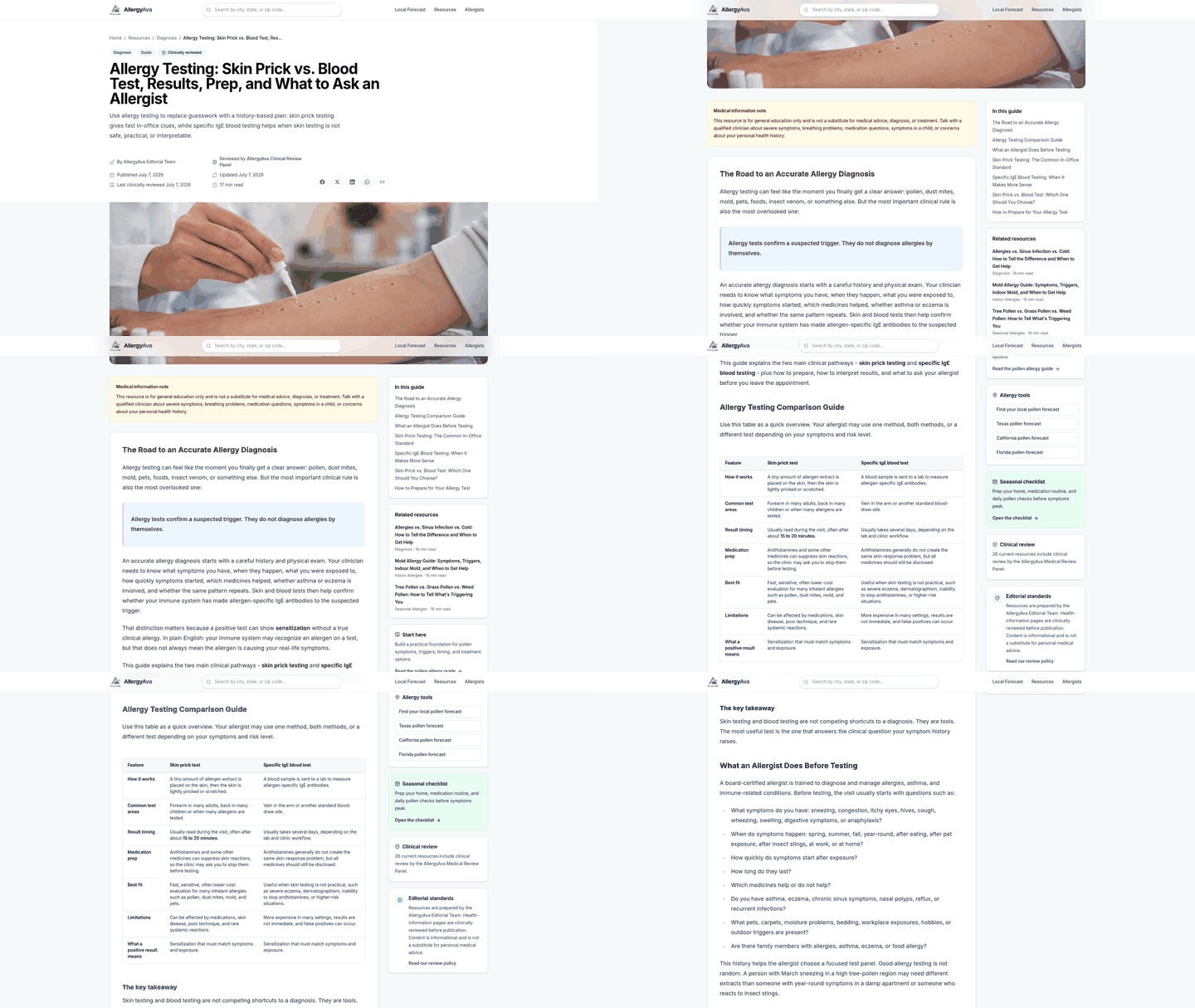
Most allergists work stepwise: safest, fastest screen first, then escalate only if results stay unclear or the clinical picture demands it. Timing matters. Wait four to six weeks after your last reaction before skin testing so baseline histamine can normalize. Blood draws should not wait as long; IgE titers hold steady whether you are mid-flare or symptom-free.
When to start with a skin-prick test
Skin-prick testing is a bedside method where diluted peptide goes through the skin surface to check for an immediate wheal-and-flare. It is fast, cheap, and read during the same visit.
Start here for mild, localized reactions once you have confirmed a clean vial. A raised, itchy wheal within 15 to 20 minutes points to real IgE-mediated sensitivity. A flat result pushes you back toward formulation or technique, not allergy.
Skip skin-prick testing entirely if your reaction was severe and systemic. Reintroducing the allergen through the skin carries real risk in those cases. Go straight to blood-based methods.
What about specific IgE blood assays?
Specific IgE assays measure antibodies in your blood that target a suspected allergen. Nothing goes into your body, which makes them safer after any serious reaction.
The main limitation is simple: validated specific IgE panels for CJC-1295 are not standardized the way they are for foods or pollens. GHRH analogues are niche. You may need a lab willing to run a custom assay, and the results need careful reading against your clinical history.
Use blood testing as your first line when the reaction was severe, when you cannot stop injecting long enough for skin to settle, or when antihistamines would throw off skin-prick accuracy.
Are the newer in-vitro tests worth it?
For ambiguous cases, cell-based in-vitro tests watch how your immune cells behave when exposed to the peptide in a dish. There is no patient exposure, and they can clarify borderline skin or IgE results.
They cost more, and access varies a lot between the US and international markets. They are worth pursuing when standard testing gives conflicting answers and you genuinely need to know whether continuing CJC-1295 is viable.
A practical order of operations
Here’s how we’d sequence it:
- Step 1: Pull your vial’s batch analysis. Confirm endotoxin-negative, high purity, verified identity. Fails here? Stop. The problem is the product.
- Step 2: Mild reaction plus a clean vial? Book a skin-prick test with an allergist.
- Step 3: Severe or systemic reaction? Go straight to specific IgE blood testing.
- Step 4: Conflicting results? Escalate to in-vitro cell-based testing.
The whole pathway usually starts with a primary-care referral to an allergist. Bring your batch documentation to that first appointment. A clinician who can see your vial was clean can move faster toward the right test instead of guessing.
Managing a reaction in the moment
Once a reaction is happening, act on severity first and diagnostics second. Mild skin symptoms can be managed at home. Systemic symptoms need emergency care. The batch data comes later, once you are stable and trying to work out whether this was truly peptide-driven or the fingerprint of a dirty vial.

The important exception comes first: if your reaction involves throat tightness, wheezing, or lightheadedness, stop reading protocols and call emergency services. That reaction to CJC-1295 is not a home-care situation. Everything below assumes you have already ruled out anaphylaxis.
Handling a mild local reaction
Redness, itching, or a small welt at the injection site usually responds to oral antihistamines and cold compresses. A cold compress reduces swelling and slows histamine spread. Keep the area clean and stop injecting there until it fully settles.
An H1 blocker is a second-generation antihistamine that controls itching and hives without much sedation. Some people add an H2 blocker to blunt flushing. It is a standard combination for allergic skin reactions, though neither replaces medical care if things worsen.
Track how fast it resolves. A clean local reaction from a verified vial usually calms within hours to a day or two. If it lingers or spreads, that pattern points back toward contamination, not a simple site response.
When it becomes an emergency
Anaphylaxis is a medical emergency, and epinephrine is first-line, not antihistamines. Signs include swelling of the lips or tongue, difficulty breathing, rapid heartbeat, and a sudden drop in blood pressure. If you carry an epinephrine auto-injector, use it in the outer thigh immediately and call for help.
Do not wait to see if antihistamines work first. They treat skin symptoms. They do not reverse airway swelling or shock. After epinephrine, emergency clinicians manage the airway and may follow with corticosteroids and IV fluids to reduce the risk of a delayed second-phase reaction.
Corticosteroids support recovery here, but they are not a rescue treatment. Oral or injectable steroids reduce inflammation over the following hours. That is why they come after epinephrine, not instead of it.
After-care and recovery
Once the acute phase passes, supportive care helps recovery. Hydrate, rest, and watch the injection site for lingering inflammation. Watch for any return of symptoms in the 24 hours after a serious reaction. Biphasic responses do happen.
During recovery, track how long the skin takes to return to normal texture and color. A simple localized reaction should clear completely within a few days and leave no permanent tissue changes. Persistent induration, or hardened tissue, or hyperpigmentation at the site suggests a deeper inflammatory process. That calls for extended rest from all subcutaneous injections to avoid localized scarring.
One practical warning for stacked protocols: layering multiple injectables at once makes it impossible to know which compound caused the reaction. Run new peptides one at a time. When something goes wrong, you will know exactly what to trace and whose paperwork to pull.
The specialist and the follow-up
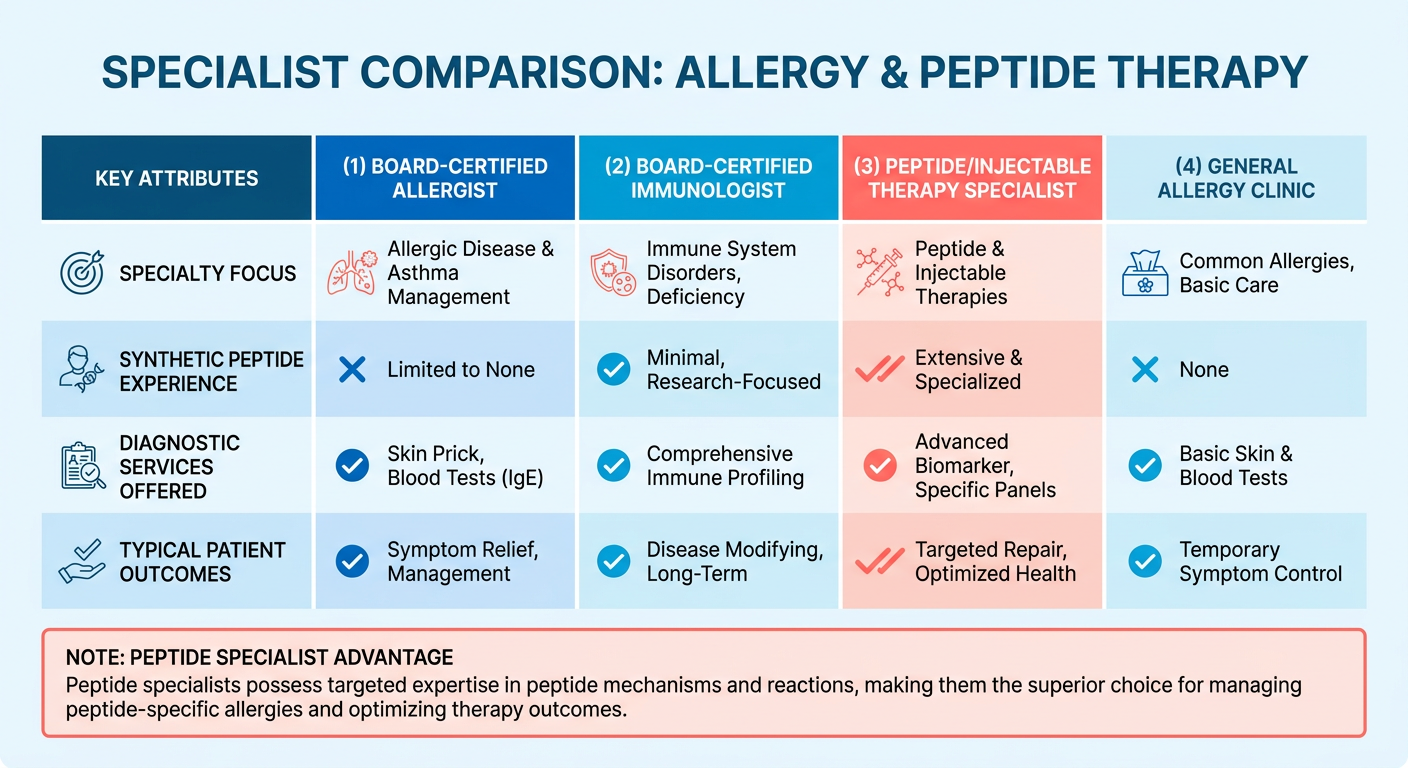
Once you’ve confirmed a genuine immune reaction rather than a dirty vial, you need someone who understands peptide allergens. That means a board-certified allergist or immunologist, ideally one comfortable with synthetic peptides and injectable therapies. General allergy clinics handle pollen and penicillin all day; peptide-specific work is a narrower skill set.
Walking into an immunologist’s office with a detailed injection log is valuable. Include exact dates of administration, symptom onset time, and the precise physical character of the reaction. That timeline, paired with any lab documentation of what you actually injected, lets the specialist build a targeted diagnostic plan instead of starting from scratch.
Finding a peptide-aware specialist
Start with professional societies. National allergy and immunology bodies keep searchable directories of board-certified members. Filter for physicians who list injectable drug allergy or drug hypersensitivity as a focus. Those are the ones most likely to read a peptide reaction correctly.
In that first consult, the specialist will work out whether your symptoms fit type I hypersensitivity or a delayed type IV cell-mediated response. They will review your broader health profile, including any history of atopy or asthma, to gauge whether your immune system runs hot in general. That context helps place the reaction inside your overall immunological picture.
Look for a clinician willing to examine the chemical structure of GHRH analogues. These are synthetic variants of hormones your body already makes, so a good provider will investigate whether your reaction might be cross-reactive against similar signaling molecules you produce naturally.
A sensible follow-up schedule
After an acute episode, structured follow-up catches recurrence and confirms whether the reaction was truly peptide-driven. A practical rhythm: a one-week check for symptom resolution, a one-month review for delayed responses, and a longer follow-up at several months if you’re weighing any future peptide use.
Early on, the focus is making sure no secondary inflammatory symptoms creep in. Some people get a delayed-onset rash or joint stiffness days after the event. Tracking those late symptoms helps your doctor tell whether the peptide set off a broader systemic immune cascade that might need a short course of oral anti-inflammatory therapy.
Skip aggressive re-challenge testing if your symptoms were systemic. Throat involvement or wheezing means the risk of a controlled re-exposure outweighs what it would tell you. That is a hard line, not a hedge.
Documenting it for future providers
Build a written allergy record any future clinician can read in under a minute. Name the peptide, describe the reaction, list the date, and reference the batch analysis you pulled for the triggering vial.
Get it into your electronic medical chart under „Drug Allergies.“ Label the compound clearly as a growth hormone-releasing hormone (GHRH) analogue so future providers do not accidentally prescribe a structurally similar peptide and put you right back where you started.
If you need growth-hormone support but have a confirmed allergy, you will need to look at alternative pathways. GHRH analogues share structural similarities, so switching to another peptide in the same class carries a high cross-reactivity risk. Non-peptide secretagogues or natural optimization strategies, discussed with your specialist, are the safer route. For more on long-term avoidance and safe alternatives, see the BiohackNow blog.
Preventing the next reaction: sourcing and storage

Prevention beats management with peptide therapy. Set rigorous standards for product selection and handling, and you cut most of the environmental and chemical triggers behind adverse injection-site events. It also means that if a reaction does happen, you can evaluate it with a clear head instead of a dozen confounding variables.
The order we recommend: verify the batch, store it correctly, then screen yourself for genuine sensitivities. Skip any of those, and you are guessing.
What a GMP-certified supplier actually proves
A quality supplier proves purity, identity, and contamination status with independent third-party testing, not just an in-house Certificate of Analysis. A COA is only as credible as the lab that issued it. Treat a supplier-issued COA as a starting point, never as proof.
Look for a supplier that names the testing lab and includes contact details, not a vague „tested for purity“ stamp. Legitimate documentation carries a batch-specific lot number that matches your vial, an issue date inside the product’s shelf life, and the actual chromatogram rather than a summary figure. If the paperwork cannot be tied to the vial in your hand, it is not traceable.
The test people skip most is endotoxin testing. Endotoxins are heat-stable and invisible to purity chromatograms, so a peptide can read clean while carrying bacterial contamination that triggers inflammation. Finnrick uses a tighter 40 EU per vial quality flag, well below the 400 EU level that causes fever.
Those thresholds are not in conflict. The quality flag catches sloppy manufacturing long before it reaches the fever threshold. If a vendor cannot show endotoxin data at all, that is your answer.
Storing CJC-1295 so it stays clean
Storage protects the clean product you paid for. Peptide degradation and impurity formation speed up with heat and light, and impurities are exactly what your immune system reacts to. Reconstituted CJC-1295 belongs refrigerated and out of light; lyophilized powder keeps longest frozen.
Mishandling turns a verified vial into a suspect one. A batch that tested endotoxin-free at the lab can still accumulate degradation products while sitting warm on a shelf. Real-time batch traceability only helps if you protect the vial after it arrives.
Does CJC-1295 cross-react with other peptides?
Independent lab data says most peptide contamination is a manufacturing problem, not a chemistry one. Finnrick found roughly 63% of submitted samples contained no endotoxins at all, with only 8% showing quantifiable contamination above trace levels. That spread comes from vendor and batch differences, not from CJC-1295 reacting with other peptide families.
Before starting a new cycle, take stock of your current baseline. Localized skin sensitivity, dermatographia, or an active seasonal allergy flare can all temporarily lower your threshold for injection-site irritation. A quick self-check makes sure your body is in a decent state to take a subcutaneous injection and keeps confounding variables out of the picture.
Your sourcing checklist: match the lot number on the COA to your vial, confirm the document names an independent lab, check the issue date falls inside the shelf life, review documented endotoxin levels, confirm the vial was stored and shipped cold. Clear all five and a genuine allergy becomes the rare exception it actually is.
The whole thing, as a plan you can follow
Here’s the article condensed into a sequence you can actually work through. Order matters: verify the product before you ever suspect your immune system. Most reactions that look like an allergy trace back to a dirty or misidentified vial, so sourcing verification sits at the front of every step.
The 7-step checklist
Print this and work top to bottom. Each step maps to a section above, so jump back for detail whenever you need it.
-
Assess your baseline. Before ordering, note any known drug or injectable allergies and any conditions like diabetes or thyroid disorders that change your risk. This tells you whether you belong in the higher-caution group before a single dose.
-
Select a verified product. Demand independent third-party testing, not just an in-house Certificate of Analysis. Confirm the lab is accredited and that the report references your exact lot number, ideally dated within the last few months. A COA with no lab behind it means nothing.
-
Store and reconstitute correctly. Keep vials cold, use sterile bacteriostatic water, rotate injection sites. Poor handling introduces contamination that mimics an immune reaction.
-
Monitor the first dose closely. Inject seated, then watch for 30 minutes. Track redness, itching, swelling, flushing, or anything systemic. Write down what you see and when.
-
Match symptoms to a response level. Mild local reactions get antihistamines and cold compresses. Systemic symptoms get emergency care. Do not improvise past that line.
-
Verify the batch, then follow up. Once stable, pull the lab analysis for the vial that triggered you. Clean results point toward genuine sensitization and a specialist referral. Dirty results point back at the product.
-
Prevent the next reaction. Stick with traceable batches, keep your storage tight, and screen yourself for real sensitivities before scaling dose.
How to decide the right care level
A simple three-tier decision tree based on severity. Fastest way to avoid both under-reacting and over-reacting.
Tier 1 (home care): Localized redness, itching, or a small welt at the site with no spread. Antihistamines and cold compresses. Reassess in 24 to 48 hours.
Tier 2 (call a provider): Induration lasting beyond several days, spreading rash, or repeat reactions across multiple clean batches. This warrants a peptide-aware allergist and formal testing.
Tier 3 (emergency now): Throat tightness, wheezing, or lightheadedness. Call emergency services. Skip every protocol below it.
Where people trip up
The biggest mistake we see is ordering allergy tests before checking the vial. You end up testing your immune system against a contamination artifact, which tells you nothing. Verify the batch first, every time.
Second pitfall: trusting a self-issued COA. A report with no accredited lab named on it, or one recycled from a different lot, gives you a false sense of safety. Match the document to the vial in your hand before you draw a dose.
Last one: scaling dose after a mild reaction resolves without ever finding the cause. If you never learned whether it was the peptide or the product, you are just rolling the dice again.
Frequently Asked Questions
1. Can I develop a CJC-1295 allergy after using it safely for months?
Yes, the immune system can develop sensitivity over time through repeated exposure. However, if a reaction occurs abruptly after months of trouble-free use, it is highly recommended to investigate the physical integrity of the current vial. Factors such as exposure to heat during shipping, micro-cracks in the glass vial that compromise sterility, or a change in the manufacturer’s raw material source are more common culprits for sudden-onset reactions than spontaneous late-stage sensitization.
2. I have a history of penicillin allergy. Does that raise my CJC-1295 risk?
There is no direct molecular cross-reactivity between penicillin (a beta-lactam antibiotic) and CJC-1295 (a synthetic peptide hormone). However, individuals with a history of multiple drug allergies often possess a more sensitive immune system or a higher baseline of mast cell reactivity. While you are not automatically allergic to the peptide, starting with a conservative approach and discussing your history with a physician is a prudent safety measure.
3. Why does my reaction disappear when I switch to a different peptide vendor?
True immunological allergies are highly specific to the exact sequence of amino acids in the peptide. If your body has developed antibodies against CJC-1295, those antibodies will react to that sequence regardless of who manufactured it. When a reaction disappears after changing brands, it proves your immune system is reacting to an impurity, a residual solvent, or an endotoxin unique to the first vendor’s production line, rather than the active peptide itself.
4. Should I get an antihistamine ready before injecting, or wait until symptoms appear?
It is best to have supportive measures nearby but avoid taking them preemptively. Pre-medicating with antihistamines can mask early warning signs of a mild reaction, making it difficult to accurately assess how your body tolerates the compound. If you experience a mild, localized itch, you can apply a cold compress or take an oral H1 blocker afterward. Remember that for severe, systemic emergencies, over-the-counter allergy medications are ineffective, and immediate professional medical intervention is required.
5. Is a supplier’s Certificate of Analysis enough to prove a peptide is safe?
A Certificate of Analysis is only reliable if it can be independently verified. Many low-quality vendors reuse a single passing report for multiple years or different manufacturing runs. To ensure validity, look for a recent analysis date, a clear signature from an accredited third-party laboratory, and a batch number that matches the physical label on your vial. You can also contact the testing laboratory directly to confirm they actually analyzed the sample and issued the report.
6. What if my peptide passes purity and identity tests but I still react?
If third-party testing confirms the peptide is highly pure, correctly identified, and free of endotoxins, look closely at the reconstitution process. The reaction could be triggered by the preservative in your bacteriostatic water, such as benzyl alcohol, or an incorrect pH level in the final solution. Trying preservative-free sterile water for a single test dose can help isolate whether the reaction is caused by the liquid medium or a genuine sensitivity to the peptide sequence.
7. Can I safely switch to another GHRH analogue after a confirmed CJC-1295 allergy?
Because growth hormone-releasing hormone analogues share a highly similar molecular structure, your immune system’s antibodies may recognize and react to related peptides like Sermorelin or Tesamorelin. Attempting to switch classes without professional guidance carries a high risk of triggering another allergic response. A specialized immunologist can help you evaluate non-peptide secretagogues or alternative therapeutic pathways that do not share structural similarities with GHRH, ensuring your long-term safety.
Free 15-Minute Discovery Call
Ready to take the guesswork out of your health?
Book a free 15-minute call with Monika to talk through your goals, what testing makes sense for you, and the right next step. No pressure, just clarity.
Book Your Free CallFor educational purposes only. Not medical advice.