
TL;DR
- 503B outsourcing facilities are generally described as operating under CGMP and subject to FDA inspection, while 503A pharmacies are typically overseen by state boards. Verify a seller’s current registration and inspection history before relying on the distinction.
- Check the current FDA Category 2 list directly; BPC-157 and TB-500 regulatory status can change. The list is a regulatory sorting mechanism, not an approval list.
- Removal from Category 2 would generally withdraw a safety-risk designation. It does not, by itself, add a substance to the 503A bulks list or make it FDA-approved.
- A more complete capsule review may include purity testing, endotoxin data where relevant, dose uniformity, and shelf-life stability data.
- Strong Certificates of Analysis usually name the analytical method, acceptance range, test date, and lot number.
503A vs 503B: who’s actually watching the production line
The distinction between a 503A pharmacy and a 503B outsourcing facility is one factor in how much testing documentation may be available. A 503A pharmacy is generally described as compounding for individual patients under state board oversight. A 503B facility registers with the FDA, is generally expected to follow current good manufacturing practice (CGMP), and may be subject to federal inspection. If you’re comparing BPC-157 and TB-500 capsule options, ask for the current classification and inspection history rather than assuming the label tells you.
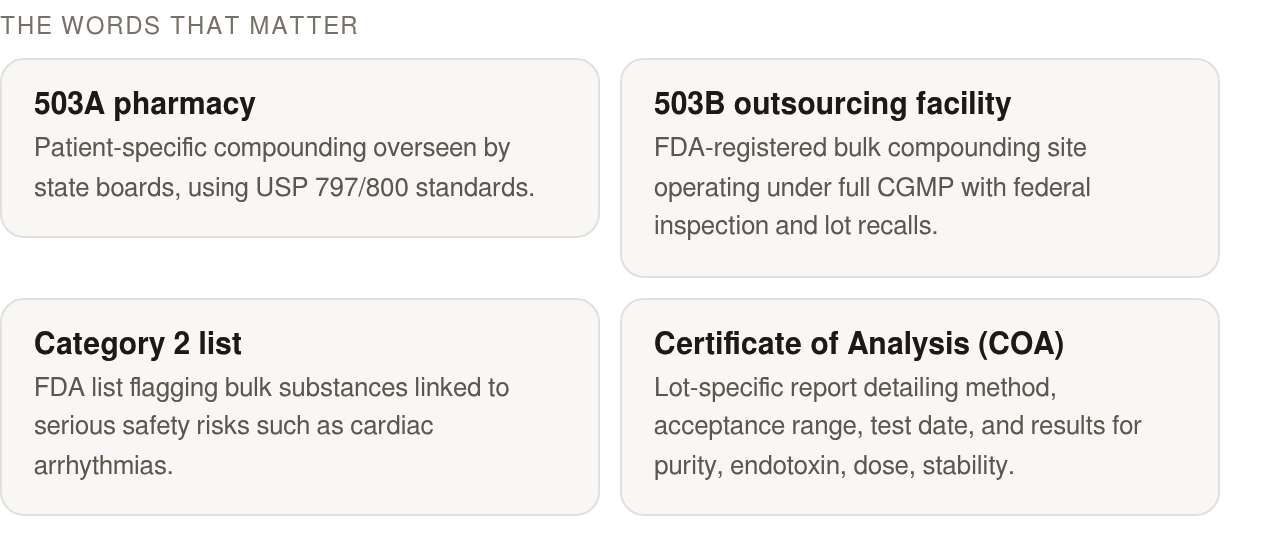
Use it as a starting point. A 503A operation can serve a legitimate need, but its documentation may be organized around individual prescriptions rather than production batches. A 503B facility may provide more batch-level documentation, which some buyers value for longer protocols.

What actually separates the two
503A: traditional compounding for a specific patient prescription, regulated mainly by state boards; USP <797> and <800> apply only when the preparation falls within their scope. 503B: registered outsourcing facilities that may produce larger batches under CGMP, with FDA inspection authority and batch records; recall procedures vary.

The practical difference often comes down to traceability. A 503B batch may have lot numbers, retained samples, and batch-level testing documentation, depending on the facility and product. A 503A dispensed product may have less lot-specific documentation, which can make a lot-level traceback more difficult.
| Compliance dimension | 503A pharmacy | 503B facility |
|---|---|---|
| Primary oversight | State pharmacy boards, typically | FDA-registered and subject to inspection, depending on status |
| Manufacturing standard | State board rules; USP <797>/<800> only if in scope | CGMP where applicable |
| Batch records | Varies | Generally more batch-level documentation |
| Lot traceability | Varies | Often documented, but verify |
| Recall procedures | Varies | May have formal recall procedures |
| Third-party potency testing | Optional | Often expected, but not guaranteed |
Why FDA peptide warnings shape which brand you trust
The FDA publishes a Category 2 list for bulk drug substances that may pose significant safety risks in compounding. Some entries have been associated with serious adverse events. Whether BPC-157 and TB-500 are currently on that list should be confirmed directly against the agency’s current list.
Where the agency publishes rationale for a listing, it often centers on identity, potency, and impurity questions. That reasoning can also serve as a testing checklist for other peptides. Aggregation, peptide-related impurities, and identity confirmation are examples of issues a third-party panel may measure, but requirements depend on the product and route.
Does coming off Category 2 mean FDA approval?
No. A removal from Category 2 generally withdraws a safety-risk designation. It does not, by itself, add a substance to the 503A bulks list or constitute FDA approval. Regulatory status can shift over time.
A vendor marketing these capsules as „FDA-approved“ or newly „legal“ may be overstating the status, and that can read as a red flag. A favorable regulatory status for one substance is not a safety endorsement for compounded peptides generally.
Some providers describe their products as research and educational material and say they use biomarker data to guide protocols. For deeper protocol detail, some providers publish on the BiohackNow blog.
Key takeaways:
- 503B facilities may be subject to CGMP and FDA inspection; 503A pharmacies are typically state-regulated. Verify current status.
- Check the current Category 2 list; other substances may remain flagged for safety concerns.
- Treat „FDA-approved“ peptide capsule claims as a warning sign, not proof of quality.
- Ask for product-specific testing for purity, impurities, and identity; the specific panel depends on product and route.
The four numbers that separate a real capsule from a repackaged one
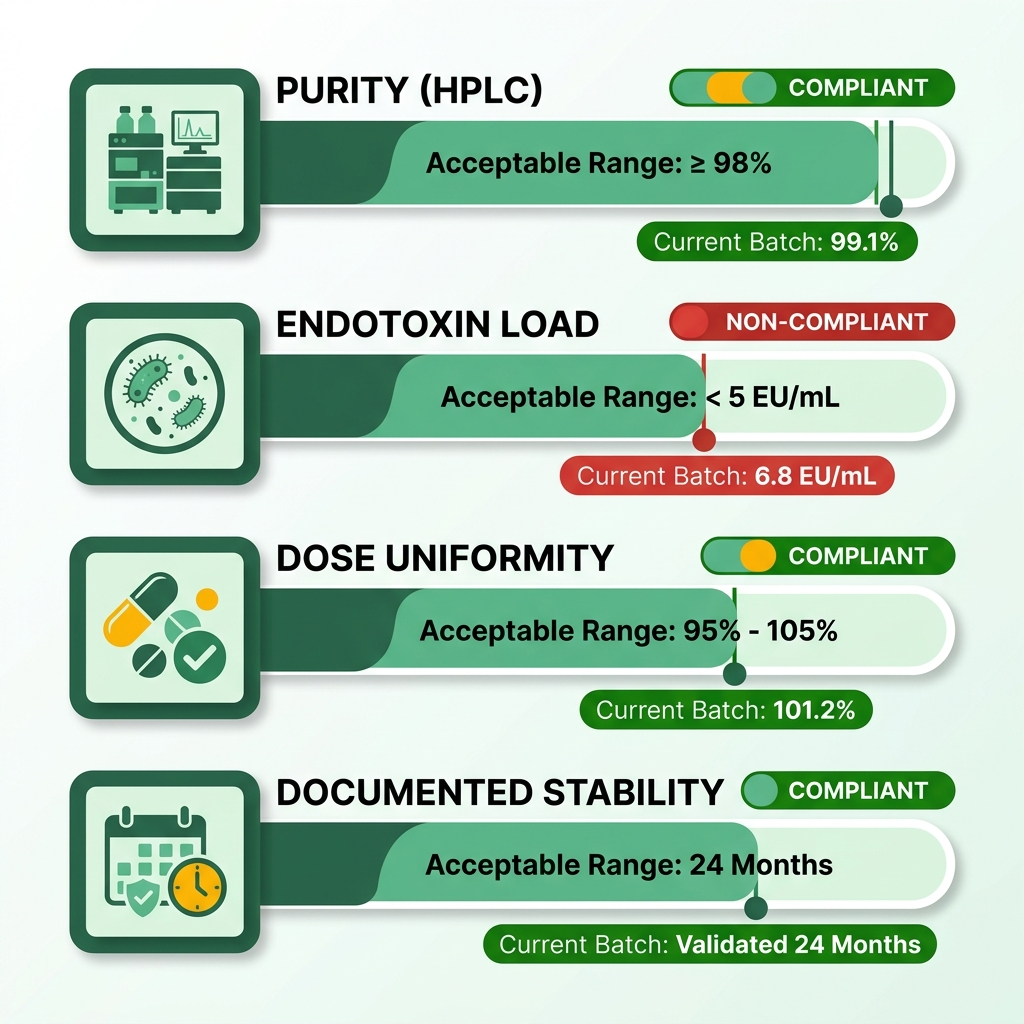
A more complete quality review may include purity testing, endotoxin data where relevant, verified dose uniformity, and documented stability across its shelf life. Some providers supply a Certificate of Analysis (COA) tying these results to a specific lot; if not, ask whether one exists.
Read the COA line by line, not as a checkbox. The strongest ones name the analytical method, the acceptance range, the test date, and the lot number, then tie every result back to that single lot. A COA that reports a percentage without stating the method behind it, or reuses one generic certificate across multiple lots, may not have been generated for the product in your hand. Method transparency and lot specificity are what let you compare two brands on equal terms.
The purity numbers that actually matter
Purity: the percentage of the labeled peptide present, with everything else counted as impurity. For an oral capsule, a chromatogram showing a single dominant peak can support purity, but identity confirmation generally requires a separate method. Ask what spec and method the provider uses.
Aggregation and related impurities are examples of failure modes that may matter for compounded peptides. Ask for the supporting chromatogram, not a summary line claiming „high purity.“ A clean chromatogram with minimal secondary peaks may indicate better characterization, but it is only one part of the picture.
Endotoxin and stability data sort the serious brands
Endotoxin testing: a Limulus Amebocyte Lysate (LAL) assay that quantifies bacterial endotoxin, reported per batch. Endotoxin limits are typically more relevant for injectable products; whether an oral capsule requires or reports this test varies by facility and product.
Stability data may be especially useful for multi-month protocols. A peptide that degrades on the shelf could lose potency and generate impurities, though the specific risks depend on the product. Look for temperature-stress results and a stated shelf life supported by time-point testing, if available.

| Quality attribute | What to look for | Why it matters for long-term use |
|---|---|---|
| Purity (HPLC or comparable method) | Single dominant peak, minimal secondary peaks | Supports purity; identity may need separate confirmation |
| Endotoxin (LAL) | Quantified per batch where relevant | Contamination risk, depending on route |
| Dose uniformity | Fill-weight tolerances stated | Consistency across capsules |
| Stability | Temperature-stress + shelf life | Helps assess potency over a long protocol |
| Lab accreditation | ISO 17025 or comparable third-party | Independent results, but confirm scope |
„FDA-approved“ is a tell, not a selling point
Watch how a brand talks about legality. Removal from a safety-risk list generally withdraws a designation; it does not, by itself, add a peptide to the bulks list or make it FDA-approved. A brand marketing these capsules as „FDA-approved“ may be misrepresenting the status.
That phrasing can serve as a diagnostic signal. A manufacturer with strong documentation can show accredited-lab COAs and batch records; it may not need approval language that does not exist. Test documentation generally beats marketing assertions.
Comparing the leading brands: what the honest ones hand you first
Naming a single winner here is harder than most roundups admit. A careful review looks for capsule makers that publicly post their 503A or 503B status, their certifications, and their actual batch test results. What separates a serious provider from a filler listing is how much of that record they hand you before you ask. A brand that fronts its documentation is telling you it expects scrutiny and can survive it.
Rather than repeat batch numbers we cannot verify, this section explains how to score providers and where the real dividing lines fall. The verification tier a brand sits in tells you more than any claim on the label.
Disclosure is what separates a brand from a reseller
A brand worth considering makes three things easy to find: its compounding classification, its testing partner, and a lot-specific COA. When a vendor hides behind „lab tested“ with no document attached, count it as a fail. You can’t audit a claim you can’t read.
Some buyers weight 503B outsourcing facilities higher for long-run protocols because those facilities are generally described as operating under CGMP with batch-level records and FDA oversight. If a 503B facility provides purity and endotoxin data, that data may reflect the whole lot rather than a single prescription. For older adults dosing for months, lot-level documentation may be one useful safety margin, but verify the specific facility.
How we rank providers by verification tier
This framework can be applied to any capsule seller before recommending it to someone running a longevity stack. Match a candidate against these tiers instead of trusting a „top brand“ badge.
| Provider profile | Oversight | Testing you should demand | Best fit |
|---|---|---|---|
| 503B outsourcing facility | FDA-registered, CGMP, federal inspection — verify current status | Lot-specific purity, endotoxin where relevant, dose uniformity | Long-term protocols when documentation is available |
| 503A compounding pharmacy | State pharmacy board, typically | Per-prescription documentation where available | Short, physician-directed courses |
| Research-only reseller | Usually none; not for human use | Rarely any | Avoid for ingestion |
This article does not audit a single brand’s batch results. When you’re weighing any provider’s capsules for ingestion, use the tiers above to press for documentation that matters.

Skip any brand that won’t show its COA
Pricing, subscriptions, and cold-chain shipping may matter, but they can be tie-breakers, not primary criteria. A cheaper capsule with no verifiable quality data isn’t a bargain. It’s an unknown.
Shortlist providers that publish or provide lot-matched documentation, then compare cost per 30-day supply among the survivors. If a review thread praises a brand’s „results“ but nobody can point to a COA, weight that feedback lightly. Anecdotal reviews without a COA tell you how someone felt, not necessarily what was in the capsule.
Why an aging body changes the math
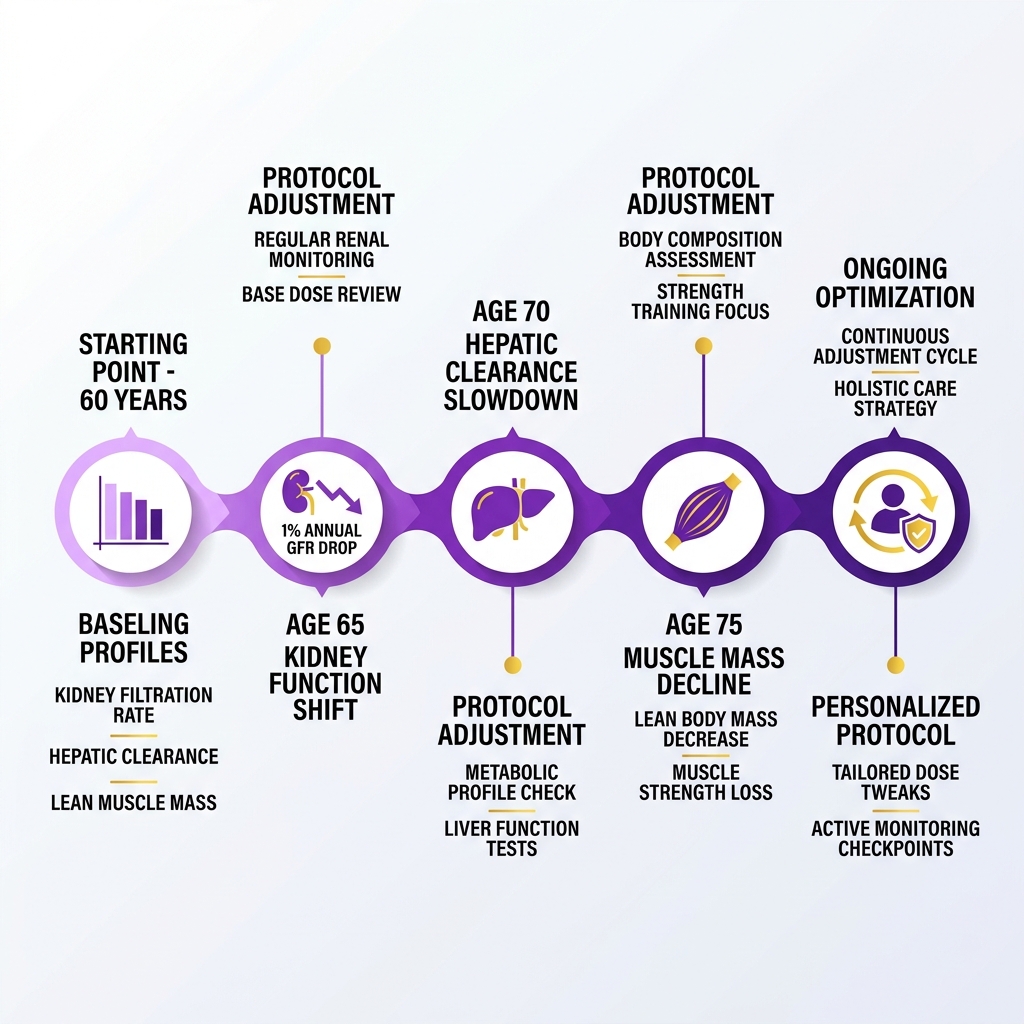
Some longevity programs are built around the premise that for someone running a protocol into their 60s and 70s, personalized attention may be a safeguard rather than a marketing perk. That view shapes how these programs assess, guide, and adjust protocols.
The reason commonly given is physiology. Some physiological changes can occur with age, such as gradual changes in kidney function, liver clearance, and body composition. Those shifts may change how a body processes some compounds, which is why a protocol calibrated to individual factors may matter more than an off-the-shelf dose for some older adults.
Why older adults need both a prescriber and a purity check
One consideration is clinical accountability: a prescriber may retain responsibility for the prescribing decision regardless of which pharmacy compounds the preparation. Reported safety concerns for some peptides can involve cardiac or metabolic effects, which may be relevant for patients with existing comorbidities. However, any documented harms should be reviewed for the specific substance and route.
Stack those considerations and the conclusion is that medical necessity and independent quality verification can both matter, not either/or. Some programs pair clinical consultation with a protocol built around a person’s own bloodwork and biomarkers.
What a personalized approach can cover
Some personalized approaches start with individual data. They may track a range of biomarkers—such as hormones, gut health, and other measures—and use them to guide recommendations. The goal is that the plan on paper should still mean something for the body it’s built for.
Longevity is a moving target, so some programs adapt protocols over time and may draw on practices from different regions. A plan that fit at the start may need adjusting mid-protocol. A single snapshot may tell you little about where your body is three months later; reassessment can keep a protocol tied to evolving data.
How a data-driven program compares
| Criterion | Typical Reseller | What Serious Buyers Should Demand |
|---|---|---|
| Compounding classification | Rarely disclosed | Disclosed upfront |
| Batch-level COA | Often missing | Requested for every lot |
| Independent third-party testing | Uncommon | Confirmed before use |
| Temperature-controlled shipping | Inconsistent | Documented in transit |
| Ongoing re-testing | Absent | Scheduled |
| Prescriber-led protocol | Optional | Paired with clinical oversight |
The table is not meant to stack the deck; it maps the dividing lines discussed above.
A personalized program may be most relevant for an older adult on a months-long longevity protocol who wants clinical oversight and a data-driven plan. An experienced athlete already working with a prescriber may prefer a bare 503B fill, and that may be fine.
For anti-aging use in a body that is less forgiving of guesswork, some buyers prioritize clinical guidance over the cheapest label on the market.

Reading a listing for red flags before you buy
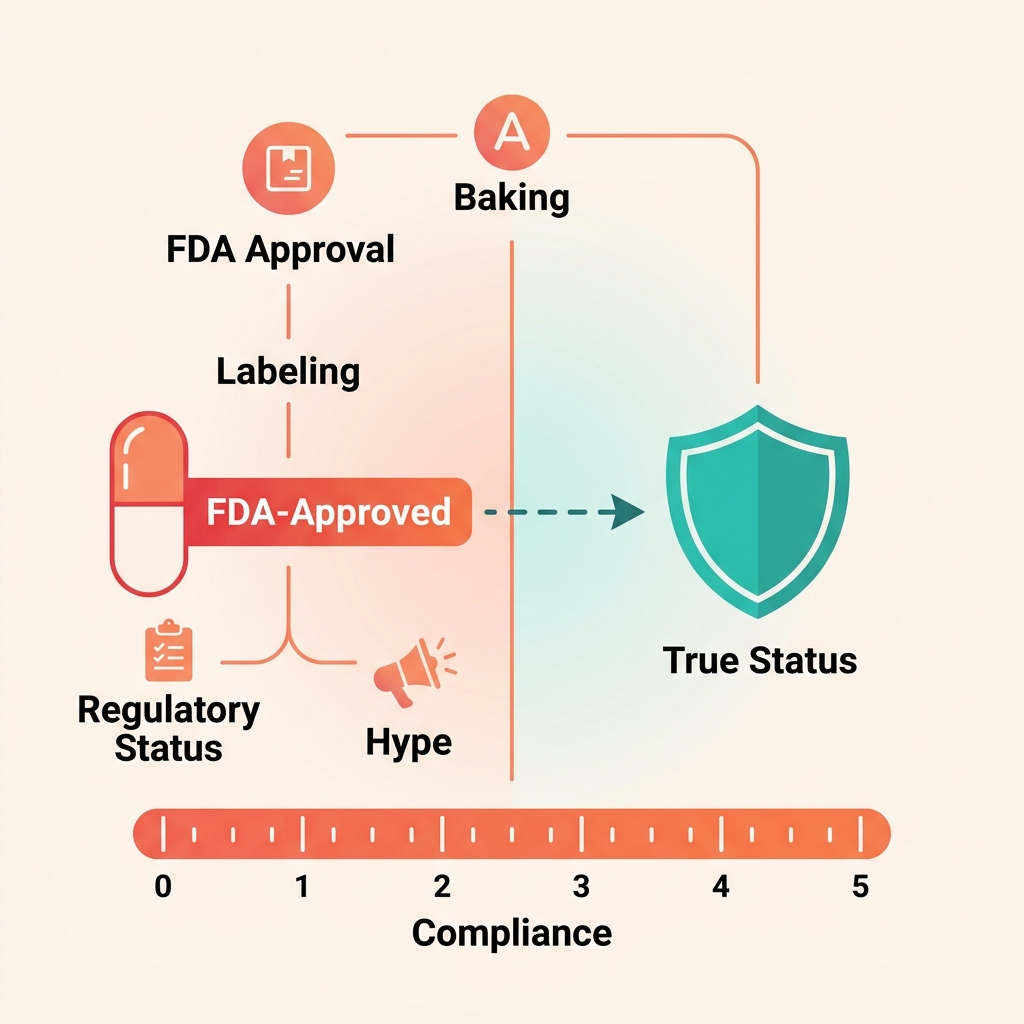
The most useful red flag isn’t buried in fine print. It’s the word „approved“ on the label. Some suppliers spin regulatory nuance into approval language for peptides that may not carry that status. It isn’t approval.
A substance’s placement on or off the FDA’s Category 2 list generally concerns bulk drug substances used in compounding. That status does not, by itself, add anything to a bulks list or make a compounded peptide FDA-approved. So when a listing shouts „now FDA-approved“ or „newly legal,“ treat the claim as a warning, not a credential. A brand that misreads its regulatory status may also misread a Certificate of Analysis.

An „FDA-approved“ claim marks a seller who didn’t read the rules
The Category 2 list is a regulatory sorting mechanism for bulk drug substances that may present significant safety risks in compounding. Absence from it, if confirmed, is a regulatory fact, not a purity guarantee. The two describe different things: one is a regulatory status, the other is a measured property of the powder in front of you.
Hold onto the distinction. A favorable legal position says nothing about the contents of a specific capsule. A seller who blurs the two may be telling you how much they understand about what they’re selling.
What a Certificate of Analysis should confirm
Common quality concerns for poorly characterized peptides suggest what testing may cover. Aggregation, peptide-related impurities, and identity confirmation are examples of issues a COA may address. The specific tests should fit the product and route.
The two-minute listing audit
| Red flag on the listing | What a legitimate brand shows instead |
|---|---|
| „FDA-approved“ or „newly legal“ claims | Accurate 503A or 503B classification, no approval language |
| No lot or batch number | A specific lot tied to a downloadable COA |
| Vague „made in a GMP facility“ | Named facility with documented CGMP and inspection history |
| No purity method listed | Purity percentage with method stated per batch |
| No aggregation or impurity data | Impurity and identity information on the COA where relevant |
Some substances on Category 2 have been associated with serious heart problems, including arrhythmias and electrolyte disturbances. Different molecules than BPC-157 or TB-500, but they illustrate why product-specific testing may matter.
For an older adult running a protocol for months, that is an argument for batch-level documentation over marketing claims. A brand that hides its paperwork may have already answered the question.
Frequently Asked Questions
Can I legally buy BPC-157 and TB-500 capsules without a prescription?
Regulatory status can change. Being off or on the FDA’s Category 2 safety-risk list is a regulatory fact, not an approval or a blanket invitation to buy without a prescription. These peptides may not be on the 503A bulks list and may carry no FDA approval. Research-only sellers may label material not for human use. Any vendor calling capsules „newly legal“ may be misreading the status, which is a reason to look for providers with a prescriber and documented testing.
Is a 503A pharmacy ever the better pick over a 503B facility?
A 503A pharmacy may fit short, physician-directed courses where a specific prescription drives the compounding. It is generally overseen by state boards; USP <797> and <800> apply only when the preparation is in scope. Per-prescription documentation may be available. For months-long protocols, a 503B facility’s batch records, CGMP status, and potentially lot-level documentation may offer more consistency, but verify the specific facility.
What should I do if a brand’s Certificate of Analysis looks generic?
Treat a reused certificate as a red flag. A COA that reports a purity percentage without naming the analytical method, or recycles one document across multiple lots, may not have been generated for the product you’re holding. Strong paperwork usually names the method, acceptance range, test date, and a specific lot number so results can be tied back to a single batch.
Why does age change how these peptides should be dosed?
Age-related changes can alter how some people process compounds, so an off-the-shelf dose may be less predictable. A protocol calibrated to individual metabolism and bloodwork may matter more for some older adults than a fixed product label, but the specific dosing decision should come from a prescriber.
Does an HPLC purity number alone tell me a capsule is safe?
A high purity percentage is helpful but not sufficient. Purity testing can support a purity claim and flag some impurities, but identity may require separate confirmation. A complete picture may also include endotoxin data where relevant, stated dose uniformity, and stability data from time-point testing. A capsule can hit a strong purity spec yet still degrade on the shelf or carry contamination the summary line never mentions.
If BPC-157 and TB-500 were never flagged, why demand impurity testing?
The reasoning behind flagged substances can offer a checklist for other peptides. Aggregation, peptide-related impurities, and identity confirmation are examples of manufacturing concerns across compounded peptides, regardless of Category 2 status. A third-party panel may measure those potential failure modes, because a favorable regulatory position says nothing about the contents of a specific capsule.
How much should price and shipping factor into my decision?
Pricing, subscriptions, and cold-chain shipping may be tie-breakers, not primary criteria. A cheaper capsule with no verifiable quality data isn’t a bargain; it’s an unknown. Shortlist providers that publish or provide lot-matched documentation, then compare cost per 30-day supply among those survivors. Reviews praising „results“ without a linked COA tell you how someone felt, not necessarily what was in the capsule.
Free 15-Minute Discovery Call
Ready to take the guesswork out of your health?
Book a free 15-minute call with Monika to talk through your goals, what testing makes sense for you, and the right next step. No pressure, just clarity.
Book Your Free CallFor educational purposes only. Not medical advice.