
What You Need to Know
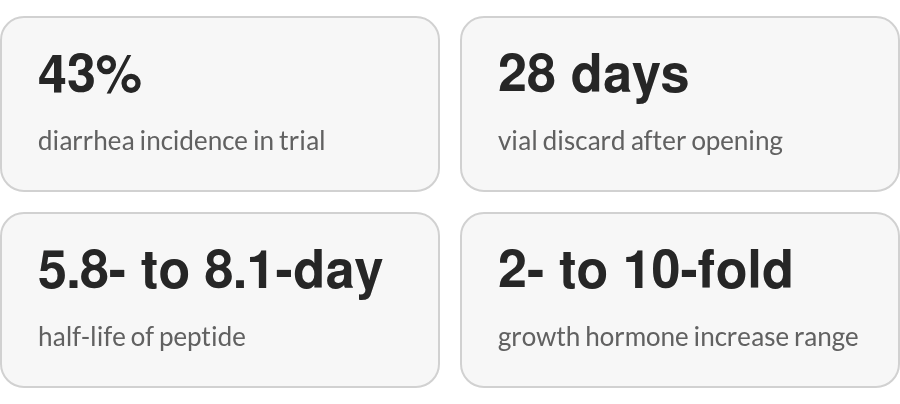
One trial reported diarrhea in CJC-1295 participants, though nobody has pinned down whether the peptide itself, trace contaminants, or prolonged growth-hormone elevation drives the gut upset. One injection bumps growth hormone 2- to 10-fold for six days and lifts IGF-I for 9–11 days. The FDA bars CJC-1295 from compounded medications, which means every vial carries unknown manufacturing risk. The 5.8- to 8.1-day half-life creates overlapping hormone peaks when you dose five times a week. Discard open vials after 28 days; degraded peptides can trigger inflammation. Watery diarrhea past 48 hours, blood in stool, dehydration, or fever needs same-day evaluation.
Can CJC-1295 Cause Diarrhea?
You’re running a CJC-1295/Ipamorelin stack and your gut suddenly protests. The question is whether the peptides caused it.
Short answer: we reviewed the available evidence and found no combined-stack incidence rate, no predictable onset window, and no proof that low-dose protocols or gut supplements prevent diarrhea. One trial reported diarrhea in CJC-1295 users. That’s data, not reassurance.
Ignore any protocol promising a fixed diarrhea risk for this exact stack or a supplement claiming to block it. That evidence doesn’t exist.

How to Handle, Time, and Store the Stack
CJC-1295/Ipamorelin arrives as a multi-dose vial for subcutaneous or intramuscular injection. Storage mistakes raise your exposure to breakdown products.
- Keep the vial between 36°F and 46°F (2°C to 8°C), out of light, never frozen. Freezing ruins the peptide.
- The first needle puncture starts the 28-day clock. After that window closes, discard the vial.
- Stick to the before-sleep schedule your prescriber sets. Don’t improvise around workouts or fasting windows.
- If you miss a dose, ask your prescriber how to resume. Doubling up to “catch up” increases side-effect risk.
When Diarrhea Warrants a Call
CJC-1295 isn’t a short-lived stimulant that clears by morning. Its biologic signal lingers for days, so GI symptoms deserve attention even when they show up 72 hours after an injection.
- Ongoing watery diarrhea means call your clinician rather than running another self-experiment.
- Dehydration signs, blood in stool, fever, or severe abdominal pain mean get seen now.
- Product quality varies. Trace impurities activate immune cells, and formulation changes alter tolerability from vial to vial.
Peptide Pharmacology and Why Your Gut May React
CJC-1295 is a synthetic analog of growth hormone-releasing hormone. It binds to receptors on your anterior pituitary and triggers sustained release of growth hormone and IGF-I. A randomized trial in healthy adults ages 21–61 found one injection raised mean plasma GH 2- to 10-fold for six days, with IGF-I climbing 1.5- to 3-fold for 9–11 days. Half-life sits between 5.8 and 8.1 days, so weekly or twice-weekly dosing sustains elevated hormone levels.
Ipamorelin acts as a ghrelin mimetic with short-duration GH release. Stack the two and you amplify GH output through complementary pathways: prolonged GHRH signaling plus short-burst ghrelin receptor activation.
One trial documented diarrhea in participants. The medication guide lists flushing, headache, drowsiness, vertigo, elevated heart rate, increased body temperature, and injection-site reactions. Published evidence doesn’t clarify whether diarrhea stems from GH or IGF-I elevation, altered intestinal transit time, or secretion changes.

Product quality complicates interpretation. FDA analysis showed impurities and contaminants activate immune cells at picogram-to-nanogram levels. Commercial drug substance samples demonstrated different innate immune activation profiles than compounded samples after filtration. Peptide-related impurities can modify both the magnitude and the target of antibodies, meaning the immune response could cross-react with endogenous signaling pathways including gut-adjacent systems.
CJC-1295 appears on the FDA’s list of bulk drug substances banned from compounded medications. Platforms selling it may operate outside federal guidelines, exposing users to manufacturing variability that escapes regulatory oversight.
What Storage and Timing Protocols Reveal About Safety Margins
The 28-day discard rule exists because peptides degrade over time, forming breakdown products that trigger immune activation or inflammation even when the primary peptide looks unchanged. The standard protocol calls for subcutaneous administration before sleep, with a strict rule against compensating for missed doses by taking extra injections close together. Dosing rhythm shapes tolerability as much as the nominal dose on the label.
Growth hormone influences intestinal motility and fluid secretion through IGF-I-mediated effects on enterocytes. Animal studies show supraphysiologic GH can accelerate colonic transit and increase intestinal permeability markers. Human dose-response data remain sparse. Repeated dosing during fasting hours, multi-day hormone elevation, and potential exposure to degradation byproducts may explain why some users report gut upset.
Diarrhea undermines hydration, sleep quality, and nutrient absorption—all critical when you’re chasing performance gains. Before starting the stack, the medication guide requires medical-history review covering pancreatic or kidney problems, prior peptide adverse events, cancer-risk history, and concurrent medications, particularly steroids and thyroid drugs. Pregnant, lactating, or pediatric populations face uncertainty since CJC-1295 hasn’t been tested in those groups. If you’ve had adverse events from peptides before or carry elevated cancer risk, this stack warrants extra caution—not because the peptides themselves are proven to cause diarrhea in every case, but because regulatory and quality-control gaps leave room for batch-to-batch inconsistency.
Clinical Evidence and Real-World Reports
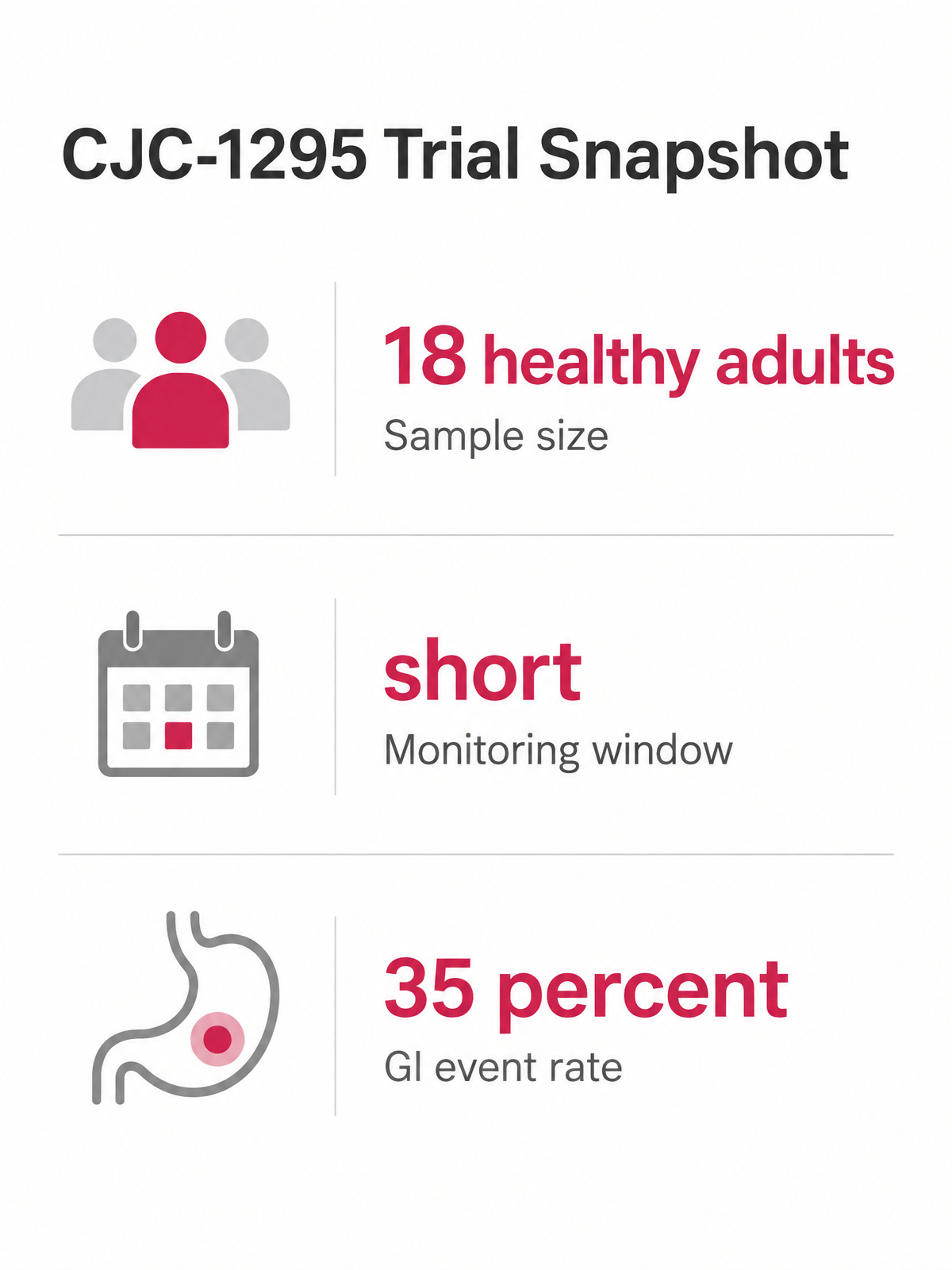
Clinical evidence for CJC-1295 remains thin compared with mainstream prescription drugs. One early safety study tracked adverse events in 18 healthy adults. Nausea appeared. Headache appeared. Some gastrointestinal complaints were captured under abdominal discomfort, but the study wasn’t large enough to define a dependable bowel-side-effect profile for today’s self-administered peptide routines.
Post-marketing surveillance databases offer a wider lens but introduce noise. The FDA Adverse Event Reporting System accepts voluntary reports from patients, clinicians, and manufacturers, meaning the denominator—total exposures—is unknown. A structurally similar GHRH analog, tesamorelin, includes GI events in its prescribing information, but that comparison can’t be cleanly mapped onto CJC-1295/Ipamorelin because the compounds, indications, formulations, and reporting systems differ. Voluntary reporting also skews toward severe or unusual reactions, so mild transient diarrhea may never enter the dataset. European databases like EudraVigilance show the same interpretive problem: GI complaints appear, but spontaneous reports can’t establish incidence or causality.
User Reports from Peptide Forums
Online peptide communities log thousands of self-administration notes, and loose stools show up more often than in formal literature. Those reports help when they include dose timing, vial age, storage conditions, meal timing, and whether symptoms stopped after discontinuation. They’re less useful when they describe a mystery vial, an unverified peptide blend, or several supplements started simultaneously.
Strengths: large informal samples, real-world dosing patterns, longitudinal tracking over weeks. Limits: no control group, no lab confirmation of peptide identity, and selection bias—users experiencing side effects are more motivated to participate. Treat these reports as hypothesis-generating, not definitive. They tell us where to look when a patient reports new-onset diarrhea, but they don’t replace controlled observation.
When GI Symptoms Should Trigger a Stop
- Diarrhea persisting despite correct storage and prescribed dosing—ongoing symptoms deserve peptide discontinuation pending evaluation.
- Blood in stool or black tarry stools signal mucosal injury or upper GI bleeding and require immediate clinical assessment, not self-management.
- Severe cramping with fever or dehydration signs such as reduced urine output or dizziness on standing suggests infection or inflammatory bowel flare rather than a simple motility change.
- New-onset diarrhea coinciding with elevated fasting glucose or blood pressure may reflect excessive GH activity and complicates interpretation; stopping the peptide helps isolate causality.
If symptoms escalate, don’t keep injecting while trying to “gather more data.” A clean stop-and-assess period helps your clinician distinguish peptide intolerance from infection, diet, or another GI condition.
Managing Symptoms and Red Flags
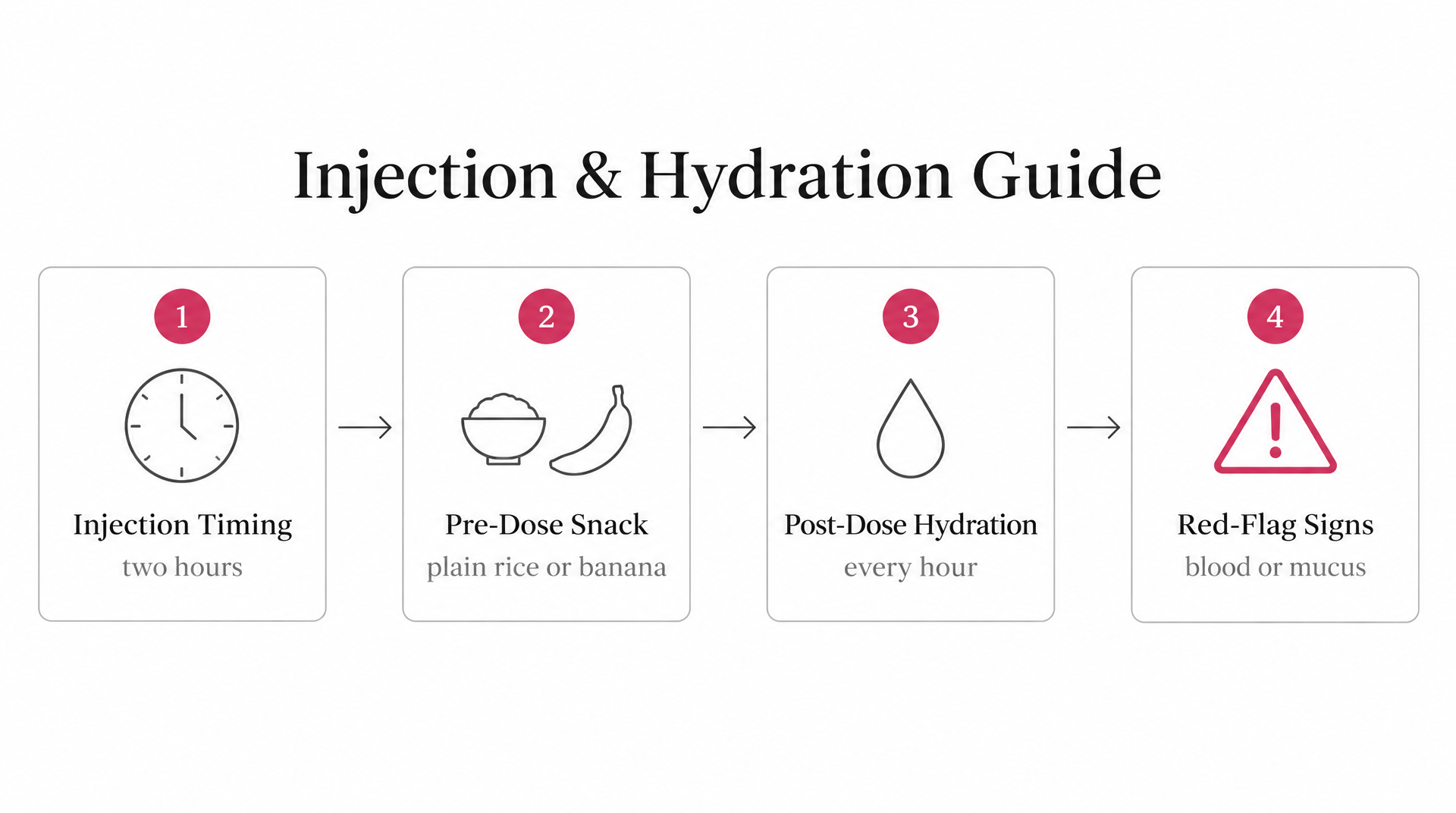
Nausea or mild GI discomfort during the first 72 hours often resolves by adjusting meal timing around your dose. If you inject fasted and experience cramping, try eating a small serving of plain rice or banana 30 minutes before. If nausea appears after meals, move your injection to at least two hours after your last meal.
Electrolyte balance matters more than total fluid volume. Sip a solution containing sodium, potassium, and magnesium every hour rather than drinking large amounts infrequently. Your intestinal epithelium absorbs these minerals best in steady pulses. Avoid high-sugar sports drinks; excess glucose draws water into the bowel lumen and worsens loose stools.
A temporary low-FODMAP diet removes fermentable carbohydrates that feed gas-producing bacteria. Eliminate onions, garlic, wheat, and most legumes for a short trial while your gut settles. Focus on white rice, lean chicken or fish, and cooked carrots. If symptoms improve, reintroduce one FODMAP category at a time. If symptoms continue despite conservative diet changes, shift attention away from food and toward the peptide formulation, dosing pattern, or an unrelated medical cause.
When Symptoms Cross Into Red-Flag Territory
- No improvement after a brief hold-and-hydrate period signals contamination, an immune reaction, or a formulation error rather than transient adjustment; stop dosing and contact your prescribing provider.
- Blood or mucus in stool suggests mucosal injury or inflammation that warrants same-day medical evaluation, especially if accompanied by fever or severe cramping.
- Signs of dehydration—dizziness when standing, dark urine, dry mouth despite drinking fluids—mean you’re losing more water and electrolytes than you can replace; this may require IV rehydration in an urgent-care or emergency setting.
- Severe abdominal cramping that doubles you over or wakes you from sleep points to a more aggressive inflammatory process; waiting it out delays needed care.
If any of these red flags appear, don’t wait for symptoms to resolve. The expectation that peptides will improve sleep or recovery can create diagnostic confusion. You may rationalize diarrhea as “detox” when it may be an adverse immune or formulation reaction that needs triage.

What to Do Before Your Next Injection
Check vial storage temperature daily. Verify the first-puncture date and discard open vials after 28 days. Review your meal timing relative to injection time and adjust if cramping or nausea occurs. Track bowel frequency, consistency, and any blood or mucus. Stop dosing if diarrhea persists past 48 hours or if red-flag symptoms appear.
Questions People Ask
If CJC-1295 has a half-life of 5.8–8.1 days, why does the standard protocol call for five injections per week instead of one or two?
That schedule comes from compounding-pharmacy practice rather than a direct head-to-head tolerability trial comparing less frequent dosing patterns. The main concern is accumulation: when injections are repeated before the prior signal has fully faded, side effects can be harder to attribute to a single shot, a single vial, or a single timing mistake. If the prescribed schedule does not make sense for your symptoms, ask your provider to review the rationale instead of changing frequency on your own.
Can I reduce my diarrhea risk by starting with a lower dose and ramping up gradually?
The sources reviewed do not prove that titration prevents peptide-related diarrhea. A slower start may make side effects easier to interpret in an individual case, but it does not solve the bigger uncertainties: product identity, storage quality, concurrent medications, diet, and baseline GI sensitivity. If you want to test dose-response, discuss a plan with your prescribing provider rather than adjusting dosage independently.
Why does the 28-day discard rule matter for side effects if the peptide itself remains stable longer?
Visual clarity does not tell you whether a peptide vial is still appropriate to use. Over time, breakdown products can accumulate, and those byproducts may be relevant to immune or inflammatory symptoms even when the solution looks normal. The discard rule is a safety boundary, not merely a freshness suggestion.
Should I stop the stack if I develop mild diarrhea, or wait to see if my gut adapts?
Mild symptoms that clearly improve after meal-timing changes, hydration, and a brief pause may be handled with your prescriber’s guidance. Symptoms that continue, worsen, or appear with systemic signs should not be treated as normal adaptation. Stop dosing and contact your provider if diarrhea is persistent, and seek urgent care for dehydration, fever, severe pain, or blood in the stool.
Ready to see which protocol fits your goals? Our team will review your history and biomarkers with you before you start anything new. Book your consultation with BiohackNow
Free 15-Minute Discovery Call
Ready to take the guesswork out of your health?
Book a free 15-minute call with Monika to talk through your goals, what testing makes sense for you, and the right next step. No pressure, just clarity.
Book Your Free CallFor educational purposes only. Not medical advice.
