
Quick Summary
You’re looking at two peptides—CJC-1295 and ipamorelin—that are often described as stimulating growth hormone release through different pathways. The theory: dual stimulation produces a stronger, more sustained GH pulse than either peptide alone. The reality: we don’t have peptide-specific dosing ranges, diarrhea rates, injection windows, reconstitution volumes, or hydration targets. What exists is limited human research on CJC-1295, and some sources describe the DAC form as staying in circulation longer than the non-DAC form. That difference may affect symptom timing, so generic timing advice may not apply equally to every product labeled CJC-1295. Direct trials have not established the best combined regimen or its long-term outcomes.
What the FDA Status Means for You
CJC-1295 may appear on an FDA list of bulk drug substances that are restricted from use in some compounded medications, but this is not the same as a single approval status. It is not FDA approved. Because regulatory status can differ depending on the form and the source, verify the current listing and your provider’s medical oversight before ordering.
The Diarrhea and Dehydration Risk You Should Monitor
GI upset—including diarrhea—is reported anecdotally, but the data do not provide peptide-specific incidence rates or thresholds. If diarrhea occurs, replace fluids and electrolytes promptly and monitor for dehydration. Do not push through severe or persistent diarrhea, blood in stool, fever, inability to keep fluids down, dizziness, confusion, or signs of dehydration. These are general red flags that warrant a pause and a call to your clinician, not peptide-cycle-specific thresholds.
- Contact your clinician if diarrhea is persistent or accompanied by blood, fever, or inability to retain fluids—these are warning signs that warrant professional review, regardless of peptide use.
- Track your hydration status daily by monitoring urine color, frequency, and any sudden drops in energy or persistent dizziness, since diarrhea accelerates fluid loss and the data do not supply peptide-specific daily fluid targets.
What You’re Actually Dealing With
- CJC-1295 may appear on an FDA list of bulk drugs restricted from compounding, so legality and medical supervision should be confirmed before use.
- Current research does not give a validated protocol for preventing diarrhea with this peptide combination.
- GI upset during peptide routines threatens adherence because skipped doses create noisy data and prevent fair protocol evaluation before quitting.
- Subcutaneous injection bypasses digestive absorption, but meals, hydration, training stress, and mixing technique can still complicate symptom tracking.
Why Diarrhea During a Peptide Routine Actually Matters
You’re three weeks into a new peptide routine, finally in a rhythm with your injections and your morning biomarker readings, when loose stools start derailing your mornings. That disruption is the real reason cjc 1295 ipamorelin diarrhea reports deserve a careful look, even though the evidence does not prove this stack commonly causes gut symptoms.
We treat diarrhea during any self-administered wellness routine as an adherence problem first. When your stomach turns, you skip a dose. Skip enough doses and your data gets noisy, your training suffers, and you can’t tell whether the protocol is working.
Why does diarrhea during a peptide routine matter?
Adherence. GI upset is one of the fastest ways people quit a regimen before it has a fair trial. Fluid and electrolyte losses from diarrhea can also drag down energy, blunt workout quality, and muddy how recovered you actually feel.
- Track whether symptoms line up with dose days, so you can tell a routine issue from a coincidence.
- Watch for fatigue, dizziness, or dark urine. These point to dehydration, not just an upset stomach.
- Note any drop in training output or recovery scores while symptoms persist.
Who should pay closest attention?
Athletes, biohackers, busy professionals, and anyone managing aging-related goals. You’re the readers most likely to run structured protocols and track results closely.
Timing and mixing are worth reviewing when you troubleshoot. Treat them as variables to examine with your clinician, not proven fixes for peptide-related diarrhea.
Timing Your Injections to Minimize GI Issues
Growth hormone secretion is often described as following a natural pulse pattern that may peak during deep sleep. That’s the physiological backdrop behind injecting CJC-1295 and ipamorelin before bed—you’re riding the body’s existing rhythm. The available evidence, however, does not establish that a specific injection window reduces cjc 1295 ipamorelin diarrhea or other GI symptoms. No consensus dosing protocol from peptide-focused medical societies appeared in the research we reviewed.
Because half-lives may differ—especially between DAC and non-DAC forms, with non-DAC sometimes described as a modified GRF—symptom timing may not transfer from one formulation to another. Any timing advice that treats all CJC-1295 products as interchangeable should be viewed as unreliable until your prescriber reviews the exact form you have.
Because these molecules are injected subcutaneously, meal timing does not change how the peptide enters your bloodstream the way it would with oral supplements. But meal timing still matters as a symptom variable. If you inject immediately after a heavy dinner and then notice loose stools, you’ve created an experiment worth logging—not because we have proof that pre-meal injection prevents diarrhea, but because your own symptom log is the only data your clinician can use to guide timing adjustments.
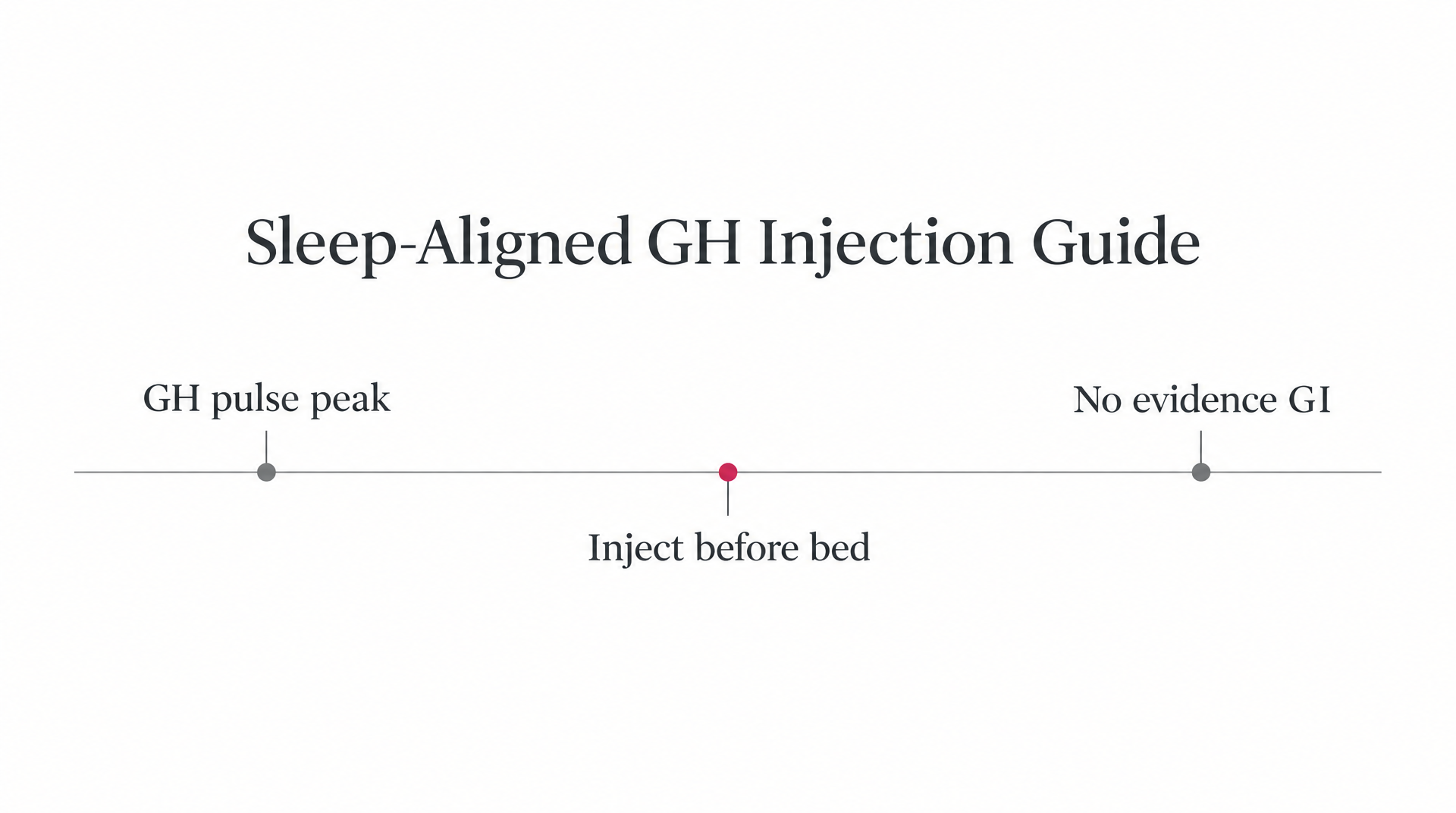
What Should You Track When Adjusting Injection Timing?
-
Record the clock time of each injection so you can spot patterns if GI symptoms appear on certain days or after certain intervals.
-
Log what you ate within two hours before and after the injection, including portion size and meal composition, to see whether high-fat or high-fiber meals correlate with stool changes.
-
Note your hydration intake for the 24 hours surrounding the injection, since dehydration can independently cause constipation or loose stools and might confound your timing experiment.
-
Document any dose or reconstitution changes in the same log so you don’t mistake a concentration error for a timing effect.
Work with a qualified clinician before shifting your injection schedule. Moving from evening to morning, or dividing administration differently if your prescriber approves, changes how your protocol overlaps with sleep, exercise, and meals. Those variables all influence how you feel and how consistently you can follow the plan.
Proper Mixing Techniques for CJC‑1295 and Ipamorelin
The available evidence does not provide manufacturer-specific reconstitution protocols for CJC-1295 or ipamorelin. That means you’ll follow the dispensing pharmacy’s label for diluent type, volume, concentration, and beyond-use dating. Those instructions matter because peptides degrade when mishandled, and a contaminated vial can introduce bacteria that trigger gut symptoms—including cjc 1295 ipamorelin diarrhea—unrelated to the peptide itself. Your job is to follow the label exactly and avoid the sterility errors that turn a clean protocol into a guessing game.
What Mixing Errors Should You Avoid?
We’ve listed general aseptic-handling principles below, not forum-reported prevalence rates. These are safety fundamentals, and they apply whether you’re reconstituting peptides, insulin, or any other injectable.
- Use only the diluent specified on the pharmacy label—bacteriostatic water, sterile water, or saline—because swapping carriers without stability data can alter pH and degrade the peptide before you inject it.
- Check that your diluent vial and syringe are sterile and within their expiration window to prevent introducing bacteria that multiply during storage and produce endotoxins linked to GI upset.
- Avoid touching the rubber stopper or syringe tip with bare hands; even clean fingers carry skin flora that contaminate the solution.
- Follow the label instruction on agitation—most peptide vials call for gentle swirling rather than shaking—because vigorous shaking can denature fragile peptide bonds and reduce potency.
- Label the vial immediately with the reconstitution date and final concentration so you don’t accidentally inject an expired or incorrectly dosed solution later.
Storage conditions should match the dispensing pharmacy’s instructions. Without manufacturer stability data in the provided sources, we can’t specify exact temperature ranges or light-exposure limits for either peptide.
Hydration Management & Dehydration Monitoring
When loose stools occur during any wellness routine, fluid loss becomes a practical problem before it becomes a clinical one. Because CJC-1295 and ipamorelin do not come with a research-backed fluid-replacement formula, the safest approach is to treat hydration as a monitoring task rather than a fixed target.
Monitor Fluid Balance Without Overcomplicating It
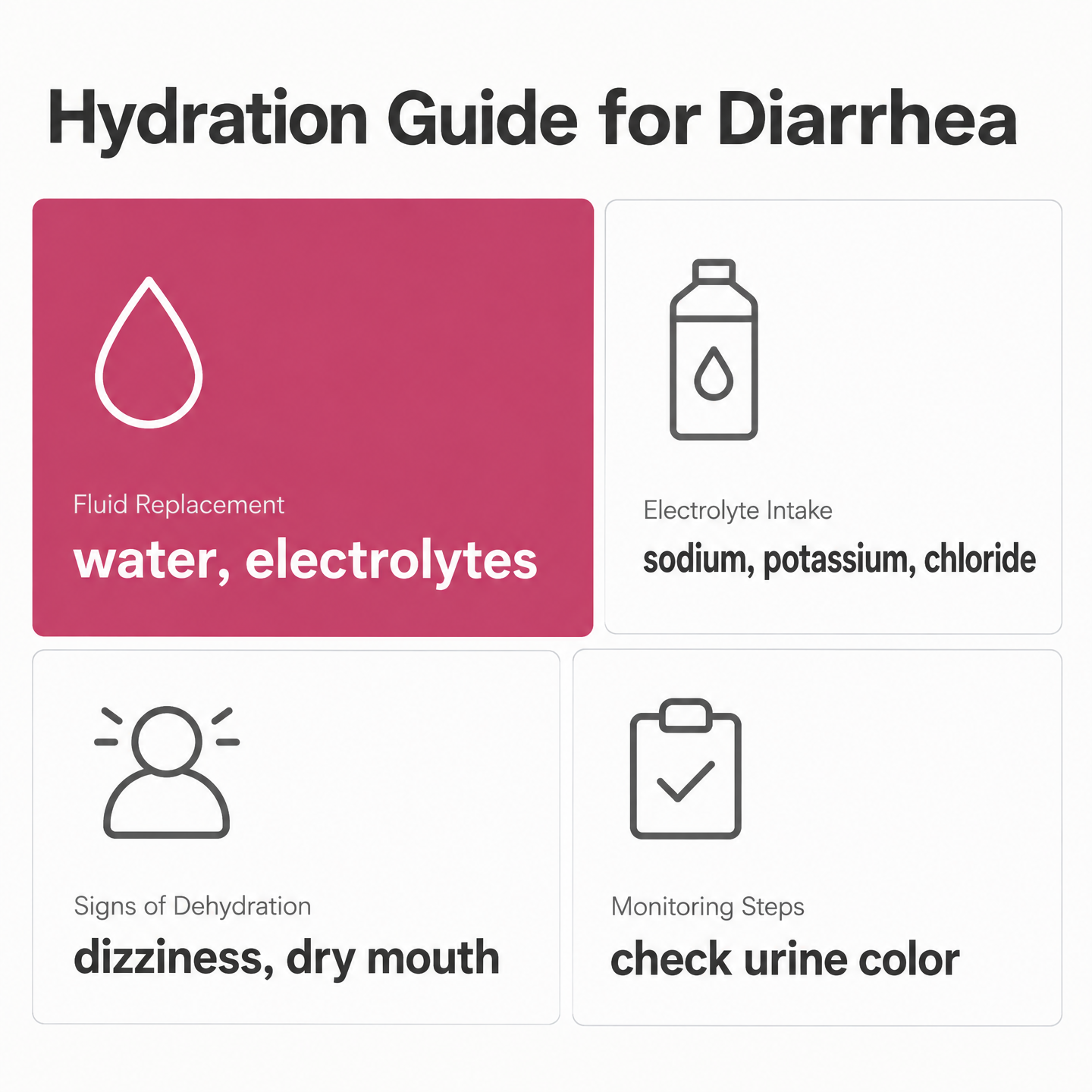
- Replace lost fluids with water, and add electrolytes when loose stools are repeated rather than isolated.
- Use urine color as a rough daily check: lighter usually suggests better fluid status, while darker urine should prompt you to review intake.
- If you already use a wearable, look for unusual shifts in resting heart rate, heart-rate variability, or overnight temperature as prompts to reassess recovery and fluid balance. These signals are not validated as peptide-specific dehydration markers, but they can add context to your symptom log.
Recognize When Self-Monitoring Isn’t Enough
- Contact your prescribing clinician when diarrhea does not resolve, when hydration signs worsen, or when symptoms appear alongside illness markers already flagged in the summary above.
- Avoid making your own changes to peptide dose, reconstitution volume, or injection schedule based solely on GI symptoms; those adjustments require clinical review because we lack consensus protocols to guide them.
We offer general oral rehydration advice, not athlete-specific electrolyte formulas tied to CJC-1295 use. If lifestyle variables—diet, exercise intensity, sleep—already shape how well someone responds to growth-hormone-releasing peptides, then hydration status likely plays an outsized role in determining who experiences gut symptoms. That makes careful fluid monitoring more important than guessing at dose changes.
Adjusting Dosage & When to Seek Medical Advice
If the stack is causing loose stools, shouldn’t a lower dose fix it? The evidence we reviewed does not link higher CJC-1295 or ipamorelin doses to higher rates of GI side effects. No dose-response curve exists for cjc 1295 ipamorelin diarrhea, so we won’t pretend one does.
That matters for one practical reason. If there’s no established dose-response relationship, self-titrating down to “fix” diarrhea is a guess, not a protocol.
Should You Adjust Your Own Dose?
No. We don’t recommend changing your dose or injection frequency on your own. Your prescriber set your regimen with your biomarkers and goals in mind, and they’re the right person to adjust it.
If diarrhea keeps coming back or won’t quit, contact your prescriber. They can weigh whether to pause the peptides, lower the dose, stretch your injection intervals, review your mixing technique, or look for a cause unrelated to the stack entirely.
When Should You Seek Medical Care?
Some symptoms signal more than passing gut upset. Use the red flags listed in the Quick Summary as your baseline, and be especially cautious when GI symptoms interfere with hydration, daily functioning, or your ability to follow the prescribed plan.
- Escalating abdominal symptoms. Worsening pain or repeated vomiting should not be treated as a routine peptide inconvenience.
- Possible bleeding. Any stool appearance that suggests blood needs medical evaluation rather than at-home troubleshooting.
- Fluid-balance concerns. Faintness, confusion, palpitations, or sharply reduced urination can reflect dehydration or electrolyte disruption.
- Symptoms that recur after each attempted restart. A repeated pattern gives your clinician useful information and may justify pausing the regimen while other causes are reviewed.
- Any situation where you’re unsure whether to continue. When the evidence base lacks a peptide-specific algorithm, clinical judgment matters more than online dose tinkering.
Quick Questions, Straight Answers
Can I switch my CJC-1295 and ipamorelin injections from evening to morning if I’m experiencing GI symptoms?
Ask your prescriber before changing the schedule. Bring a log that shows injection times, meals, sleep, training, and stool changes so the discussion is based on patterns rather than a single bad morning.
If I reconstitute my peptide vial correctly but still develop diarrhea, does that mean the peptides are contaminated?
Not automatically. Correct handling lowers one risk, but it does not rule out diet changes, training stress, illness, or hydration problems. Your prescriber can help decide whether the vial, the protocol, or something unrelated deserves the closest review.
Should I add extra electrolyte drinks every day as a preventive measure while using this peptide stack?
Daily electrolyte loading is not automatically justified just because you are using the stack. Match fluid and electrolyte replacement to actual losses, then use your symptom log to avoid treating normal variation as a peptide side effect.
Free 15-Minute Discovery Call
Ready to take the guesswork out of your health?
Book a free 15-minute call with Monika to talk through your goals, what testing makes sense for you, and the right next step. No pressure, just clarity.
Book Your Free CallFor educational purposes only. Not medical advice.
