
In short: CJC-1295 No-DAC is a short-acting GHRH analog that clears fast, so it preserves your pituitary’s natural growth hormone pulses. The DAC version binds to blood albumin and keeps GH and IGF-1 elevated for days, far above normal levels. Ipamorelin is a ghrelin mimetic that adds a clean GH pulse without raising cortisol or prolactin. Human data on CJC-1295 is thin, and the anti-aging and skin claims do not hold up outside true GH deficiency. Keep the pituitary switched on too long, and receptors down-regulate. Higher daily doses buy you less, not more. CJC-1295 is still on the WADA Prohibited List, and the stack has no FDA approval for longevity uses.
Related Video
Watch: Real Dr Explains CJC-1295 + Ipamorelin – The CLASSIC Peptide Stack by This Is Not Covered – Dr. Ashley Froese
Two peptides, two angles on the same gland
CJC-1295 and Ipamorelin are research peptides that push your body to release more growth hormone. CJC-1295 without DAC (you’ll also see it labeled Modified GRF 1-29) is a GHRH analog. Ipamorelin is a ghrelin mimetic. Used together, they hit the pituitary from two directions at once.
Everything about the safety of this stack comes down to one number: half-life. The no-DAC version is short-acting and clears quickly. The DAC version, built on ConjuChem’s Drug Affinity Complex technology, bonds with blood protein and hangs around far longer. That single difference drives almost every safety question worth asking, especially for aging adults who want the longevity upside without days of sustained hormone elevation.
Why the half-life is the whole story
CJC-1295 No-DAC triggers a brief pulse of growth hormone, then clears fast. Because it’s short-acting, it works with your body’s own rhythm instead of overriding it. The DAC form binds to albumin and keeps GH and IGF-1 elevated for a much longer stretch. Studies on the long-acting analog document prolonged GH and IGF-1 secretion in healthy adults after repeated dosing. That sustained elevation is exactly what a shorter-acting peptide sidesteps.
Your pituitary releases GH in pulses for a reason. Force it to stay „on,“ and you invite receptor down-regulation. Push high daily doses, and the gland stops responding well, which wastes both the peptide and your money.
What the stack is trying to do in an aging body
Your natural GH output falls off with age, and this stack aims to nudge it back up. CJC-1295 raises the amount of GH released per pulse. Ipamorelin adds a clean pulse of its own without spiking cortisol or prolactin.
The longevity pitch is where you need to be honest. Anti-aging and younger-skin claims are largely unproven. The human data on CJC-1295 is limited, and reported perks like better sleep haven’t been established outside true GH deficiency.
So if smoother skin or a vague „feeling younger“ is your only goal, skip it. The evidence isn’t there. It also sits on the WADA Prohibited List, so competitive athletes shouldn’t go near it.
What this guide covers
| Section | Focus | For whom |
|---|---|---|
| Fundamentals | Definitions, half-life, mechanism | Newcomers to the stack |
| Human trial findings | Clinical data, adverse-event notes | Evidence-focused readers |
| Biomarker-guided dosing | Using IGF-1 to titrate | Aging adults optimizing longevity |
| Risks and unknowns | Serious vs. mild AEs, gaps | Cautious decision-makers |
Time to read: about 20 minutes. Difficulty: intermediate; a little hormone biology helps but isn’t required.
What you’ll walk away with:
- Why no-DAC differs from DAC on safety, not just duration.
- Why the thin human data and missing FDA approval matter when you weigh „no serious adverse reactions“ against the gaps that remain.
- Why IGF-1 is the biomarker to track when you personalize a protocol, instead of chasing a fixed microgram dose.
The idea to carry through the rest of this: the feature that makes no-DAC look „weaker“ is precisely what makes it the more physiological choice. Fast clearance preserves your natural GH pulse. That, more than any anecdote, is the real safety argument. For aging adults after durable results, tracking IGF-1 turns generic dosing into a feedback loop with a defined target. You can read more of our team’s peptide thinking on the BiohackNow blog.
The short half-life is the feature, not the flaw
Most guides file the no-DAC version under „weaker.“ We read it the other way. The short half-life is the whole point, and it changes how you should think about side effects from the first injection.
The no-DAC form of CJC-1295 has a much shorter half-life than the DAC version, which was engineered with a Drug Affinity Complex to bond with blood protein and linger. A peptide that lingers keeps your pituitary switched on well past its natural rhythm. Everything downstream follows from that.
Why a fast clearance protects you
Your body releases growth hormone in pulses. A short-acting peptide gives the pituitary a nudge and then gets out of the way, letting the pulse rise and fall on its own. The DAC form doesn’t do this. It produces sustained, above-physiological GH elevation that keeps IGF-1 rising.
The data on the long-acting form makes the trade-off concrete. In healthy adults aged 21 to 61, a single dose raised plasma GH two- to tenfold for six days or more, and IGF-1 stayed above baseline for up to eleven days. With repeated dosing, IGF-1 stayed elevated for nearly a month, with clear signs of accumulation.
That accumulation is where the risk lives. When GH runs too high for too long, you get the classic problems: fluid retention, joint and muscle pain, higher blood pressure, and a drift toward insulin resistance. The no-DAC form sidesteps most of this because it can’t accumulate the same way. Constant over-stimulation also backfires biologically, triggering receptor desensitization that wastes both peptide and money.
Reading the actual side-effect numbers
The trial record looks contradictory at first. One report calls the long-acting analog „safe and relatively well tolerated“ with no serious adverse reactions. The same body of research also notes that mild adverse events were common. Both describe the same data.
The contradiction dissolves once you separate severity from frequency. Nothing serious happened, but mild effects were frequent: injection-site reactions, headache, diarrhea, and vasodilatory flushing. Self-reported effects also include flu-like symptoms, irritability, nausea, and hives. Tolerability was best in the moderate 30 to 60 µg/kg range, which tells you dose discipline matters more than the compound itself.
Titrate to IGF-1, not to a fixed dose
This is where our approach for aging adults parts ways with generic protocols. IGF-1 is the biomarker we track to steer therapy.
A feedback-controlled plan looks like this:
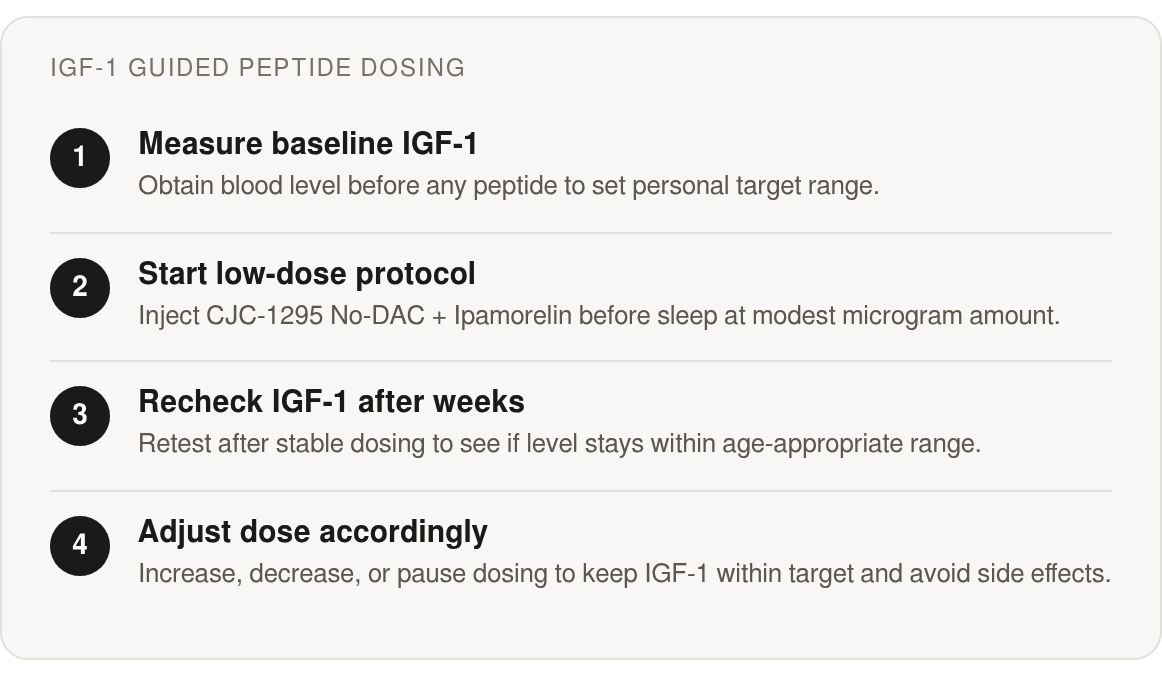
- Baseline first. Measure IGF-1 before starting, so you know where you began.
- Personalized dosing. Protocols get tailored to your data and goals, not a one-size schedule.
- Retest and adjust. The target is an age-appropriate IGF-1 range, not a microgram number on a vial.
One firm limit: skip this stack entirely if you compete under WADA rules, since it’s on the prohibited list. And those anti-aging skin claims making the rounds online? The evidence doesn’t support them. We use these peptides to manage the GH axis with data, not to chase promises the research hasn’t earned.
Advanced Topics
Most protocols hand you a fixed microgram number and call it done. That misses the point. The smarter move for aging adults is to titrate against your own GH-axis biomarkers, which reframes the whole conversation.
Fixed dosing falls short because the long-acting DAC form keeps IGF-1 elevated for an extended stretch, and with repeated dosing that elevation builds on itself. That slow accumulation running in the background is exactly what you don’t want.
IGF-1 turns guesswork into a feedback loop
IGF-1 is the number to watch. It integrates the downstream effect of every GH pulse, so it tells you whether your dose is landing in a useful range or drifting into excess.
When GH runs too high, the risks are concrete: elevated blood pressure, insulin resistance, joint and muscle pain, and fluid retention. Those are the same signals that separate a therapeutic dose from an overdose. If your IGF-1 climbs past your target band, cut the dose. If edema or morning stiffness shows up, that’s your body flagging the problem before a lab even prints it.
Here’s where the short half-life of the no-DAC form earns its keep. Because it clears far faster than the DAC version, IGF-1 doesn’t pile up the way it does with the multi-day form. You get a moving target you can actually steer, instead of a slow accumulation you can only measure after the fact.
Frequency versus severity in the adverse-event data
The trial data can look contradictory. CJC-1295 has generally been described as well tolerated in study settings. Yet the frequency of minor events can still run high in a study population.
Both are true. Frequency counts mostly minor events: injection-site reactions, headache, diarrhea, and vasodilatory flushing. „No serious reactions“ speaks to severity. The distinction matters because tolerability tends to track dose. That’s the practical argument for staying conservative and titrating up.
Protecting the pulse is the real safety mechanism
Sources split on whether CJC-1295 keeps GH release pulsatile or forces it into a sustained plateau. The DAC question settles it. The long-acting DAC form drives above-physiological sustained elevation. The short-acting no-DAC form nudges the pituitary and steps back, letting your natural rhythm reassert itself.
That’s the safety case, plainly. Push the pituitary harder than it wants and you get receptor desensitization plus wasted product. For aging adults chasing longevity, the goal is a biomarker-guided nudge, not a hormonal flood. Skip the daily high-dose protocols; more isn’t better here. Track IGF-1, respect the pulse, and the safety profile mostly takes care of itself.
Dosing habits that keep the profile clean
The single most useful practice we follow: dose against a target, not a number on a bottle. Keep the injections in the range a GH secretagogue can actually work within, then confirm the result with bloodwork instead of guessing. For no-DAC therapy in aging adults, that discipline is what keeps the cjc 1295 effects profile clean over months of use.
Timing is part of that discipline. Injecting before sleep rides the natural nocturnal GH pulse instead of fighting it. It also plays to the no-DAC form’s fast clearance, which lets your pituitary reset between doses in a way the long-acting version can’t. Set any specific protocol during a personalized consultation and confirm it with follow-up labs.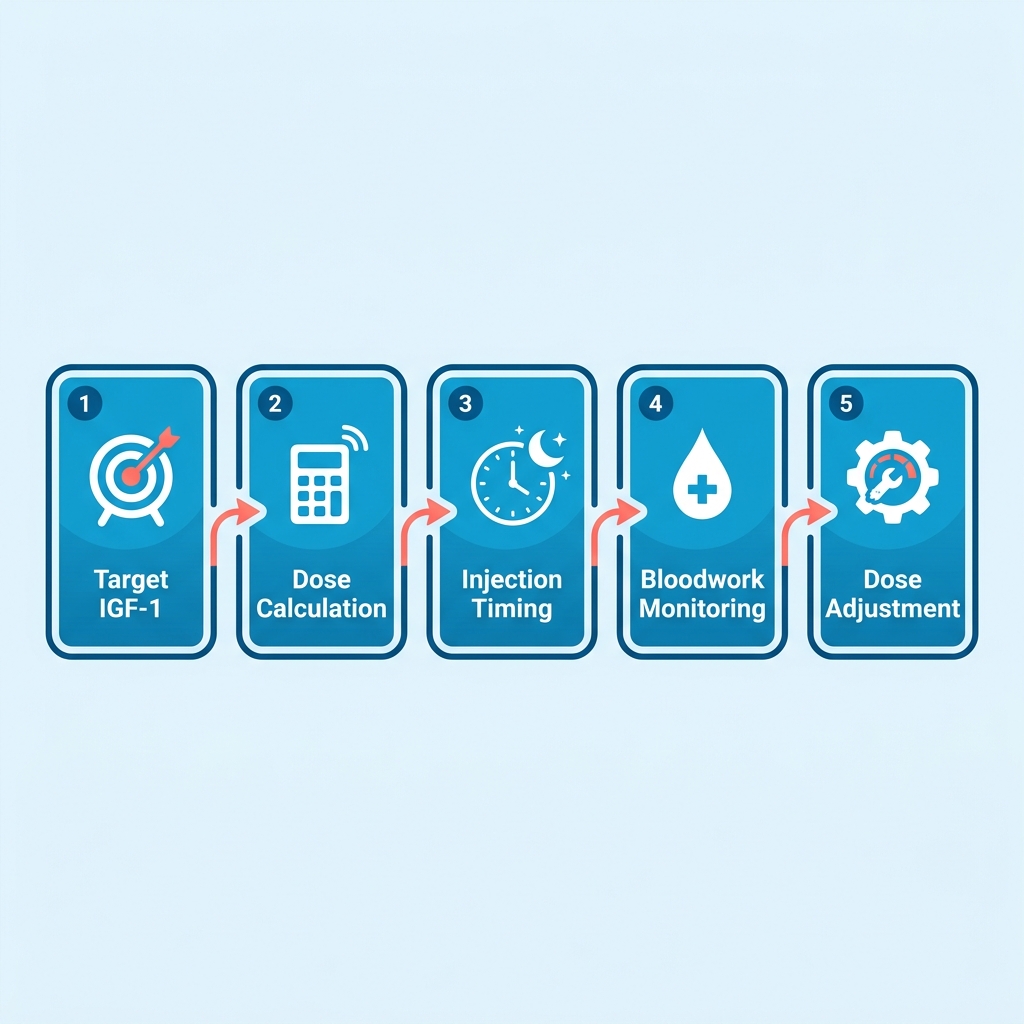
Why „more“ is the fastest way to waste money
Higher daily doses feel productive. They aren’t. Push the pituitary past what it’s ready to release and you get receptor desensitization plus a lighter wallet.
This is the mechanistic case for the short-acting form. Sustained elevation is what drives the trouble: the long-acting DAC version keeps hormone levels propped up for days, and that’s where fluid retention, joint pain, and insulin resistance tend to creep in. Intermittent no-DAC dosing sidesteps that by letting levels fall back to baseline between pulses.
How to titrate against IGF-1 instead of guessing
Track IGF-1, not how you feel. It integrates the effect of every pulse, so it tells you whether your dose is doing something or nothing. Pull a baseline before you start, then recheck after a few weeks on a stable protocol.
Why this matters for aging adults: with repeated dosing, IGF-1 can stay above baseline for an extended stretch, and GH excess independently drives the high blood pressure, joint pain, and fluid retention you’re trying to avoid. Set an IGF-1 ceiling appropriate for your age bracket and titrate down if you blow past it. That converts a fixed microgram habit into a feedback loop.
When to skip this stack entirely
Skip it if you compete under any anti-doping code. CJC-1295 sits on WADA’s Prohibited List under Section S2, full stop.
Be honest about the anti-aging and skin claims too. With limited human data and no FDA approval, the evidence doesn’t show these peptides deliver younger-looking skin or reliable rejuvenation. We use this stack for GH-axis support in people with a measurable case for it, not as a cosmetic bet.
One more honest note on sleep. Users swear it improves their sleep, and it might, but the mechanism may not be the GH bump marketers assume. Research on GHRH analogs points to effects on sleep architecture that don’t map neatly onto GH levels. If you want the sleep benefit, chase it with good timing and realistic expectations, not a bigger dose. To build a plan around your own bloodwork, book a consultation with our team.
No-DAC vs. DAC: which one, and when
The clearest way to judge no-DAC therapy is to line it up against its main rival, the DAC form. That single choice shapes the entire picture, because the two peptides behave nothing alike once they hit your bloodstream.
The DAC version has a documented half-life of roughly 5.8 to 8.1 days. A single injection pushed mean plasma GH up 2- to 10-fold for six days or more, and IGF-1 stayed elevated for nine to eleven days. The DAC form also blunts the natural trough between GH pulses, flattening the peak-and-valley pattern your pituitary normally produces. For an aging adult trying to nudge the GH axis gently, that flattened curve is the opposite of what you want.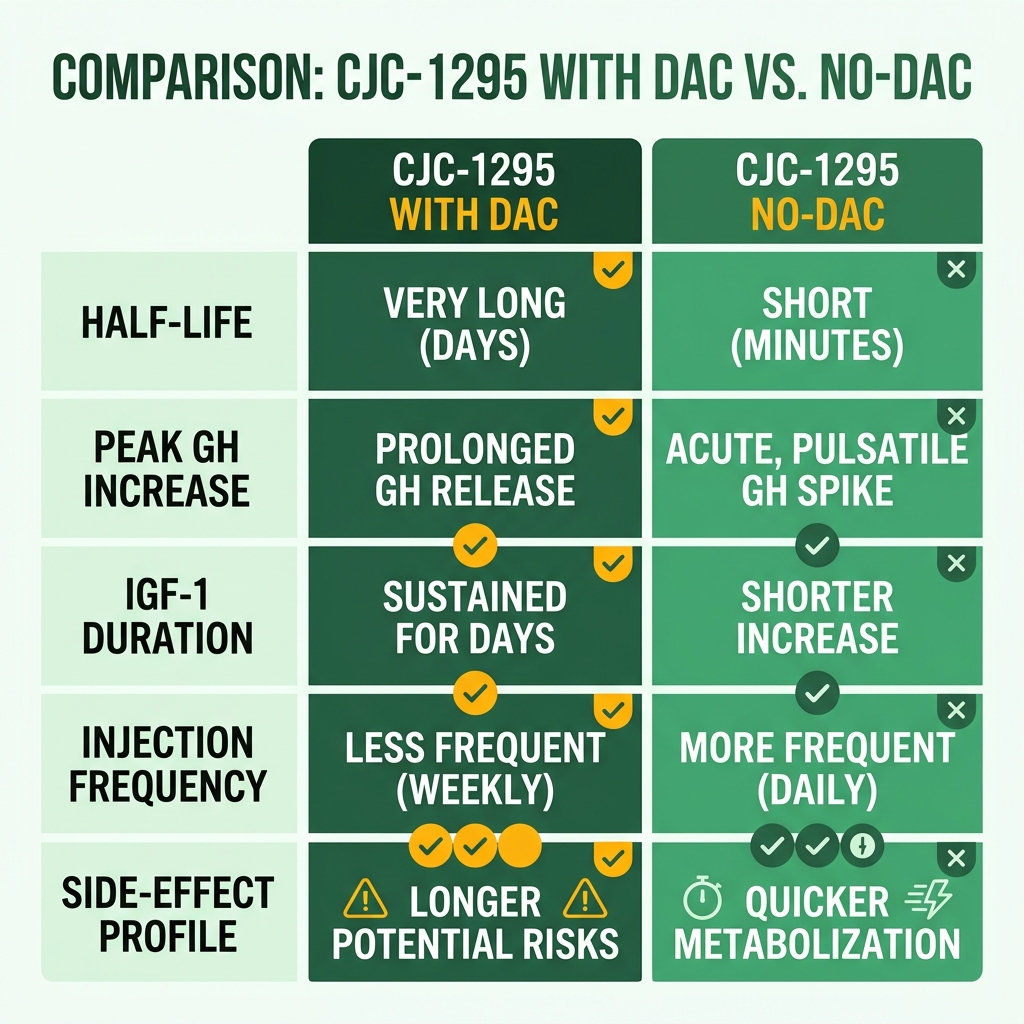
How no-DAC stacks up
The trade-off looks like a weakness on paper. Without the drug-affinity complex, the no-DAC form has a much shorter duration of action and can’t hold IGF-1 elevated for days on end. We read that fast clearance as the entire advantage.
A short-acting peptide preserves your natural GH pulses. The long-acting form drives sustained elevation that departs from how your body actually releases growth hormone. Sustained signaling is what invites receptor desensitization and quiet IGF-1 accumulation.
For aging adults chasing longevity rather than raw mass, matching the body’s rhythm matters more than peak numbers. That’s why our approach favors physiologic, data-driven dosing: every protocol is guided by biomarkers and tailored to the individual rather than built around a peptide that stays active far longer than your own hormones would.
What the human trials actually say about safety
A contradiction worth untangling. The registration trials called CJC-1295 „safe and relatively well tolerated.“
Both the reassurance and the caution describe the same studies. The resolution is simple: „no serious reactions“ speaks to severity, not to whether milder, transient effects can occur. That’s why frequency and severity have to be read separately.
Tolerability tracked with dose. The 30 and 60 µg/kg ranges performed best. That pattern tells us most effects are driven by how much and how often you dose, not by something intrinsic to the peptide.
When to pick each option
Choose no-DAC when your goal is gradual, biomarker-guided GH support and you value staying close to physiological rhythm. Keep dose and frequency modest, since the trial data suggest tolerability tracks with how much and how often you dose rather than with the peptide itself.
Skip both if you’re competing under anti-doping rules. GH secretagogues are banned, and no dosing tweak changes that.
The DAC form has a narrower honest use case: convenience for someone who genuinely can’t dose often. But convenience buys you sustained elevation and cumulative IGF-1. For the aging adult reading this, that’s a poor trade. The short half-life wins on the merits, not by default. If you want protocol guidance built around your own numbers, our data-driven approach sets targets before touching a vial, and a free consultation is the place to start.
Troubleshooting
A lot of the complaints people raise about this stack aren’t mysterious peptide reactions. They trace back to dose, frequency, or timing. Sort those three against your own labs and most of the trouble eases. That’s the practical reality behind side effects for aging adults.
The commonly self-reported issues cluster tightly: flu-like symptoms, headaches, irritability, anxiety, nausea, and hives. None of these are exotic. Most reflect the body reacting to too much stimulation too often, not to the peptide simply being present.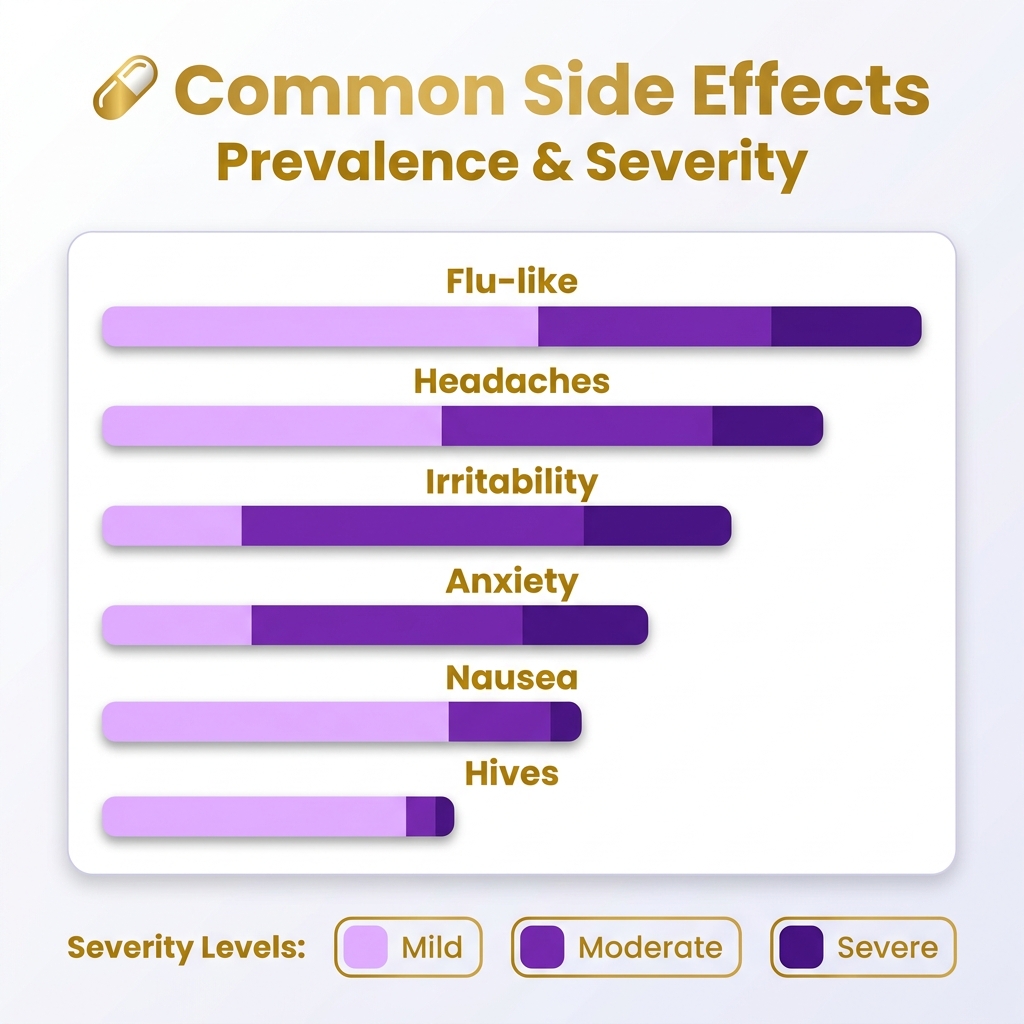
Half the „side effects“ are frequency problems in disguise
Here’s the connection worth sitting with. The no-DAC form is favored because its shorter half-life supports natural GH pulse frequency, while the DAC platform is a bioconjugation trick that stretches the half-life out to days. When someone on no-DAC still reports edema, water retention, or that puffy, sluggish feeling, the usual culprit isn’t the compound. It’s dosing daily at high microgram loads and never letting the pituitary reset.
The video from a practicing physician lands the point cleanly. Push the pituitary past what it’s ready for and you get two things: receptor desensitization and wasted money. That desensitization shows up as diminishing results plus creeping side effects. The fix is counterintuitive but consistent. Dial the dose down, not up.
Instead of chasing higher microgram loads, an intermittent schedule that lets the GH axis recover between doses is the more sensible reset. If symptoms persist even on a reduced, spaced-out schedule, the problem is probably somewhere other than the protocol. That’s exactly the kind of question a personalized consultation, guided by your own bloodwork, is built to answer.
When sleep gets worse instead of better
This one catches people off guard. You started the stack partly for deeper sleep, and now your sleep feels off. Don’t assume the peptide failed.
The evidence on GH secretagogues and sleep is genuinely mixed. One clinical view argues sleep gains are mostly placebo outside true GH deficiency. CJC-1295 has research applications in sleep quality and anti-aging, and studies have examined sleep and endocrine changes after intranasal administration of growth hormone-releasing hormone in young and aged humans. The picture is far from settled.
The broader takeaway: better sleep architecture may not run through the GH pathway marketers assume. Our read is that the sleep response here is context-dependent, tied to your baseline and timing, not a guaranteed lever. If sleep worsens, shift your injection earlier in the evening and confirm your IGF-1 isn’t being pushed too high.
A checklist before you blame the peptide
Run this order before changing compounds:
- Frequency first. Are you dosing daily? Spacing doses out gives the pituitary time to reset.
- Dose second. Loading high per injection? Bring it back toward a physiologic range.
- Timing third. Injecting midday? Move it to pre-sleep.
- Labs fourth. Pull IGF-1. A number climbing out of range explains most persistent complaints.
One honest limit: the human data here is thin. CJC-1295 carries limited human data and lacks FDA approval, and a well-designed phase 1 study with independent validation would be needed before anyone draws firm conclusions. If a symptom doesn’t resolve after you’ve tuned these four variables, that’s the point to stop and reassess with proper bloodwork rather than push through.
Resources and Tools
Building a personalized no-DAC protocol takes more than a vial and a syringe. You need the right labs, the right timing, and a clear read on the trial evidence so you can judge the effects against your own numbers instead of a forum thread. This section pulls together the tools and references that make that possible.
The bloodwork and tracking you actually need
Start with the biomarker that anchors the whole approach: IGF-1. A baseline draw before your first injection, then a follow-up at four to six weeks, tells you whether your dose is doing anything measurable. Without those two numbers, you’re guessing.
Why IGF-1 carries this much weight comes from the Teichman trials. Their ascending-dose studies ran 28 and 49 days in healthy adults aged 21 to 61, and IGF-1 was the readout they tracked to confirm the GH axis was responding. Borrow that logic. Two draws, spaced weeks apart, turn a hunch into a feedback loop.
A simple injection log is the second tool, and it costs nothing. Record dose, time, and any symptoms. When flu-like feelings or headaches show up, that log usually points straight at a frequency problem you can fix.
The studies worth reading before you start
The Teichman 2006 paper in the Journal of Clinical Endocrinology and Metabolism is the single most useful read. It gives you the raw tolerability numbers you need to set a personal ceiling, and it breaks adverse events out by dose tier, so you can see where reactions start to climb.
Read it with a skeptical eye. The same trials labeled „safe and well tolerated“ also reported adverse events during a dose-escalation arm, versus 29% on placebo. Both statements are true. Severity was low, but frequency was high, and nearly all of it clustered at higher doses.
That contradiction is the thing to sit with. Serious reactions were absent; minor ones like headache, injection-site reaction, and vasodilation were common and dose-driven. The best-tolerated range in those studies was 30 to 60 µg/kg. Push past what your labs justify and you buy yourself more side effects.
How to vet a supplier and a protocol
Two practical filters. First, confirm the product is genuinely no-DAC. The half-life difference is stark: thirty minutes for the no-DAC form versus several days once the DAC modification is attached. A mislabeled vial changes your entire safety math, so ask for a certificate of analysis and third-party purity testing before you buy.
Second, get a real practitioner reading your labs, not a stock dosing chart. A personalized consultation is where the biomarker feedback loop actually gets set. BiohackNow offers wellness consultations and personalized protocols built around your own biomarkers, with a team that includes physicians, nurse practitioners, and paramedics.
One more vetting step: ask how the supplier stores and ships the peptide. These compounds degrade with heat and light, so lyophilized powder shipped cold, with clear reconstitution guidance, is the baseline you should expect from anyone worth ordering from.
Where to take this from here
The honest summary of CJC-1295 Ipamorelin no-DAC side effects: the reported problems are mostly dose-and-frequency problems, not peptide problems. Sort your dose against your own IGF-1, keep the injections timed to your natural rhythm, and the short-acting stack behaves very differently from the sustained-elevation version that drives most of the scary safety headlines.
But be straight about the gap between what people hope for and what the trials show. The human data on CJC-1295 comes from monotherapy studies in healthy adults, not from the Ipamorelin stack. Many of the flashy benefits, better body composition and younger skin, stay largely theoretical, with much of what circulates online unproven. That mismatch is exactly why generic dosing fails aging adults, and why biomarker-guided personalization is the responsible way to bridge it.
Sort the real benefits from the hype
Some claims deserve skepticism. The reported sleep improvements are most likely placebo for anyone without a true GH deficiency. If better sleep is real for you, it may not run through the GH pathway marketers assume, so keep expectations grounded and let your own results guide you rather than the promises online.
The anti-aging skin claims deserve real caution too. As Midi Health notes, there’s very little evidence that CJC-1295 delivers the outcomes being promised. If younger-looking skin is your only goal, skip this stack.
One regulatory note you can’t ignore: CJC-1295 cannot be used in compounded medications. Any platform selling it may be operating outside current federal guidelines. Factor that in before you buy.
Your next steps are measurement, not guesswork
If you do proceed, the path is straightforward. Draw a baseline IGF-1 before your first injection. Follow up at four to six weeks. Titrate toward a target IGF-1 range instead of chasing a fixed microgram number on a vial.
Why does IGF-1 anchor everything? Because GH excess independently drives insulin resistance, fluid retention, joint pain, and elevated blood pressure. Watching IGF-1 turns dosing into a feedback loop where the endpoint is a number you can defend, not a forum recommendation.
The reason we favor the no-DAC form is that it clears fast and lets your pituitary reset between pulses. That short half-life keeps the side-effect profile manageable in a way sustained elevation never can.
Longevity is a long game, so treat it like one. Retest, adjust, and stop if your numbers or symptoms tell you to. We keep more practical protocol breakdowns on the BiohackNow blog for readers who want to go deeper.
No-DAC therapy isn’t magic, and it isn’t for everyone. Handled with real bloodwork and honest expectations, it’s a measured tool. Handled with a fixed dose and forum hype, it’s a gamble.
Frequently Asked Questions
1. Can I combine CJC-1295 No-DAC with other peptides beyond Ipamorelin?
The article specifically covers the CJC-1295 No-DAC and Ipamorelin pairing, which hits the pituitary from two angles: a GHRH analog raising GH per pulse and a ghrelin mimetic adding a clean pulse without spiking cortisol or prolactin. It does not address other peptide combinations, so any additions should be evaluated with bloodwork through a personalized consultation.
2. How soon after starting should I expect to see measurable changes?
Measurable changes are tracked through IGF-1, not subjective feel. Pull a baseline before your first injection, then retest at four to six weeks on a stable protocol. Those two draws, weeks apart, tell you whether your dose is landing in a useful range or doing nothing, turning guesswork into a feedback loop.
3. If I miss my pre-sleep injection window, does timing really change the results?
Timing matters because injecting before sleep rides the natural nocturnal GH pulse instead of fighting it. If sleep worsens or you inject midday, shift your injection earlier in the evening. The no-DAC form clears quickly and resets between doses, so timing works with your rhythm rather than overriding it.
4. Is CJC-1295 No-DAC legal to buy and use?
CJC-1295 lacks FDA approval for the marketed longevity and skin uses, and human data remains limited. It also sits on WADA’s Prohibited List under Section S2, so anyone competing under any anti-doping code should skip it entirely. No dosing adjustment changes its prohibited status for competitive athletes.
Free 15-Minute Discovery Call
Ready to take the guesswork out of your health?
Book a free 15-minute call with Monika to talk through your goals, what testing makes sense for you, and the right next step. No pressure, just clarity.
Book Your Free CallFor educational purposes only. Not medical advice.