
The Short Version
- CJC-1295 No-DAC clears your system in about 30 minutes; the with-DAC version stays active up to 8 days.
- Most side effects tied to CJC-1295—flushing, water retention, tingling, blood-pressure spikes—come from the DAC variant’s prolonged exposure, not the No-DAC form.
- No human safety trial exists for Mod GRF 1-29 used alone, and it may not move IGF-1 without a partner peptide like Ipamorelin.
- Four amino acid swaps make No-DAC closer to Sermorelin than to the with-DAC compound, even though they share part of a name.
- Tracking IGF-1, fasting glucose, HbA1c, blood pressure, and heart rate catches early signals before small issues grow during No-DAC protocols.
What You Need to Know Before Starting
You want growth-hormone benefits without a peptide lingering in your system for days. That’s the usual reason people choose CJC-1295 No-DAC—also called Mod GRF 1-29. Before you commit, separate the short-acting compound from the longer-acting product that shares part of its name.
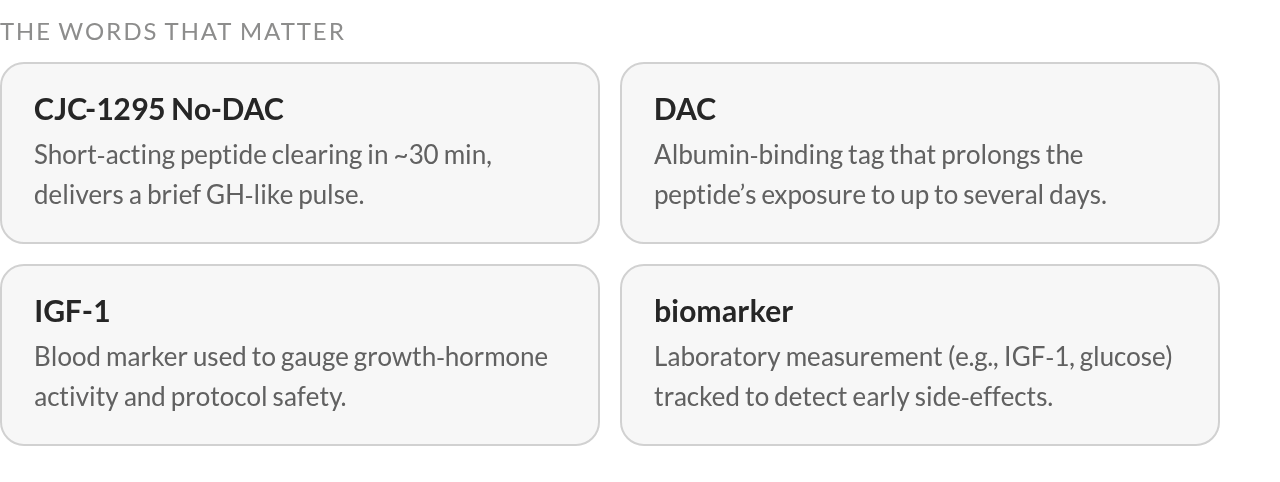
The risk picture changes because the two versions don’t behave the same once injected. No-DAC delivers a brief, pulse-like signal. The DAC form delivers extended exposure. That distinction explains why a generic “CJC-1295 side effects” list can mislead unless you know which version the source is discussing.
| Metric | CJC-1295 No-DAC (Mod GRF 1-29) | CJC-1295 with DAC |
|---|---|---|
| Alternate names | Mod GRF 1-29, Modified GRF(1-29) | CJC-1295 DAC |
| Exposure pattern | Short-acting, pulse-oriented | Long-acting, extended exposure |
| Dosing | Usually more frequent and commonly paired with Ipamorelin | Usually less frequent |
| GH/IGF-1 window | Brief signal intended to resemble a physiologic pulse | Sustained GH elevation over multiple days |
| Documented drawbacks | No safety trial specific to the short-acting form | Side-effect reports more often tied to prolonged stimulation and slower washout |
| Evidence base | Direct human evidence for the compound itself is limited | Human and animal data exist, but for a structurally distinct molecule |
| Monitoring approach | Lab-guided biomarker review as part of a personalized protocol | Same, with extra caution because adjustments take longer to show |
Why the shorter half-life matters
The short clearance window is No-DAC’s strongest argument. Less sustained exposure should mean less downstream signaling pressure than the long-acting version creates. That’s a pharmacokinetic argument, not proof from a completed head-to-head safety trial.
Why it doesn’t erase the uncertainty
The lack of direct safety data remains the constraint. The practical risk curve becomes clearer only when you look at the full protocol: whether No-DAC is paired with a GHRP, how often you use it, what baseline labs show, and how symptoms get handled. We use functional testing and biomarker tracking to build a personalized protocol, so decisions rest on your own data.
Why the No-DAC Side-Effect Picture Stays Murky
The CJC No-DAC side-effect conversation is muddled by a naming problem. The “CJC-1295” label gets applied to two different compounds: the No-DAC form (Mod GRF 1-29) and a longer-acting with-DAC version. An article, forum post, or clinic page that uses the name without specifying the form blurs together two different exposure profiles.
That distinction matters because risk is partly about duration. A brief GHRH-style pulse is not the same clinical situation as a compound designed to keep signaling active well beyond the immediate post-injection period. So when you see side effects attributed broadly to “CJC-1295,” the first question should be: are we talking about the short-acting analog or the albumin-binding version?
Published comparisons create a second source of confusion. No-DAC and Sermorelin sit in the same mechanism class, and the meaningful differences between the “No DAC” branding and other GHRH analogs often come down to regulatory history, naming clarity, and sourcing channels rather than completely different pharmacology. Because No-DAC is sold under the CJC-1295 name in some research-peptide channels, it gets lumped together with a structurally distinct product that creates a fundamentally different exposure profile.
The Evidence Gap That Shapes the Protocol
The honest position on No-DAC’s side-effect profile is “unknown but plausibly lower.” That’s not hedging. It’s what the evidence supports. A shorter-acting compound is less likely to create the continuous stimulation associated with the long-acting variant, but published data directly comparing the two forms’ safety profiles in humans is limited.
The dosing conventions you’ll see in practice haven’t been settled by a completed safety trial. That’s why reputable sources are clear that dosing should be determined by a qualified physician who can evaluate your individual circumstances. And because these compounds often move through research-peptide channels where branding and supply chains vary, product sourcing adds another layer of uncertainty on top of the evidence picture.
That uncertainty is why we push biomarker monitoring before, during, and after any No-DAC protocol. IGF-1 shows whether the protocol is producing the intended endocrine response. Metabolic and cardiovascular markers help reveal whether the response is creating stress you can’t feel yet. You’re not monitoring to confirm safety that a trial already proved. You’re monitoring because the direct safety data on this form is limited, and individualized tracking is how we catch early signals and adjust before small problems grow.
Managing Risk Through Dosing, Injection Technique, and Labs
Because growth hormone peptides work through the GH/IGF-1 axis, labs matter more than guesswork. Our approach is measure, don’t guess: we review your history and biomarkers before you start anything new, then use those findings to guide a personalized protocol.
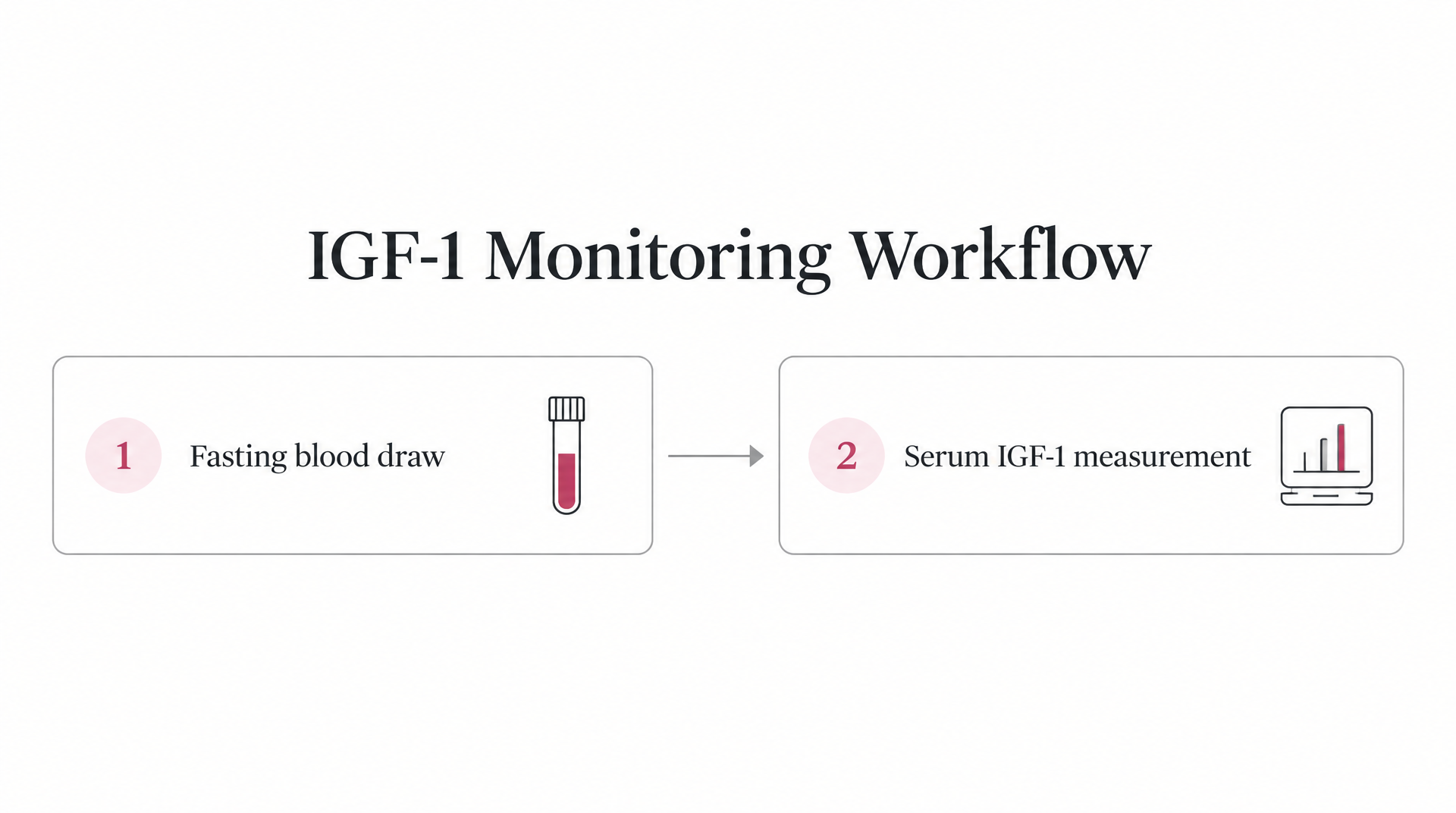
A typical safety review starts with a fasting blood draw, a serum IGF-1 measurement, and a conversation with your team about what the number means given your goals, dosing pattern, sleep, recovery, and symptoms. If labs drift outside the right range for your age or symptoms such as headaches, joint stiffness, or persistent fluid retention appear, the protocol should be adjusted rather than pushed forward automatically. Symptoms matter alongside the labs, because subjective changes can show up before a single marker tells the whole story.
Dosing Patterns and What They Mean for Risk
CJC-1295 No-DAC side effects depend on exposure pattern. Modified GRF 1-29 is generally used as a short-acting pulse, while the DAC form is used for a more prolonged signal. The convenience of a longer-acting compound is obvious. The tradeoff is that it becomes harder to fine-tune quickly once unwanted effects appear.
Community protocols for No-DAC usually involve repeated injections and often pair it with Ipamorelin rather than using it alone. You may also see cycling built into protocols so the GH axis isn’t being pushed indefinitely. Those practices are conventions, not proof of safety. They should be interpreted through baseline labs, symptom response, and clinician oversight rather than copied from a template.
The key dosing question isn’t only “how much?” It’s also “how reversible is the signal if the response is too strong?” Shorter-acting peptides give the clinician more room to adjust quickly. Longer-acting exposure can be less forgiving because the biologic signal doesn’t stop as soon as the decision is made to change course.
Injection-Site Care and Rotation
Clean technique starts before the needle touches skin. We use a fresh alcohol swab on the injection site, check the vial visually for particulates or discoloration, and never reuse a needle. Subcutaneous placement is standard—abdomen, thigh, or upper arm—with the needle angled at 45 degrees.
Rotating sites prevents lipodystrophy, the localized fat loss that shows up when you hit the same spot repeatedly. Making rotation a consistent habit is worth the small effort. After the injection, watch for local irritation: persistent redness, swelling, or tenderness that doesn’t resolve promptly warrants a pause and a clinician review. The evidence doesn’t show that injection-site rotation changes whole-body endocrine side effects, but avoiding tissue damage is basic hygiene.

Tracking the Biomarkers That Matter
IGF-1 is the anchor marker for evaluating whether a GH secretagogue protocol is doing anything meaningful. We measure before you start, then track the trend over the course of your cycle instead of relying on energy, sleep, or body-composition changes alone.
If IGF-1 stays flat, several possibilities need consideration: timing may be off, the product may be underdosed, the protocol may not be strong enough to move the axis, or the compound may be used in a way that doesn’t suit the intended goal. If IGF-1 rises too high for your age-adjusted range, the concern shifts from efficacy to overexposure. That’s the point where symptoms and dose decisions need to be reviewed together rather than treated as separate issues.
Clinical monitoring also gives context to complaints that otherwise sound vague. A headache may be unrelated. A headache plus rising IGF-1, elevated blood pressure, and new joint tightness is a different conversation. The value of monitoring is that it lets you connect patterns early enough to make a rational adjustment.
Glucose Sensitivity and Cardiovascular Risk
Fasting glucose and insulin-related markers matter because growth hormone can shift insulin sensitivity. The mechanism is direct: GH opposes insulin at the tissue level. That’s why prolonged GH elevation in acromegaly produces insulin resistance. A short-acting No-DAC protocol creates a different exposure profile than the with-DAC form, but the provided sources don’t give a standardized lab panel or fixed glucose threshold tied to side effects. If you have prediabetes, metabolic syndrome, or a family history of Type 2 diabetes, that’s exactly the kind of history worth putting on the table before you begin—we review your history and biomarkers with you before you start anything new.
The pharmacokinetics of the No-DAC form differ fundamentally from the with-DAC version, so caution carried over from longer-acting GH secretagogues doesn’t translate directly. Still, for anyone with known cardiovascular disease, hypertension, or significant cardiac risk factors, a clinician-led cardiovascular risk review before starting any GH secretagogue is the cautious call. The evidence doesn’t recommend ECG or imaging as routine monitoring, so we’re not claiming that as a standard, but higher-risk individuals warrant closer scrutiny before beginning.
BiohackNow Longevity Clinic vs. Other Peptide Providers
When you inject a peptide that clears quickly, the problem isn’t only the pharmacology. The problem is whether the vial you received actually contains what the label says at the concentration the label claims, and whether anyone checked that before it shipped.
Gray-market research suppliers vary widely in purity, and independent testing of research peptides has repeatedly turned up samples that fall short of their labeled identity and concentration. That’s not a scandal that made headlines. It’s the baseline reality. The No-DAC side-effect story is largely pharmacokinetic inference, since much of what gets quoted is borrowed from the longer-exposure product rather than data specific to Mod GRF 1-29. The compounding pharmacy market offers better oversight than gray-market research suppliers, but verification still falls to you, and most clinics don’t proactively share lot-specific certificates of analysis unless you ask.
What Safety Features Any Provider Should Document
We approach this as a checklist you run on your own. A clinic’s marketing page will claim oversight and testing. The real test is what they hand you when you request specifics.
Third-party testing and certificates of analysis. Purity, identity, and endotoxin data should be lot-specific, not generic product-level claims. If the clinic can’t produce a certificate of analysis tied to your actual vial, they’re sourcing from a vendor who doesn’t provide one. That means the dosing conversation is built on an unknown foundation.
Clinician oversight and dose rationale. A protocol that starts everyone on the same schedule without a biomarker baseline or a conversation about your current IGF-1 level is a template, not a personalized plan. The dose should be tied to your age-adjusted reference range and your stated goal. If a clinic prescribes CJC No-DAC without explaining the rationale for whether it’s paired with a GHRP, ask what outcome they’re actually targeting.
Functional testing before you start anything. Our philosophy is simple: measure, don’t guess. We use functional testing to find where your body is out of balance and build a personalized protocol around that data, rather than handing you a template dose. A clinic that doesn’t look at your biomarkers before prescribing is guessing at efficacy and waiting for side effects.
Adverse-event escalation path. Unwanted symptoms should trigger a defined response, not a vague instruction to keep going. The question is whether the clinic has a documented process for dose adjustment or cycle breaks when you report changes, or whether the response is “wait and see” without reviewing labs, timing, product source, and exposure pattern.
Regulatory clarity and compounding source. CJC-1295 faced compounding restrictions following FDA advisory committee review in late 2024, and regulatory status varies by jurisdiction. A provider should state clearly whether they’re compounding under Section 503A, sourcing from a research supplier, or operating in a gray area, and what that means for your legal exposure and product recourse if something goes wrong. If they avoid the question, that’s your answer.
Common Questions
1. Can I use CJC-1295 No-DAC on its own, or does it need to be stacked?
It depends on the goal. If the target is a measurable GH/IGF-1 response, clinicians commonly evaluate whether a GHRP belongs in the protocol rather than assuming No-DAC alone will be enough. If the target is something narrower, such as sleep quality, the rationale should be stated clearly so you know what success is being measured against.
2. Is CJC-1295 No-DAC basically the same thing as Sermorelin?
They are closely related in clinical logic because both work through the GHRH pathway. The bigger practical issue is naming: “CJC-1295” can refer to products with very different duration profiles, so the label alone is not enough to understand the risk picture.
3. I have prediabetes and a family history of Type 2 diabetes. Does that affect whether No-DAC is appropriate?
Yes. That history does not automatically rule it out, but it raises the importance of baseline labs and clinician review. Any peptide that pushes the GH axis should be considered in the context of glucose control, insulin sensitivity, current medications, and your broader cardiometabolic risk.
4. Does rotating injection sites actually reduce the side effects I’ve read about?
Rotation mainly protects the local tissue where you inject. It helps prevent repeated trauma to the same area, but it should not be treated as a fix for endocrine symptoms. If whole-body symptoms show up, the review needs to focus on exposure, labs, dose timing, and product quality.
Ready to see which protocol fits your goals? Our team will review your history and biomarkers before you start anything new. Book your consultation with BiohackNow
Free 15-Minute Discovery Call
Ready to take the guesswork out of your health?
Book a free 15-minute call with Monika to talk through your goals, what testing makes sense for you, and the right next step. No pressure, just clarity.
Book Your Free CallFor educational purposes only. Not medical advice.
