
Before we get into it, the short version:
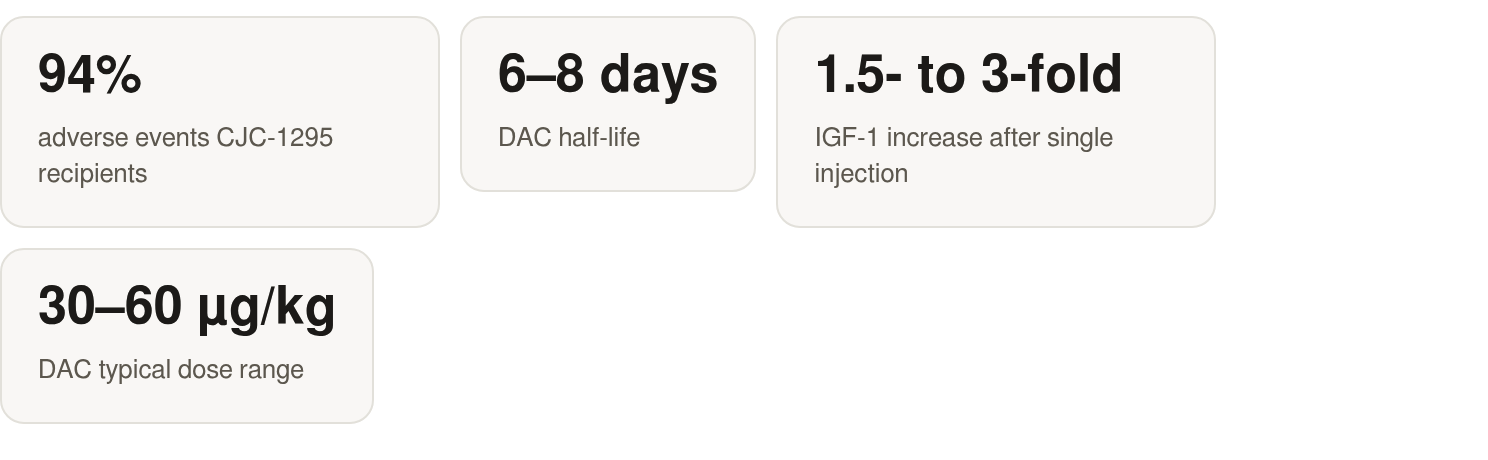
- Published safety discussions describe nonserious adverse events such as headache, injection-site reactions, and diarrhea as common among treated recipients, with placebo recipients reporting fewer.
- DAC is designed to extend the peptide’s presence by binding albumin, producing a longer duration of action than natural growth-hormone pulses.
- No-DAC Mod GRF 1-29 is described as short-acting, so a skipped dose may allow side effects to fade more quickly.
- Some early research describes IGF-1 elevation lasting beyond the immediate dosing window, with cumulative effects after repeated doses.
- Water retention and vasodilatory headaches may share a plausible mechanism: prolonged albumin-mediated action that may nudge the kidney toward sodium retention.
The DAC decision is the side-effect decision
For men chasing muscle, fat loss, or faster recovery, CJC-1295 side effects aren’t a footnote. They’re the difference between a protocol that backs your goals and one that quietly works against them. Water retention hides the lean look you trained for. Headaches ruin your training days. And IGF-1 that drifts too high carries risks nobody wants to gamble on.
Here’s the tension worth naming up front. Early trial language described CJC-1295 as „safe and relatively well tolerated“ in healthy adults. Later safety analyses have logged higher rates of nonserious adverse events among treated recipients than placebo — headache, injection-site reactions, diarrhea, and vasodilatory responses. The reconciliation: „well tolerated“ may mean no serious events, not no events. For a man tracking his physique week to week, those minor-but-real effects are exactly what matters.
Water retention and headaches trace back to the same root
Water retention and vasodilatory headaches on CJC-1295 likely share one plausible mechanism: albumin. DAC is designed to stretch the peptide’s half-life by binding to albumin in the blood. Some analyses have also noted changes in circulating albumin fragments. Prolonged albumin-mediated action could plausibly drive both the fluid shift and the vasodilatory cluster men report.
That’s why the DAC-versus-no-DAC choice isn’t academic. With DAC, growth hormone signaling may remain elevated well beyond a natural pulse. Some sources describe this as prolonged non-pulsatile stimulation, which differs from how your body naturally releases GH. It is also a plausible mechanistic basis for prolonged water weight.
IGF-1 drift is a long-term question, not just an aesthetic one
IGF-1 that climbs and stays up is the side effect men underestimate. Early research describes IGF-1 staying elevated after the initial dosing window, with cumulative increases after multiple doses. That raises a cumulative-effect question.
Why care? The mitogenic concerns tied to sustained GH-IGF-1 signaling are described in the peptide literature as biologically plausible but unproven. Not a reason to panic. A reason to monitor. Standard IGF-1 testing is imperfect — IGF-1 and IGFBP-3 show substantial population variability and aren’t reliably predictive on their own. A single lab draw tells you less than a trend.
Why the no-DAC choice makes side effects reversible
No-DAC CJC-1295 (Mod GRF 1-29) is described as short-acting, with a much briefer clearance window than DAC. That’s the whole game for men who want to manage side effects in real time.
| Factor | No-DAC (Mod GRF 1-29) | DAC |
|---|---|---|
| Half-life | Described as short-acting | Described as long-acting |
| Dosing | Often scheduled several times weekly | Often scheduled once weekly |
| Side effect reversibility | May adjust within a day | Longer exposure window |
| GH pattern | Closer to pulsatile | More sustained, non-physiologic |
If water retention or a headache shows up on a no-DAC protocol, you skip or cut the next dose and the exposure clears quickly. Inject DAC and you own that exposure window no matter what happens. That short no-DAC clearance window is the pharmacokinetic reason real-time adjustment is even possible.

One firm limit: if you compete under anti-doping rules, check the current WADA prohibited list before using either form. Growth hormone secretagogues are widely described as prohibited, and detection methods continue to improve.
Water retention: DAC vs no-DAC
Water retention is the side effect men notice first and quit over. It shows up in the mirror, not the bloodwork. Map out the CJC-1295 side effects in men and fluid shift sits at the top, because it undoes the exact lean, dry look most guys are chasing.
The formulation drives how bad it gets. CJC-1295 without DAC is described as clearing fast; the DAC version is designed to bind albumin and stay active much longer. That single difference reshapes the entire water-retention story, which is why the two versions are best understood as different tools, not two doses of the same one.
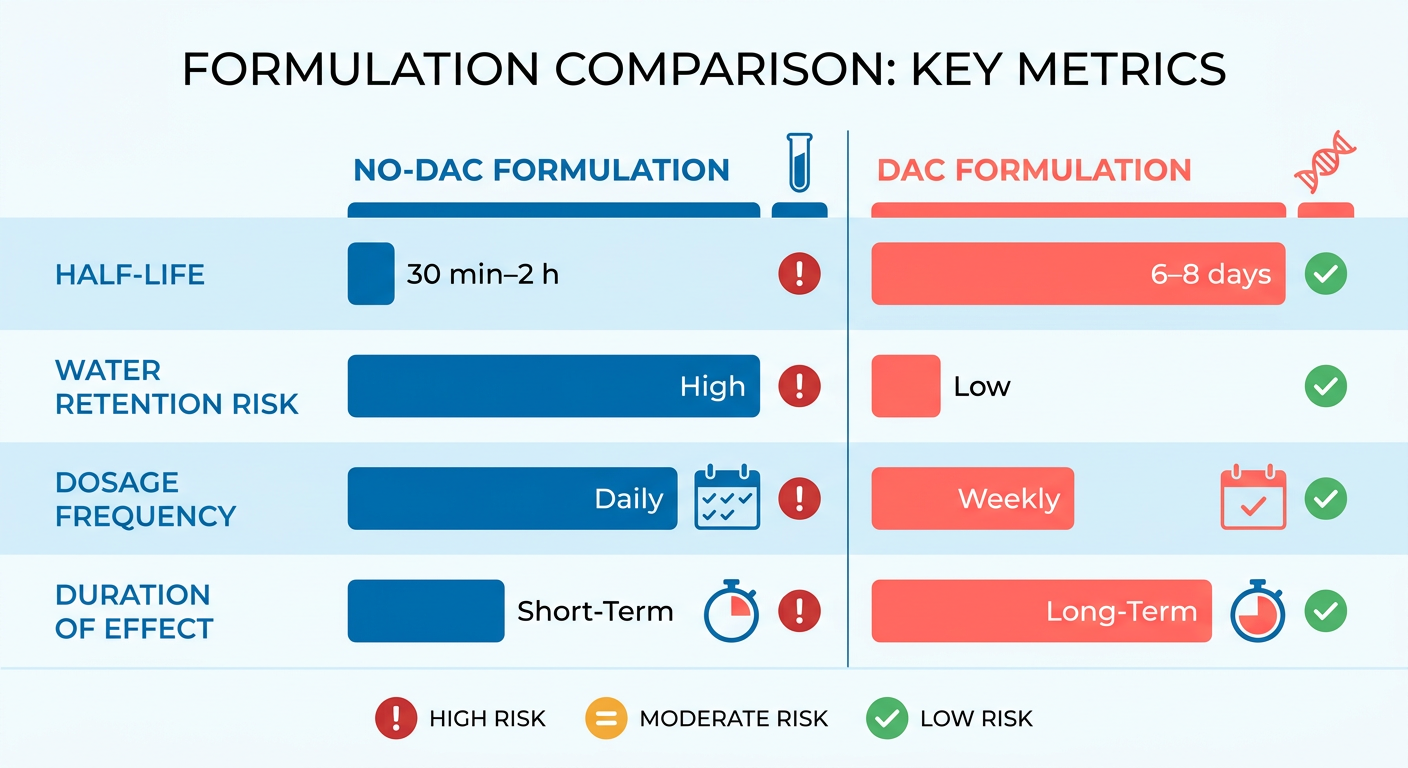
DAC locks in extended exposure you can’t easily walk back
Here’s the mechanism worth watching. Because the DAC version is designed to stay bound to albumin, it produces prolonged GHRH activity rather than a single natural pulse. That long-acting exposure is tied to sustained GH and IGF-1 stimulation, keeping the growth-hormone axis switched on far past a natural pulse; GH signaling may nudge the kidney toward holding sodium. Hold sodium, hold water.
Now layer in what the long-acting form is also known for: flushing and tingling rank among commonly reported side effects in some safety discussions. Prolonged albumin-bound action plausibly feeds both the puffiness and the flushing-type headaches men describe. No single paper draws that line, but the fluid cluster and the vascular cluster may share one root — exposure that does not turn off.
Even a peptide described as generally well tolerated may still leave room for everyday headaches and flushing. For a man judging his physique week to week, those minor-but-real effects are the whole game.
No-DAC is the version you can actually steer
This is where the no-DAC angle earns its keep. You can measure hydration daily, but measurement only helps if you can act on it. With no-DAC, you can. Feel puffy on Tuesday? Skipping or shrinking the next dose gives the short clearance window time to work. With DAC, that injection already committed you to days of exposure. There’s no dial to turn.
| Factor | No-DAC (Mod GRF 1-29) | DAC |
|---|---|---|
| Half-life | Described as short-acting | Described as long-acting |
| Water retention onset | Faster, shorter-lived | Slower, may persist |
| Reversible mid-week? | Usually easier to adjust | Less adjustable |
| Fits real-time hydration tracking | Yes | Poorly |
| Typical schedule | Often several times weekly | Often weekly |
That reversibility is exactly what makes a track-and-adjust routine possible: log how you look and feel day to day, then set the next no-DAC dose against what you see. A short-clearing peptide gives you flexibility that a weekly, long-acting one does not.
Practical management still matters. Moderate sodium on higher-dose days, keep potassium and magnesium adequate, and log the numbers. Skip diuretics unless a physician prescribes them. And verify current anti-doping status if you compete, since growth hormone secretagogues are widely described as prohibited. For everyone else, no-DAC lets you course-correct before the water wins. BiohackNow stocks both CJC-1295 No DAC and the DAC version for research use — explore the full lineup on our blog.

Headaches: triggers and how often they hit
Headaches are among the CJC-1295 side effects men flag early. Unlike water retention, they hit during your day, wrecking focus and training. And the trigger isn’t random. It traces back to the same albumin-bound mechanism that drives the bloat.

Here’s the chain no single source spells out. The DAC version is designed to bind albumin to extend its presence. Prolonged GH stimulation over that window may shift serum protein profiles and produce vasodilatory responses. That cranial vasodilation — blood vessels widening in the head — is a plausible root of the throbbing men describe. Same molecule, two symptom clusters: fluid retention and headache, both riding the non-physiologic pattern DAC locks in.
Why DAC headaches are harder to shake
Post-marketing observation and clinical reporting list headache as an adverse event for both formats. But the DAC group reports it alongside flushing, tingling, elevated blood pressure, and lethargy in some safety discussions. That cluster is telling. It points to a systemic vascular response, not a one-off.
The problem with DAC is reversibility. Once you inject, you own a prolonged exposure window. If a headache builds on day two, you can’t dial it back. You wait it out.
The short-acting version changes that math. With a much briefer clearance window, a rough dose may be gone within a day. Skip the next injection, cut the amount, and the vascular load may drop fast. This is the pharmacokinetic case for adjusting dose against symptoms in real time rather than committing to a week blind.
Where the short half-life earns its keep
The brief clearance window is what makes real-time adjustment possible. When headache or fluid markers trend up, the short-acting form lets you respond inside a day, not next week.
That reversibility is the core advantage over a DAC schedule. A DAC schedule offers convenience, but convenience is worthless when you can’t course-correct mid-cycle. One practical tactic: keep a simple symptom log noting onset time and severity per injection, so you can correlate dose changes to headache patterns across a week rather than guessing.
| Factor | Short-Acting Version | With DAC |
|---|---|---|
| Half-life | Described as short | Described as long |
| Headache reversibility | May adjust within a day | Locked for the exposure window |
| Reported vascular cluster | Lower in some reports | Flushing, tingling, BP changes, lethargy |
| Real-time dose correction | Yes | No |
| Fits real-time adjustment | Strongly | Poorly |
Relief that actually works
Hydration comes first. Vasodilatory headaches respond to steady fluid intake, and keeping ahead of dehydration stops it from compounding the vascular effect.
Timing matters next. Scheduling short-acting doses away from your most demanding hours means any vascular response lands when you’re not training or in meetings. Because the peptide clears fast, this kind of scheduling may actually shift symptoms.
For breakthrough pain, a standard NSAID handles most episodes. Skip it if you already run high blood pressure, since some DAC-related reports include pressure elevation and you don’t want to mask that signal.
One honest limit: if headaches persist across multiple adjusted short-acting cycles, the peptide isn’t your tool. Stop and reassess rather than chasing relief protocols. A wellness consultation can help you weigh whether to continue.
IGF-1 drift: monitoring, meaning, and formulation differences
IGF-1 drift is the trend nobody watches until it bites. It means your IGF-1 numbers move where you didn’t intend — creeping past baseline or sagging below it over weeks of dosing. For men, stable IGF-1 is the whole point. It drives lean muscle and metabolic signaling, and it carries the theoretical mitogenic concern that makes runaway elevation worth taking seriously.
This is where the CJC-1295 side effects men worry about stop being about the mirror and start being about bloodwork. Water retention you can see. Drift you can only catch by testing. And the formulation you chose decides how much drift you’re even capable of steering.
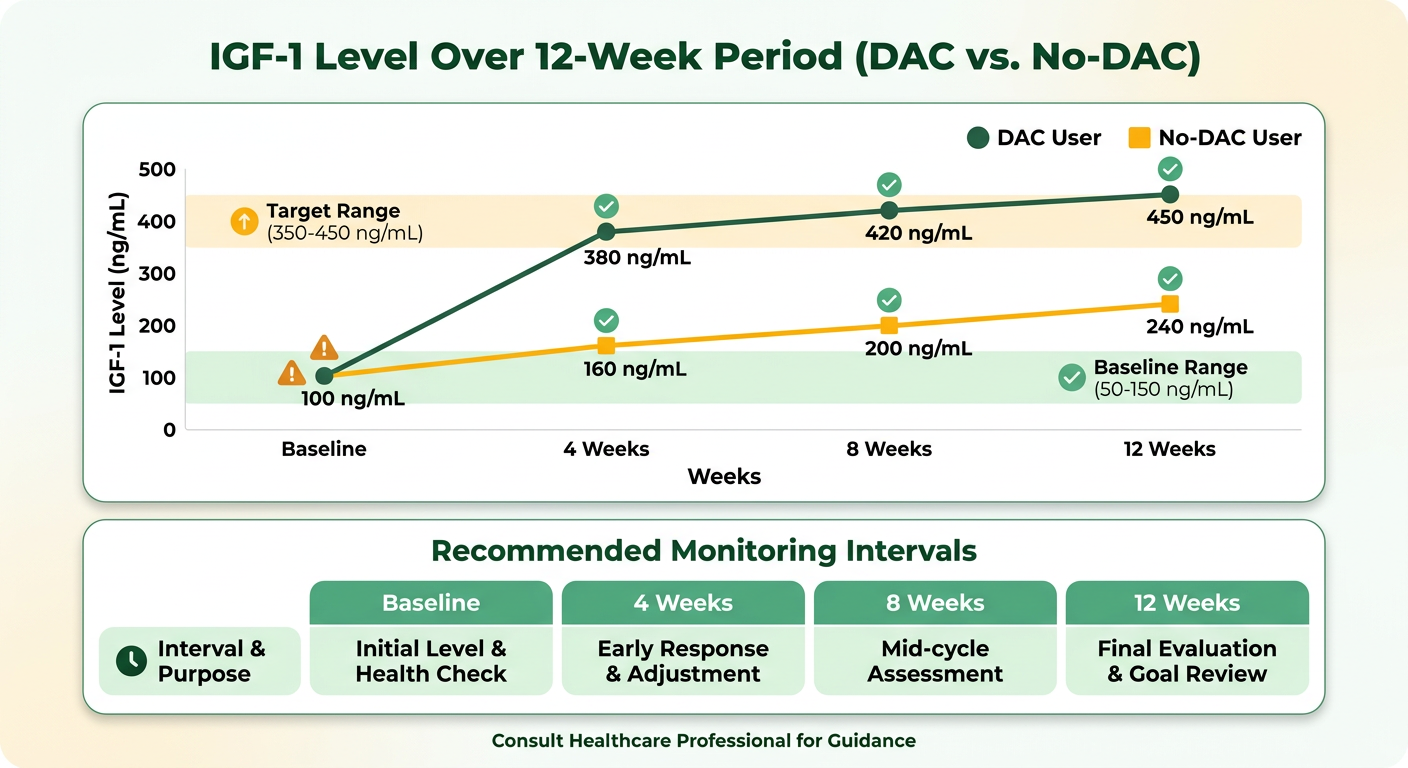
DAC may lock IGF-1 above baseline for an extended window
Early research describes the DAC version pushing mean IGF-1 up substantially after a single injection, with elevation lasting beyond the immediate dosing window. After repeated doses, some reports describe levels staying above baseline for several weeks, consistent with a cumulative effect.
That’s not a bug. It’s the whole design of a long-acting peptide. But it means once you inject the DAC form, you may have committed to an extended elevation you can’t dial back quickly.
Proteomic work adds a wrinkle worth knowing. In some analyses, IGF-1 changes tracked with specific serum fragments, while standard markers like IGF-1, IGFBP-3, and collagen peptides showed enough population variability that a single number rarely tells the full story. One reading is a snapshot, not a trend.
No-DAC gives you drift you can actually steer
Here’s the pharmacokinetic reason the two formats aren’t interchangeable for monitoring. The no-DAC form is described as clearing quickly. If a test shows IGF-1 climbing, you skip or cut tomorrow’s dose and the exposure fades quickly. With DAC, that same correction may take much longer to register in your blood.
That gap is exactly why no-DAC is the format that lets you steer at all. A short clearance window means fluid shifts and IGF-1 can be tracked closer to real time, and the next dose adjusted against what your body is actually doing. You can’t run that loop on a peptide that locks in prolonged signal per shot.
| Monitoring Factor | CJC-1295 (No-DAC) | CJC-1295 (DAC) |
|---|---|---|
| Half-life | Described as short | Described as long |
| IGF-1 elevation window | Shorter, dose-by-dose | May persist for weeks, cumulative |
| Correction speed if drift appears | Likely within a day | Longer |
| Fits real-time dose adjustment | Yes | No |
How to test, and when to act

Draw fasting IGF-1 at baseline before your first dose, then re-check at steady state a few weeks in. Time the draw consistently against your injection so you’re comparing like with like. One out-of-range value is noise; a repeated upward march past your own baseline is the drift that matters.
When drift shows on no-DAC, the short clearance window lets you cut the dose or space injections out and retest quickly. When it shows on DAC, the main practical lever is stopping and waiting out the clearance — which is why the no-DAC form suits anyone who wants to titrate around side effects at all.
One firm limit: check current anti-doping rules if you compete. Growth hormone secretagogues are widely described as prohibited, and no monitoring framework changes that.
Overall side-effect profile: DAC vs no-DAC
Pull the three side effects together and a pattern emerges. Water retention, headaches, and IGF-1 drift aren’t separate problems. They may share one root: prolonged, non-physiologic exposure that DAC is designed to produce. That single pharmacokinetic fact drives the entire comparison below.
The comparison matrix men should actually use
Risk icons: 🔴 higher relative risk, 🟡 moderate relative risk, 🟢 lower relative risk.
| Peptide format | Typical dose range | Frequency | Water-retention risk | Headache risk | IGF-1 drift risk | Regulatory status |
|---|---|---|---|---|---|---|
| CJC-1295 with DAC | Protocol-dependent | Often once weekly | 🔴 Higher | 🔴 Higher | 🔴 Higher (sustained exposure) | Verify anti-doping and compounding status |
| CJC-1295 no-DAC (Mod GRF 1-29) | Microgram-range, per protocol | Often several days weekly, sometimes with a GHRP | 🟡 Moderate | 🟡 Moderate | 🟡 Lower (short exposure) | Verify anti-doping and compounding status |
| Tesamorelin | Protocol-dependent | Often daily | 🟢 Lower–moderate | 🟡 Moderate | 🟡 Lower–moderate (shorter-acting) | Verify anti-doping and approval status |
Dose ranges vary, and tolerability should be assessed individually under appropriate supervision. Everything else in the DAC row traces back to the prolonged exposure window.
Why no-DAC is the format you can actually steer
This is the pharmacokinetic case worth understanding before you buy. No-DAC is described as clearing quickly. Because exposure is short-lived, a single dose does not commit you to days of sustained GH stimulation the way a long-acting format does. When water retention or a low-grade headache appears, you can trim the next dose, skip a session, or pull back the paired GHRP without fighting pharmacology that’s already locked in.
DAC gives you no such lever. Once injected, you own a prolonged exposure window whether or not the water retention shows up. You can’t dial around a side effect that’s already baked in.
BiohackNow carries both formats, so buyers can match the pharmacology to their tolerance and goals. All products are labeled for research and educational purposes only.
Where DAC still wins, and where to walk away
Give DAC its due. The convenience of one weekly shot is real, and some early reports describe sustained IGF-1 elevation with longer use.
Now the honest limits:
- Check anti-doping status before competing. Growth hormone secretagogues are widely described as prohibited. No dosing trick changes that.
- DAC is the wrong tool if side-effect control matters to you. You may trade a longer exposure window for the convenience of fewer needles. For most men chasing a lean, dry look, that trade loses.
- Watch the regulatory reality. Compounding restrictions and legal status vary by jurisdiction and change over time, so verify current rules before buying.
Our read: the pharmacology of DAC is real, but the non-pulsatile pattern is a plausible source of the worst side effects. No-DAC, with its short clearance window, is the format that gives users the most room to respond.
Cutting side effects, whichever formulation you run
Every man asking about CJC-1295 side effects wants the same thing: keep the recovery and lean-mass benefits, drop the bloat and the throbbing head. Most of these effects respond to technique, timing, and a few supportive habits. The catch is that your formulation decides how much control you actually have.
Here’s the pharmacokinetic reason that matters. No-DAC is described as leaving your system quickly; DAC is designed to stay bound to albumin much longer. So if a dose triggers water retention or a headache, no-DAC lets you course-correct faster by skipping or reducing the next shot. DAC locks in a longer exposure you can’t walk back as easily. That single fact is why real-time adjustment may work better with no-DAC, and it shapes every tip below.
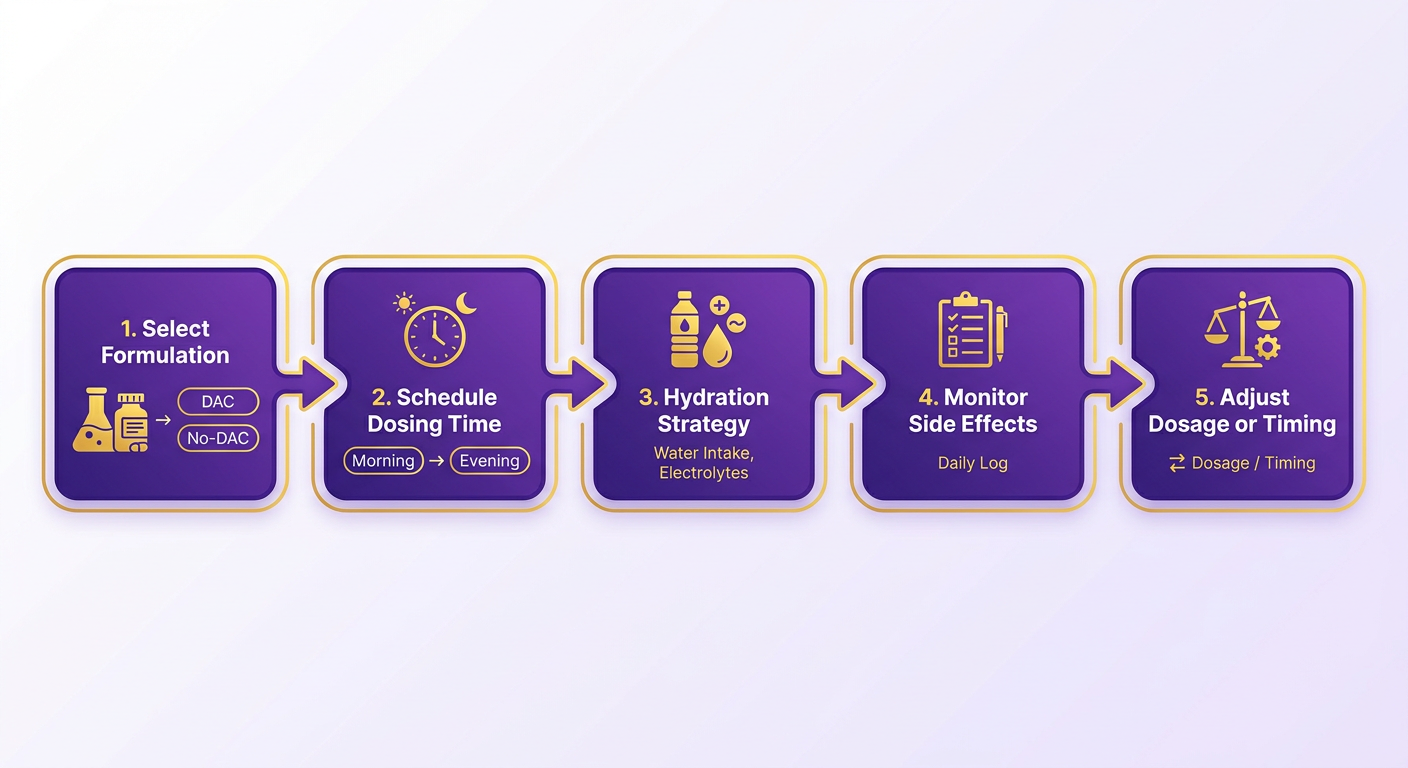
Inject at night, away from meals
Timing is the cheapest lever you have. Some protocols suggest taking your no-DAC dose before bed, after a few hours without food. GH pulses naturally during early sleep, so a nighttime shot may ride your own rhythm instead of fighting it. Insulin from a recent meal may blunt GH release, so the empty-stomach timing matters.
Rotate injection sites across the abdomen. Site rotation cuts the local reactions and irritation that show up when you hit the same spot repeatedly. Subcutaneous is the standard route for these peptides, and clean technique reduces the injection-site issues that safety reports commonly describe.
Hydration and supplements that may blunt fluid shift
Water retention feels counterintuitive to fight with water, but staying properly hydrated helps your kidneys regulate sodium rather than hoarding it. Some providers suggest moderating sodium early in a protocol, when fluid shift is most noticeable.
Magnesium and omega-3s are sometimes added to a GH-axis protocol. Both are commonly discussed as supportive for fluid balance and vascular tone, which speaks directly to the two symptom clusters men report: fluid retention and vasodilatory headaches. Sleep and stress management aren’t filler here either. Poor sleep and high cortisol both work against the GH axis you’re trying to support.
When to pause or drop your dose
Push past the dose your body tolerates and adverse events may climb. If headaches, persistent flushing, or numbness in your hands and feet show up, that’s your signal to lower the dose, not tough it out.
With no-DAC, pausing is simpler: skip a day, let it clear, restart lower. With DAC, you may be waiting out a longer exposure window no matter what. This is the practical core of a hydration-monitoring approach: track your morning weight, note headaches, and treat those readings as dosing inputs. A rapid morning weight jump over a couple of days may point to fluid retention rather than real gains, and no-DAC lets you act on that reading sooner rather than waiting out a fixed weekly window.
| Adjustment lever | No-DAC | DAC |
|---|---|---|
| Reverse a bad dose | More quickly | May take longer to clear |
| Titrate around side effects | Flexible, dose-by-dose | Less flexible, weekly |
| Clears from system | Described as fast | Described as prolonged |
One hard limit: verify current anti-doping status before use if you compete. Growth hormone secretagogues including CJC-1295 and Ipamorelin are widely described as prohibited, and no dosing trick changes that.

Questions People Ask
Can I switch from DAC to no-DAC CJC-1295 mid-protocol if side effects get bad?
Switching away from DAC does not immediately end current side effects, since DAC is designed to remain bound to albumin for a prolonged period after your last shot. You would wait out that clearance window before no-DAC’s shorter clearance gives you more real-time control over the next dose.
Does injecting CJC-1295 at a lower dose eliminate water retention entirely?
Lower doses may reduce fluid shift but rarely eliminate it entirely, because retention may trace back to prolonged GH signaling that nudges the kidney toward holding sodium. On no-DAC you may be able to skip or shrink the next dose and clear exposure sooner; DAC may lock in a longer exposure regardless of how low you dosed.
How is CJC-1295 different from Tesamorelin for someone worried about side effects?
Tesamorelin is often described as a shorter-acting option with a different approval and safety context. CJC-1295 with DAC is generally associated with a longer exposure window and higher reported risk across water retention, headaches, and IGF-1 drift. Check current anti-doping status for all of them if you compete.
Will a single IGF-1 blood test tell me if my levels are drifting too high?
One reading is a snapshot, not a trend. IGF-1 and IGFBP-3 show substantial population variability and may not be reliably predictive alone. Draw fasting IGF-1 at baseline, then re-check at steady state weeks later, timing draws consistently against injections. A repeated upward march past your own baseline is the drift that matters.
Are the headaches from CJC-1295 dangerous or just uncomfortable?
Most are described as vasodilatory headaches from blood vessels widening in the head, uncomfortable rather than dangerous. However, some safety discussions list elevated blood pressure among the vascular cluster, so avoid NSAIDs if you already run high pressure, since they can mask that signal. If headaches persist across multiple adjusted no-DAC cycles, stop and reassess.
Why does injecting on an empty stomach matter for reducing side effects?
Insulin released after a meal may blunt GH secretion, so eating before a dose may work against the peptide. Some protocols suggest dosing after a few hours without food, ideally before bed, so the dose may ride your natural early-sleep GH pulse instead of fighting it.
Can supplements actually reduce CJC-1295 water retention, or is that a myth?
Magnesium and omega-3s are sometimes used to support fluid balance and vascular tone; some practitioners believe they may help with the fluid and headache clusters men report. Moderating sodium early on and staying properly hydrated may also help kidneys regulate sodium. Skip diuretics unless a physician prescribes them, and treat rapid morning weight jumps as possible dosing inputs.
Free 15-Minute Discovery Call
Ready to take the guesswork out of your health?
Book a free 15-minute call with Monika to talk through your goals, what testing makes sense for you, and the right next step. No pressure, just clarity.
Book Your Free CallFor educational purposes only. Not medical advice.