
Key Takeaways
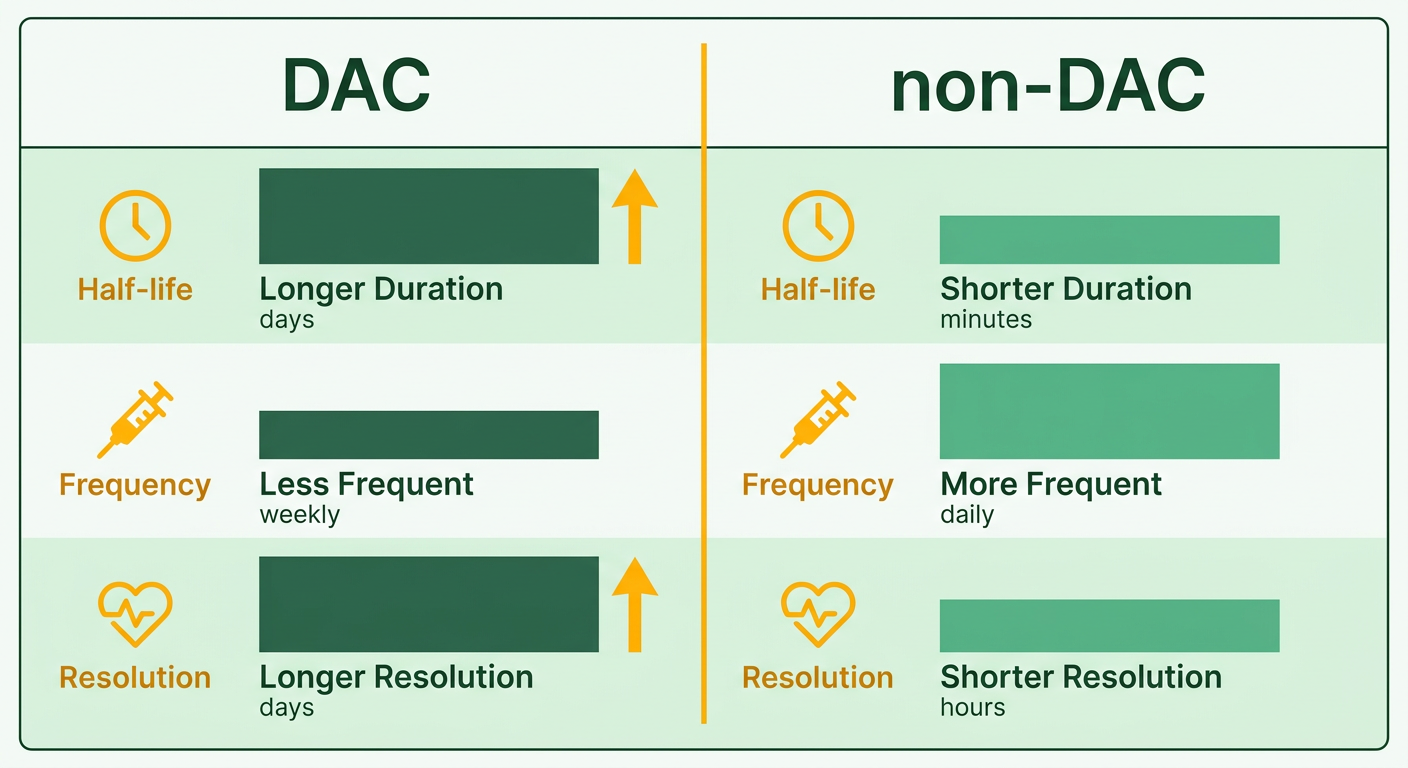
- CJC-1295 with DAC binds to albumin, extending its half-life.
- Most reported side effects come from sustained growth-hormone signaling.
- That long half-life limits quick dose corrections.
- Controlled studies in healthy adults showed sustained GH and IGF-1 increases.
- Research suggests the peptide preserves natural pulsatile GH release.
- Early warning signs are usually flushing and water retention.
- The non-DAC version acts faster but clears faster.
How the DAC version actually works
CJC-1295 with DAC is a synthetic GHRH analog that binds to albumin in your blood. That binding is the whole trick. The Drug Affinity Complex keeps the peptide active far longer than the non-DAC form. That lets you dose once or twice weekly instead of daily. But the same feature means the growth-hormone signal stays elevated the entire time.
That mechanism explains cjc-1295 with dac side effects. Most user reports trace back to sustained signaling, not acute toxicity.
Here’s where our approach differs. Most guides list the side effects and stop. At BiohackNow, every protocol is data-driven and personalized, guided by the biomarkers we track. The classic advice, „just adjust your dose,“ is slow and clumsy with a peptide that stays active for days. When flushing or water retention shows up, you can’t flush a long-acting peptide out of your system on demand. You catch the trend early or you ride it out. That’s why we review your markers as part of a tailored protocol.
What CJC-1295 with DAC actually is
A GHRH analog modified to resist breakdown and bind albumin, producing sustained GH and IGF-1 elevation from a single once- or twice-weekly subcutaneous injection.
Controlled work in healthy adults showed sustained GH and IGF-1 increases after a single dose. Research indicates the peptide preserves your natural pulsatile GH pattern rather than flattening it. It prompts the pituitary to secrete growth hormone in its normal rhythm.
The non-DAC version behaves differently. It acts faster and clears faster. That is why it needs more frequent dosing. That flexibility is exactly what the DAC form trades away for its longer, sustained signal.
What side effects do users actually report?
The common complaints are injection-site reactions, flushing, headache, and water retention. More serious concerns flagged in the literature include elevated blood pressure, glucose dysregulation, and fluid retention. Patient reports on the DAC form specifically describe persistent flushing and tingling that are hard to correct once they start.
The sources genuinely conflict here. Controlled trials reported no serious adverse reactions in healthy adults. Real-world patient reports describe stubborn tolerability issues. Our read: short-term studies capture statistical safety in tightly screened subjects, while sustained real-world use exposes recalibration problems. Both are true. They’re measuring different things.
On timing: the early adaptation window users describe lines up with the IGF-1 elevation curve. Early puffiness and flushing reflect your body adjusting to chronically raised growth-factor signaling, then resetting its own setpoints. That’s why monitoring trough IGF-1 during the first few weeks matters. It captures your post-adaptation baseline and flags anyone drifting into supraphysiological territory before it becomes a problem — the kind of monitoring experts recommend for IGF-1 and metabolic markers.
Who this fits, and who should skip it
This fits health-conscious adults and performance-focused users chasing body composition, recovery, and sleep benefits who are willing to monitor their markers. Skip it entirely if you compete under WADA rules. CJC-1295 is banned in sport, full stop.
Skip it too if you’re a woman seeking menopause symptom relief. As Dr. Ava Mainieri put it, „there is little evidence that CJC-1295 delivers promised outcomes, particularly for women.“ Established options like HRT have far stronger backing. CJC-1295 is also not FDA approved and sits on the FDA’s restricted-compounding list, so go in with clear eyes.
Why monitoring beats a fixed schedule
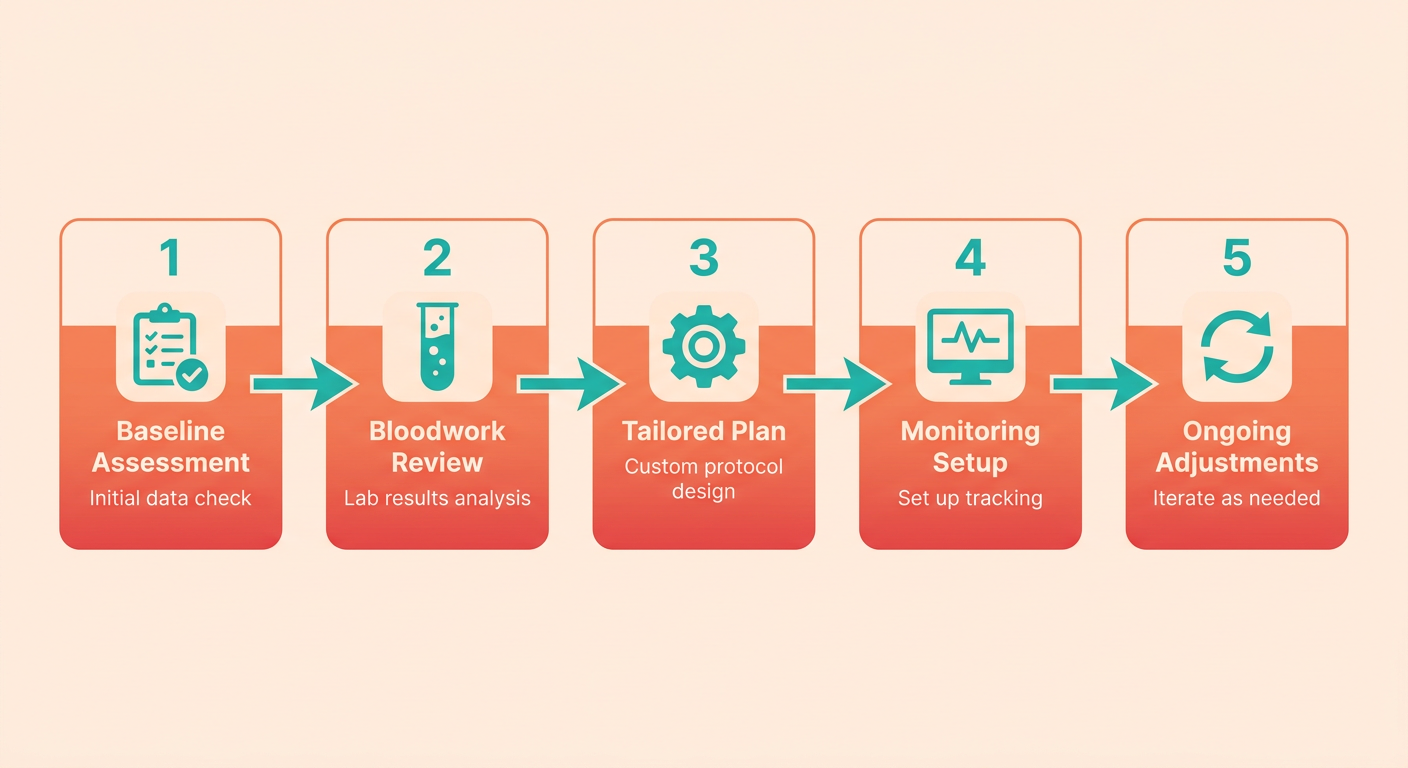
Most guides list the side effects and leave you to fend for yourself. We do the opposite. We review your bloodwork and health data to tailor a plan before a mild symptom becomes a reason to quit.
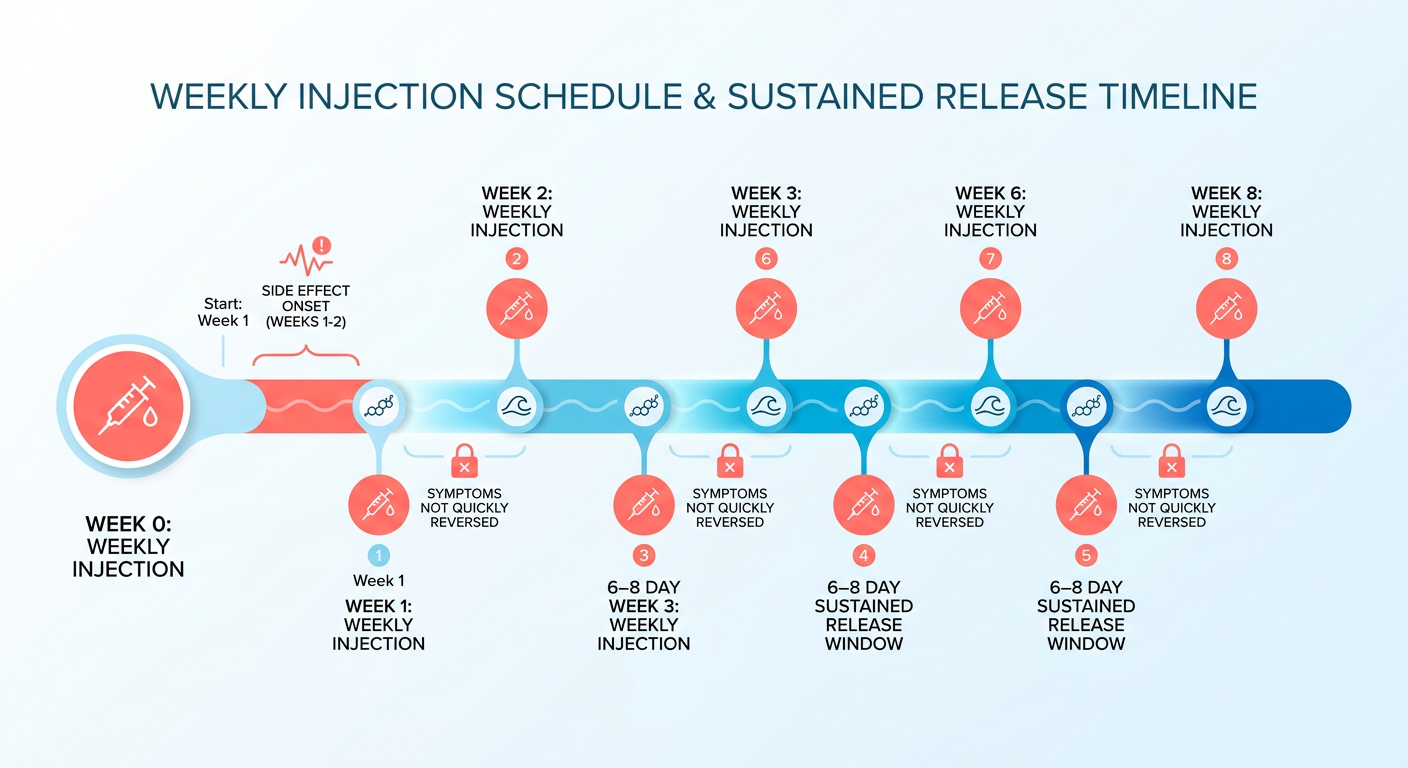
The extended-release profile keeps the peptide active for days, so flushing or mild swelling can’t be reversed quickly. That’s the safety gap structured oversight is meant to close, and it’s why the consultations are data-driven rather than a one-page checklist.
Which markers matter most
Our consultations focus on the markers that move first when GH signaling climbs too high: heart rate, blood pressure trends, fluid shifts, sleep, and glucose patterns you report, cross-checked against periodic IGF-1 bloodwork.
Why those? Because the DAC version’s half-life stretches past a week. Small daily shifts compound before they’re obvious. Elevated blood sugar and rising blood pressure are the two we treat as early warnings during your protocol.
Water retention usually shows up as weight change and swelling before you consciously register puffy hands. Catching it early instead of late changes how comfortable the whole cycle feels.
How we adjust your protocol
When your reported markers trend the wrong way, we help you lower or pause your next dose instead of pushing through. Most protocols treat this as a fixed weekly injection. We don’t.
If blood pressure or fasting glucose shows a steady upward trend, we scale back the volume of your next injection. That keeps minor physiological shifts from compounding into persistent discomfort.
Early in a cycle, your body goes through a metabolic shift as growth-factor levels climb. Rather than letting that disrupt your routine, we guide you through targeted adjustments, sodium intake, and hydration to ease the transition until your baseline stabilizes.
Getting started: your first cycle
Start low. The standard advice is to begin conservative and titrate up. Typical ranges run 30 to 60 mcg per kg, dosed once or twice weekly. Inject subcutaneously, at bedtime on an empty stomach, to work with your natural REM-sleep GH pulse.
In practice:
- Baseline week: log resting HR, BP, sleep, and glucose before the first injection.
- Weeks 1–4: expect mild puffiness or fatigue. We watch, we don’t overreact.
- Ongoing: recheck IGF-1 to keep you inside a safe physiological range, especially past 6 months.
For competitive athletes, the regulatory status and testing windows are absolute barriers. If you’re subject to drug testing, this compound is off the table under any protocol.
The timing problem you plan around
A sustained-release peptide leaves you little room to course-correct once a symptom appears. By the time something feels bad enough to report, you’re already committed to a signaling window you can’t quickly walk back. Understanding that timeline before you start is how you close the gap.
The same feature that makes weekly dosing convenient makes it harder to guess with. You can’t „just stop for a day“ when the compound is engineered for a multi-day effect. Planning matters more than reacting after the fact.
Why the first 2–4 weeks matter most
The adaptation window is real. During the initial weeks, your somatotropic axis is adjusting to a continuous exogenous stimulus. The pituitary and peripheral tissues see a sudden shift in growth-hormone receptor occupancy, which temporarily alters fluid dynamics. Once receptor sensitivity and renal clearance find a new equilibrium, those transient shifts usually resolve.
This lag is why immediate panic is often unwarranted — and why patience helps. Knowing your vascular system is adapting to altered osmotic pressure keeps you from making premature changes to an otherwise effective protocol.
That’s also why hydration and dose timing actually help. Your body is recalibrating, not poisoning itself. But recalibration can overshoot, which is exactly why structured follow-up matters.
How follow-up testing catches problems early
Sustained signaling can trigger glucose dysregulation, so fasting insulin and HbA1c are worth monitoring. Water retention and elevated blood pressure are reported more by DAC users than non-DAC users, so those are worth tracking too.
Relying on subjective feelings alone can mislead you. Tracking objective markers like HbA1c and fasting insulin catches subtle shifts in insulin sensitivity long before they show up as fatigue or metabolic sluggishness. It removes the guesswork from long-term management.
That’s the case for building protocols around your own bloodwork rather than a one-size-fits-all template, so adjustments are grounded in what your labs actually show before the long half-life locks in a difficult stretch.
When to skip the DAC version entirely
Some clinical profiles are poorly suited to this peptide. If you have pre-existing metabolic syndrome, or you’re seeking endocrine support for age-related transitions, look elsewhere. Ovarian aging and its symptoms, for one, are far more effectively managed with bioidentical hormone replacement, which directly addresses the underlying receptor deficiencies.
For fat loss and visceral fat specifically, the non-DAC form or other GHRH analogs give you tighter control and lower side-effect risk. The weekly-dosing convenience of DAC isn’t worth it if you can’t fine-tune when problems appear.
Over extended periods, set a clear ceiling for growth-factor levels. Regular blood panels keep your systemic levels out of ranges associated with acromegalic-like symptoms. Our blog has guides on interpreting these lab values and knowing when a structured break is necessary.
Running it safely
Treat CJC-1295 with DAC as a monitored protocol, not a fixed weekly injection you set and forget. The long-acting form keeps working for days after each dose, so you can’t reverse a bad reaction by skipping a shot. That single fact reshapes every practice below.
Because the extended-release formulation stays active for over a week, any adverse reaction persists until the compound naturally degrades. There’s no immediate clearance mechanism, so your safety margins have to be built into the front end of the protocol rather than relying on emergency cessation.
How to start safely
Start low, dose at night, and monitor your response closely. Eternity Health Partners puts it plainly: „start with lower doses and gradually increase it.“ Beginning at the lower end of the clinical range lets you assess your vascular and neurological tolerance before committing to a full dose.
Timing matters too. PatientPop’s clinical guidance recommends dosing „before bed on an empty stomach to maximize HGH release during REM sleep.“ GH pulses peak overnight, so how you feel in the mornings, and how your sleep and recovery shift, tells you a lot about your response.
Rotate injection sites to limit local reactions. Stay hydrated. Water retention and puffiness in the hands and face are the most common early complaints, and fluid balance blunts them.
Why monitor closely through the first month
The first 2 to 4 weeks are when acute cjc-1295 with dac side effects peak, then fade. MyPeptideMatch reports most transient effects „diminish after the first 2-4 weeks as the body adjusts to elevated growth factor levels.“ Tracking your daily physical responses during this window separates normal adaptation from a persistent adverse reaction.
A useful habit: log fasting glucose weekly during this window, since elevated growth-factor signaling can nudge insulin sensitivity in some users. Readings that stay normal while flushing and heaviness taper off are a good sign you’re recalibrating on schedule.
If your resting heart rate, blood pressure, or overnight temperature keeps climbing past week four, that’s not adaptation. That’s your cue to bring the dose down.
When to skip DAC entirely
Athletes under anti-doping regulations must avoid this compound. Its extended presence in the body makes detection windows far longer than short-acting alternatives, which makes compliance impossible.
The evidence on safety is genuinely mixed. Midi Health notes the FDA restricts CJC-1295 in compounded medications, and experts caution that long-term human safety data for CJC-1295 specifically is limited. Our read: the FDA action reflects missing approval data, not proven harm in controlled use. The gap is oversight — which is what monitoring supplies.
Extended exposure to elevated growth factors can bring joint stiffness and altered glucose metabolism. Periodic blood panels confirm your levels stay within a healthy physiological range. Our blog breaks down the specific biomarkers we track for long-term safety.
How it compares to the alternatives
Compare CJC-1295 with DAC against its alternatives and one theme keeps surfacing: the DAC version trades flexibility for convenience. The half-life is long, so you inject weekly. But if flushing, tingling, or water retention shows up, you can’t back out for the better part of a week.
That drives how we position it against the non-DAC form and other GH-releasing options. The side effects users describe, mostly in the extremities, are harder to manage precisely because the signal won’t clear on demand.
The main alternatives
Three realistic ones: non-DAC CJC-1295 (Mod GRF 1-29), ipamorelin, and tesamorelin. Each solves a different problem the DAC version struggles with.
The non-DAC variant clears fast. That rapid decay lets the pituitary return to baseline quickly, mimicking the natural episodic release of growth hormone. If you’re sensitive to sustained hormonal elevation, that pulsatile action offers more safety and control.
Ipamorelin earns a mention for one reason: it does not meaningfully affect blood pressure at standard doses. CJC-1295 is also associated with more water retention than ipamorelin. If puffiness or blood-pressure creep is your main worry, that difference matters.
Tesamorelin sits in a different lane, positioned as a stronger option for visceral fat reduction and metabolic health. If fat loss is your primary goal, the DAC version isn’t your best bet.
When to choose DAC over the alternatives
Choose the DAC version when injection frequency is your real barrier and your side-effect risk is being watched closely. Weekly dosing is a genuine advantage for people who won’t stick to daily shots. That’s the honest case for it.
The decision comes down to lifestyle compatibility versus clinical control. Daily injections let you pause instantly if a side effect arises, but they demand a level of daily commitment many people can’t maintain. The extended-release form simplifies your routine but demands more upfront screening and ongoing vigilance.
Because of that tradeoff, our clinical team, physicians, nurse practitioners, and paramedics, monitors your progress closely. We work through the compound’s extended active window by weighing your subjective feedback against objective data before clearing you for the next dose.
Skip DAC if…
If your primary goal is metabolic optimization or targeted fat reduction, other GHRH analogs give you more direct pathways. Anyone with borderline insulin resistance or fluctuating cardiovascular metrics should reach for shorter-acting compounds that don’t place a continuous demand on pancreatic or vascular systems.
Given the limited long-term trials for these peptides, caution wins. Rather than following standardized internet protocols, anchor your therapy to regular lab work — it’s the only reliable way to reduce the risk. For how we structure these protocols, see the clinic blog.
Troubleshooting
Most CJC-1295 with DAC side effects show up in the first few weeks, and nearly all trace back to one thing: your body adjusting to chronically elevated growth-factor signaling. Flushing, tingling, water retention, and mild puffiness in the hands and face are the usual suspects. The good news is they’re transient. The catch with the DAC version is you can’t clear them on demand.
It helps to read early physical shifts as regulatory adjustments, not adverse events. Minor fluid retention or mild flushing means your endocrine system is adapting to a new baseline. Small changes to daily habits smooth the transition.
Why you can’t just stop when side effects hit
The DAC version has no fast off-ramp. The Drug Affinity Complex prevents rapid clearance, so any response, good or bad, runs its course over several days. Unlike shorter-acting peptides that allow daily adjustments, this one demands you anticipate issues before they show up.
Our method leans on continuous feedback. By checking your metabolic and cardiovascular trends at regular intervals, we can adjust the regimen with information rather than hope. If your data suggests you’re overresponding, we lower the next scheduled dose preemptively.
Debugging common issues
Match the symptom to a specific fix. Most early problems respond to small adjustments in timing, dose, and fluid intake:
- Fluid shifts and peripheral swelling: often made worse by high sodium. Keep the diet clean, add potassium-rich foods, stay consistently hydrated to support lymphatic drainage. If cardiovascular metrics trend steadily upward, a dose reduction is warranted.
- Microvascular flushing and paresthesia: that warming, tingling sensation comes from GH-induced vasodilation. The best fix is letting your vascular system adapt gradually with a conservative titration schedule in the early weeks.
- Transient headaches or lightheadedness: these can hit if the injection lands during active digestion, which alters insulin dynamics. A strict fasting window of two to three hours before your evening dose stabilizes blood glucose and cuts these down.
- Long-term biomarker drift: over extended cycles, systemic growth factors can accumulate beyond optimal levels. Regular lab evaluations catch this drift early, so you can schedule therapy breaks to protect joints and insulin sensitivity.
When to skip DAC entirely
If your lifestyle demands maximum flexibility, or you answer to an athletic governing body, this long-acting formulation is unsuitable. The regulatory restrictions around compounded peptides are a reminder to source and use these compounds only under clinical guidance. For those who proceed, our monitoring protocols supply the safety framework — detailed on the blog.
Tools that make it manageable
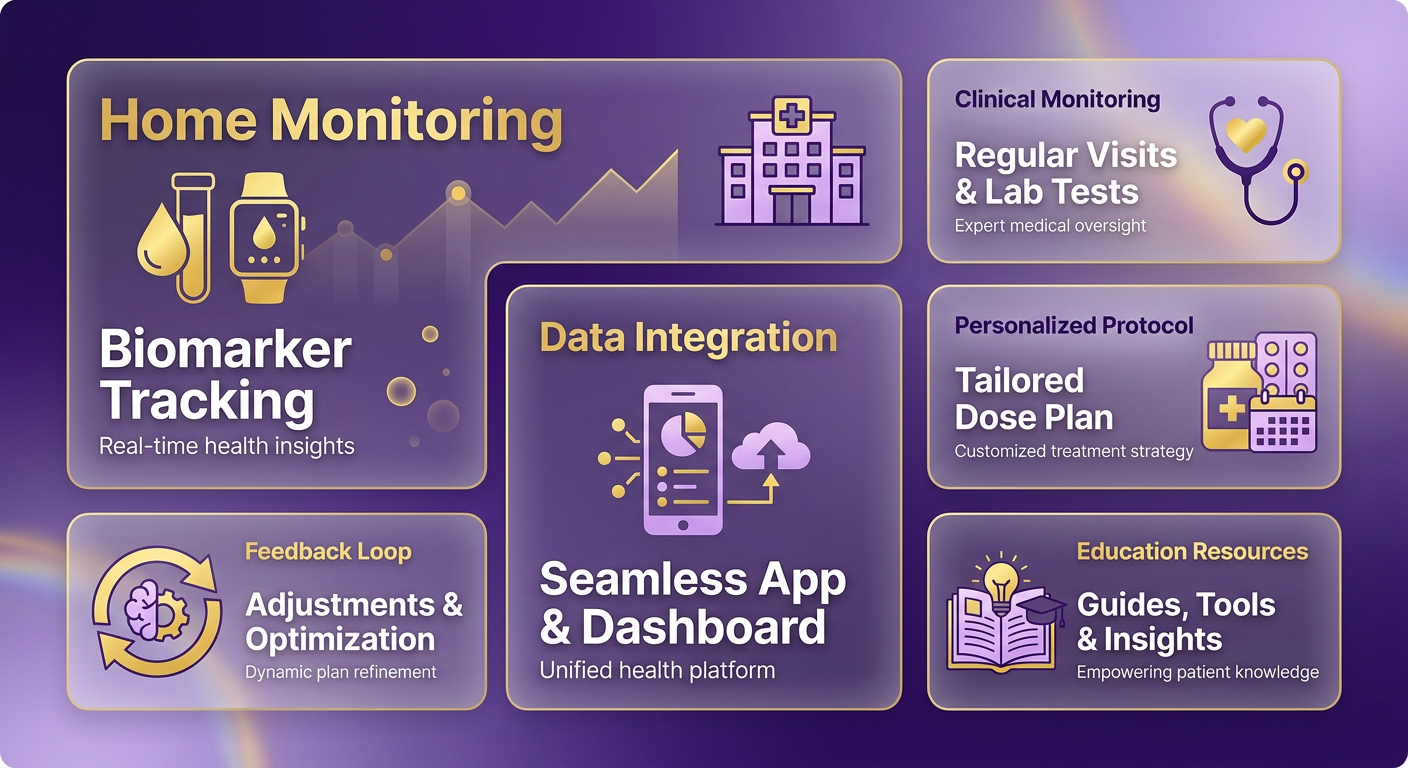
The tools that keep CJC-1295 with DAC side effects manageable fall into two buckets: what you measure at home, and what your clinical team tracks between visits. The extended half-life means side effects build gradually, so you need a setup that catches slow drift instead of waiting for a bad day.
The same albumin-binding that gives the DAC form its multi-day half-life is what makes real-time data worth having. Instead of guessing whether flushing or a rising heart rate is starting, you watch the numbers. That’s the precision-medicine layer most guides skip.
Which wearables to track
A continuous heart-rate and blood-pressure monitor plus a sleep-and-recovery wearable covers most early warning signs. They flag the two changes that show up first with sustained hormonal signaling: resting heart-rate creep and disrupted sleep architecture. When the trend moves, you adjust before the signal locks in for the week.
Look for a wearable that logs resting heart rate, heart-rate variability, and skin temperature overnight. Water retention and puffiness often track with a temperature and HRV shift a day or two before you notice them in the mirror. A wrist or ring device that exports daily trend data does the job.
Add a home blood-pressure cuff if you’re prone to fluid retention. The DAC form’s extended activity can nudge blood pressure upward, and a two-minute morning reading gives you a hard number instead of a vague „I feel puffy.“ Log it alongside your wearable data so the trends line up.
The testing and logs that actually help
Periodic bloodwork for IGF-1 and fasting glucose is the single most useful lab tool. IGF-1 tells you whether your signal is in a sensible range or running hot. Fasting glucose catches the insulin-sensitivity shifts sustained activity can cause. Run both before starting and every few weeks early on.
Keep a simple symptom-and-dose log. A spreadsheet or notes app is fine. Record your dose day, injection site, and any flushing, tingling, or swelling, then match it against your wearable trends. Patterns you’d never spot day to day become obvious across a few weeks.
Reading peer-reviewed literature on growth-hormone secretagogues gives useful context on what to expect. BiohackNow’s blog translates the clinical data into practical tracking templates you can actually use.
Turning data into dose adjustments
Feed the wearable and lab trends into your dosing decision, not just your worry. If resting heart rate climbs several beats over baseline and HRV drops for two straight nights, that’s a signal to hold or lower the next dose. Wait for the symptom to peak and you’re riding it out for the rest of the week.
Skip the elaborate monitoring if you’re only trialing the non-DAC form for a short block. That version clears in hours, so a symptom diary is enough.
What I’d actually recommend
CJC-1295 with DAC works best when you treat side effects as signals to measure, not surprises to endure. The core problem is duration. Because the DAC version keeps GH elevated for days, you can’t undo a bad reaction by skipping a dose. That’s why our protocols are built on baseline testing and ongoing biomarker tracking that flag trouble before it settles in.
If you take one thing from this guide: the most common cjc-1295 with dac side effects are manageable when you catch the drift early. Flushing, tingling, water retention, and joint discomfort all track back to sustained signaling. Watch the numbers, and you rarely reach the point where quitting feels like the only option.
What to do next
Start with monitoring, not the injection. Establish your baseline heart rate, blood pressure, and recovery metrics before the first dose. Then let your tracked biomarkers guide adjustments across the multi-day signaling window each dose creates.
That shifts your role from passive observer to active manager. Objective physiological data beats subjective guesswork every time.
Women seeking relief from menopausal symptoms should look at established clinical pathways instead. Standard hormone replacement has an evidence-based track record for these specific endocrine shifts, which makes it a far more appropriate choice than an unapproved peptide.
Is it safe and legal?
You need a clear read on current compounding restrictions before sourcing anything. The FDA’s classification of certain peptides is a signal to slow down and get professional guidance.
Those decisions often stem from a lack of standardized safety data rather than documented adverse events in clinical settings. Balancing that regulatory caution against real-world clinical observation is how you make an informed call.
Which comes back to professional oversight. Partner with qualified providers, track your biomarkers rigorously, and you can work through the gray areas safely.
Where to learn more
Keep building the knowledge before you build the stack. Reread the sections on the first 2–4 week adaptation window and the monitoring approach. Together those two do most of the heavy lifting for keeping side effects mild.
For more on endocrine health and monitoring techniques, our blog has articles on the science of biomarker optimization.
The takeaway holds across everything above. CJC-1295 with DAC rewards planning and punishes guesswork. Measure your baseline, watch the early signals, and adjust off real numbers. That’s how you get the benefits without riding out days of avoidable discomfort.
Frequently Asked Questions
1. Can I take an antihistamine to reduce the flushing from CJC-1295 with DAC?
The article does not address antihistamines. Because peptide-induced flushing is typically driven by rapid microvascular vasodilation rather than an IgE-mediated allergic reaction, antihistamines may not provide relief. The most reliable approach is to allow your vascular system to adapt naturally by using a conservative dosing schedule and maintaining optimal hydration.
2. Is water retention from CJC-1295 with DAC permanent?
No, fluid retention is temporary. These shifts occur as your body adjusts to altered osmotic pressure and growth-factor levels. You can manage this transition by monitoring your sodium intake and staying well-hydrated. If swelling or associated blood-pressure changes do not resolve after the initial weeks, it is a clear indication to discuss a dose adjustment with your clinical team.
3. Does CJC-1295 with DAC cause the same side effects in everyone?
Individual responses vary significantly based on your unique biochemistry, baseline hormone levels, and pre-existing health status. While some individuals experience minimal disruption, others may be more sensitive to vascular or metabolic shifts. This variability highlights the importance of personalized screening and baseline testing rather than relying on generic protocols.
4. What happens if I miss a scheduled CJC-1295 with DAC injection?
While the article does not explicitly cover missed doses, the extended active window of the compound means that missing a dose by a day or two is unlikely to cause a sudden drop in systemic levels. You should avoid doubling the next dose to compensate; instead, simply resume your regular schedule to maintain stable steady-state kinetics.
5. Should I choose ipamorelin instead if blood pressure is my concern?
If cardiovascular stability is a primary concern, alternative secretagogues may be more appropriate. Certain options exhibit high selectivity for growth hormone release without significantly impacting fluid retention or vascular tone. Discussing these selective alternatives with your healthcare provider can help you identify a safer path forward.
6. Why does monitoring IGF-1 matter more after six months of use?
Over extended periods, continuous stimulation can lead to a cumulative rise in systemic growth factors. Monitoring these levels past the six-month mark ensures that your baseline does not slowly drift into ranges that could cause joint discomfort or affect insulin sensitivity, allowing you to plan timely therapy breaks.
7. Can wearables actually help me catch CJC-1295 with DAC side effects early?
Yes, smart wearables are highly effective for tracking subtle physiological trends. Changes in autonomic markers, such as overnight heart-rate variability or resting heart rate, often signal systemic shifts before physical symptoms become noticeable. Monitoring these daily trends allows you to make proactive adjustments to your wellness routine.
Free 15-Minute Discovery Call
Ready to take the guesswork out of your health?
Book a free 15-minute call with Monika to talk through your goals, what testing makes sense for you, and the right next step. No pressure, just clarity.
Book Your Free CallFor educational purposes only. Not medical advice.