
TL;DR
- Early scale increases on CJC-1295 are often reported as fluid rather than new tissue; true lean-mass accrual tends to build slowly.
- CJC-1295 is understood to increase growth hormone and IGF-1, and some providers link higher IGF-1 to changes in sodium handling and water retention.
- Any fluid retention may be delayed and build gradually; visible puffiness in the ankles, hands, or face can be a late sign.
- The DAC form is generally described as long-acting and often dosed weekly, so any water-related effects may be more continuous between doses.
- A single weekly weigh-in can be misleading because fluid shifts may mimic or mask real body-composition changes.
- Overnight weight jumps are more consistent with fluid, while gains that build slowly over weeks may be closer to real tissue.
- Many clinicians consider baseline and follow-up IGF-1 labs a minimum safety standard for CJC-1295 use.
What the scale is actually telling you in week one
On CJC-1295, early scale changes may mainly be fluid rather than muscle. Learning to separate water retention from real weight gain can prevent panic dose changes or missed health signals.
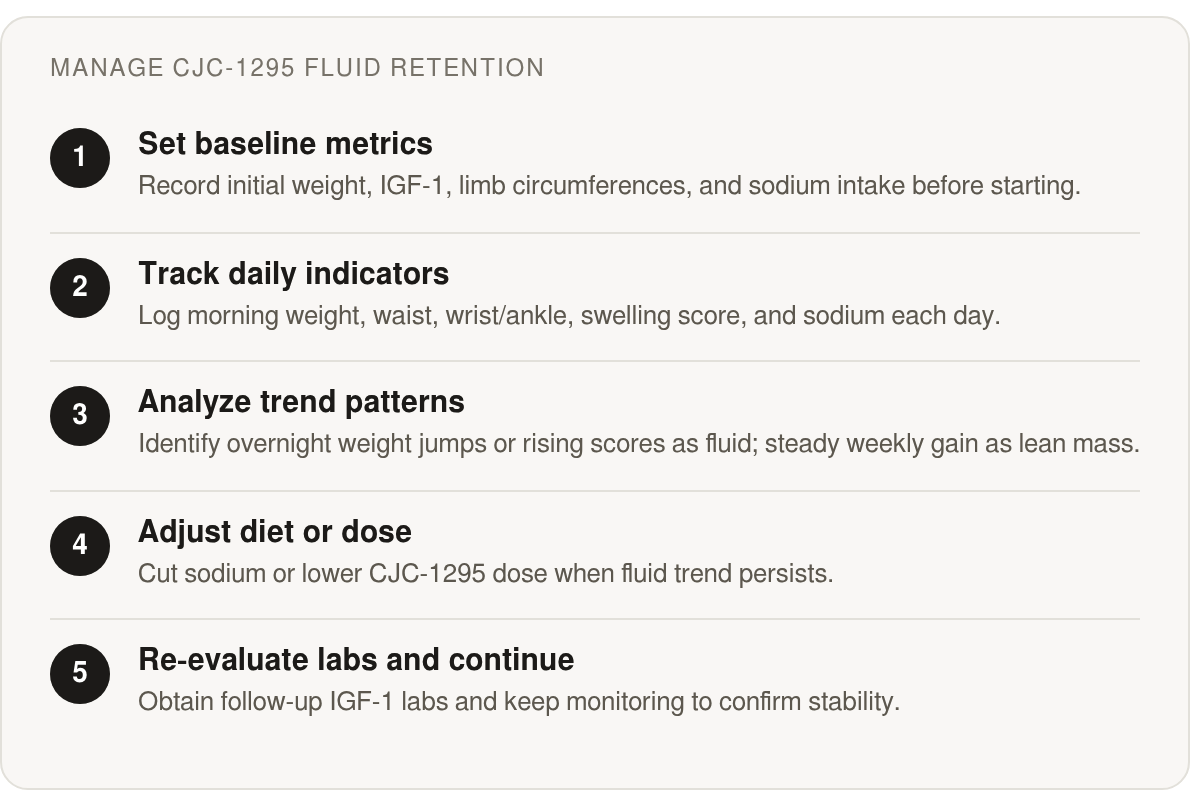
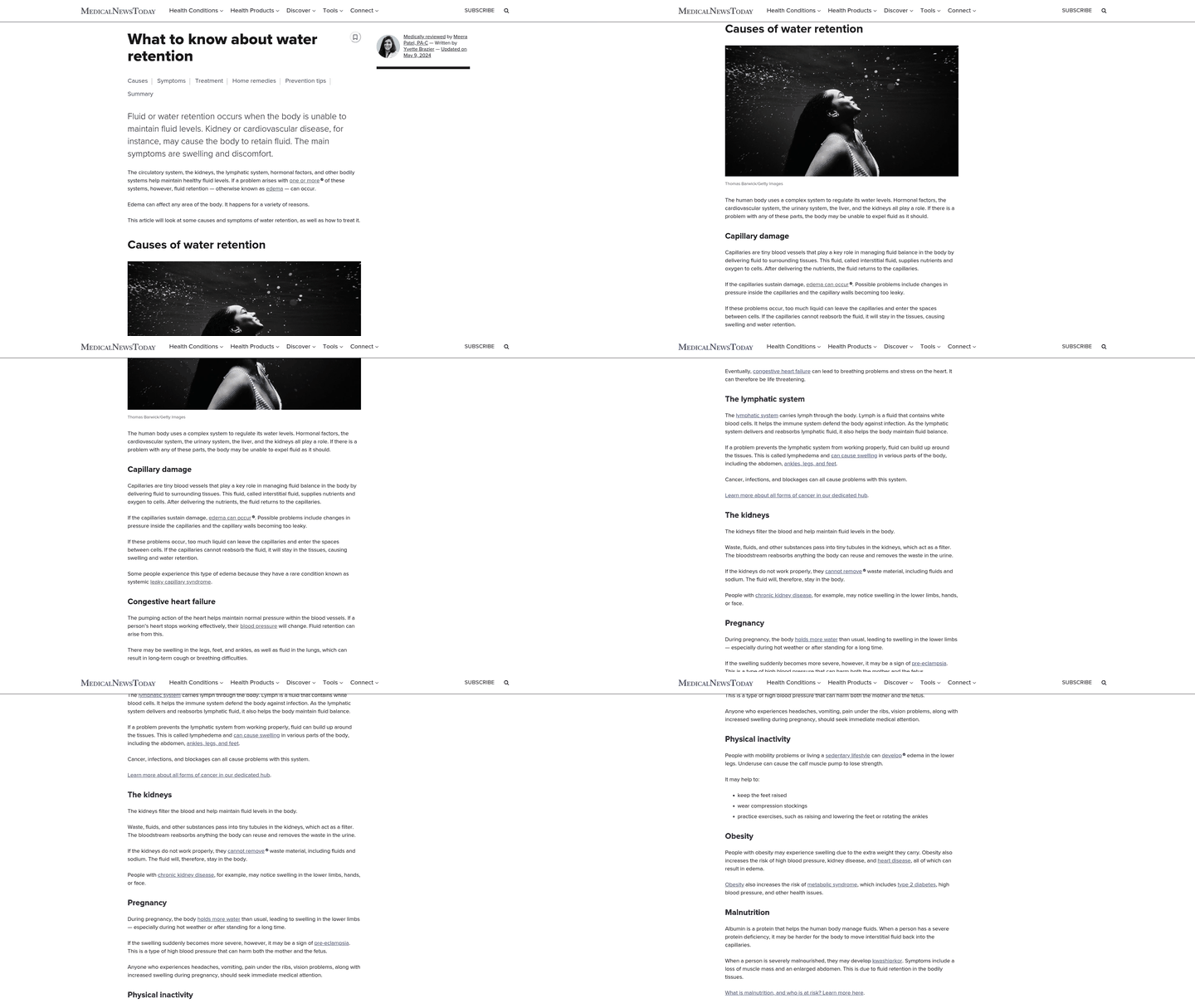
The timing clue matters. CJC-1295 is understood to increase GH and IGF-1, and in some people that may contribute to sodium retention. Genuine lean-mass accrual tends to move more slowly. So weight that appears early may be fluid, while weight that builds steadily across months is more likely tissue. Time is often more useful than the amount alone.
Why mistaking fluid for fat sabotages your results
The risk is acting on the wrong signal. If the scale rises and you cut the dose or add cardio when the gain was mostly fluid, you may blunt a protocol that was working.
The reverse can also hurt. Ignoring persistent swelling because you assume it is muscle may mask edema related to kidney, heart, or thyroid problems. Fluid shifts can mimic and hide true composition change, which is why one weekly weigh-in can be misleading.
When the swelling actually shows up
Fluid retention on CJC-1295 is often described as delayed rather than immediate. It may build for a while before it becomes visible, so puffiness in the ankles, hands, or face tends to be a late signal.
Some people treat swelling as an acute problem to stop the moment it appears. Others view it as a slower process that is easier to catch with structured tracking. Both perspectives can be true: visible swelling is usually downstream of a process that started earlier. Waiting until your face puffs may mean you missed a window where daily weight, limb measurements, and a small dose adjustment could have helped.
That window is why some people track daily signals rather than waiting for symptoms. Daily weight and limb circumference alongside IGF-1 response can provide an early-warning loop for dose titration. You may be able to trim the dose while sodium-related retention is still building, before visible swelling reaches your hands and face.
What your monitoring checklist should include
Track these on the cadence listed, and compare each reading to your own baseline rather than a generic target.
- Weigh daily at the same time. A sudden overnight jump often reads as fluid; slow gains over weeks may read as lean mass.
- Measure ankle, wrist, and waist circumference weekly. Rising limb measurements may point to edema, not muscle.
- Log a daily puffiness and stiffness score. Morning hand tightness can be an early retention flag.
- Record sodium intake daily. Easing off sodium may resolve mild retention without touching the dose.
- Book baseline and follow-up IGF-1 labs. Many clinicians consider this a minimum standard for safe use.
Green flag: stable weight, no swelling, hold course. Yellow flag: overnight fluid jump plus rising sodium, tighten the diet. Red flag: persistent facial or ankle edema, seek evaluation before your next dose.
How CJC-1295 moves your hormones and your fluid
CJC-1295 is understood to promote GH release and raise IGF-1. Some providers think the water retention starts with that IGF-1 rise, possibly through changes in how the kidneys handle sodium. When sodium is retained, water may follow into the extracellular space, and some people notice puffiness in the ankles, hands, and face.
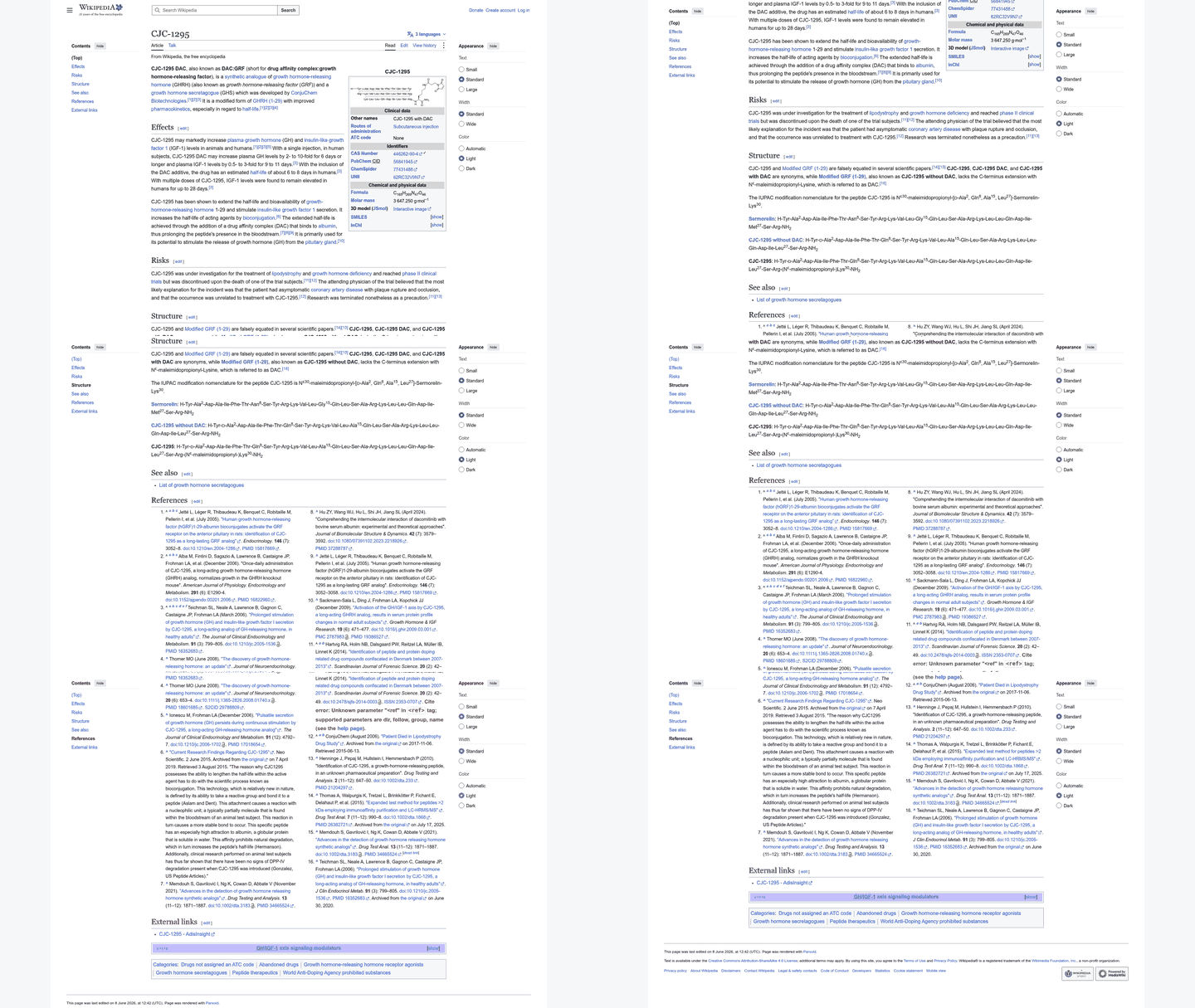
These changes are not necessarily immediate. In many people, any fluid shifts appear gradually rather than right after an injection. The gap between a hormonal signal and a visible symptom is one reason daily records may be more useful than a single post-injection check.
The DAC variant stretches one signal across a full week
The DAC form is generally described as long-acting, which is why it is often dosed weekly instead of daily.
With a long-acting form, any fluid-related effects may be more continuous between doses rather than spiking and clearing. You may not be riding a short pulse that clears quickly. If the driver is continuous, a single before-and-after injection weight check may not tell you much, and daily trend data can be more informative.
Retention runs on a clock you can monitor
Fluid retention here may be delayed-onset, building gradually rather than hitting all at once. Some guidance frames swelling as an emergency to stamp out the moment ankles puff. A different view is that by the time swelling is visible, you may have missed earlier daily-tracking signals that could have supported a dose adjustment.
That is the logic behind pairing daily records with dosing. Watching the trend while the fluid signal is still building can help you and a clinician decide whether to trim the dose before edema becomes obvious.
- Log a daily body-weight or device trend so a slow upward drift is visible before swelling appears.
- Track weight as IGF-1 builds, because early changes may track sodium-related fluid rather than lean tissue.
- Flag any reading that keeps climbing over consecutive days as a dose-titration signal, not a reason to panic.
Age, baseline GH, and kidney function shift the response
The same dose does not land the same way in two people. Response may vary with baseline GH, age, and kidney function. Some people with lower baseline GH may see a larger relative rise in IGF-1, and older kidneys may clear a sodium load less efficiently, so retention may show up faster and linger.
This is where a personal data loop can help. Instead of guessing where you fall on that spectrum, you can calibrate against your own daily numbers. At BiohackNow, protocols can be built around that individual response curve rather than a one-size dose.
Extra tracking may be less important for a short, low-dose test cycle with no history of edema or renal issues. The tracking is more useful when doses climb, cycles run long, or your baseline already leans toward fluid retention.
Daily Monitoring Checklist: What to Track and How
A daily log only works if you capture the right variables at the same time every day. The point of tracking CJC water retention is to separate a fluid signal from real tissue, and that only shows up when your data is consistent enough to trust. Sloppy timing hides the trend you are trying to see.
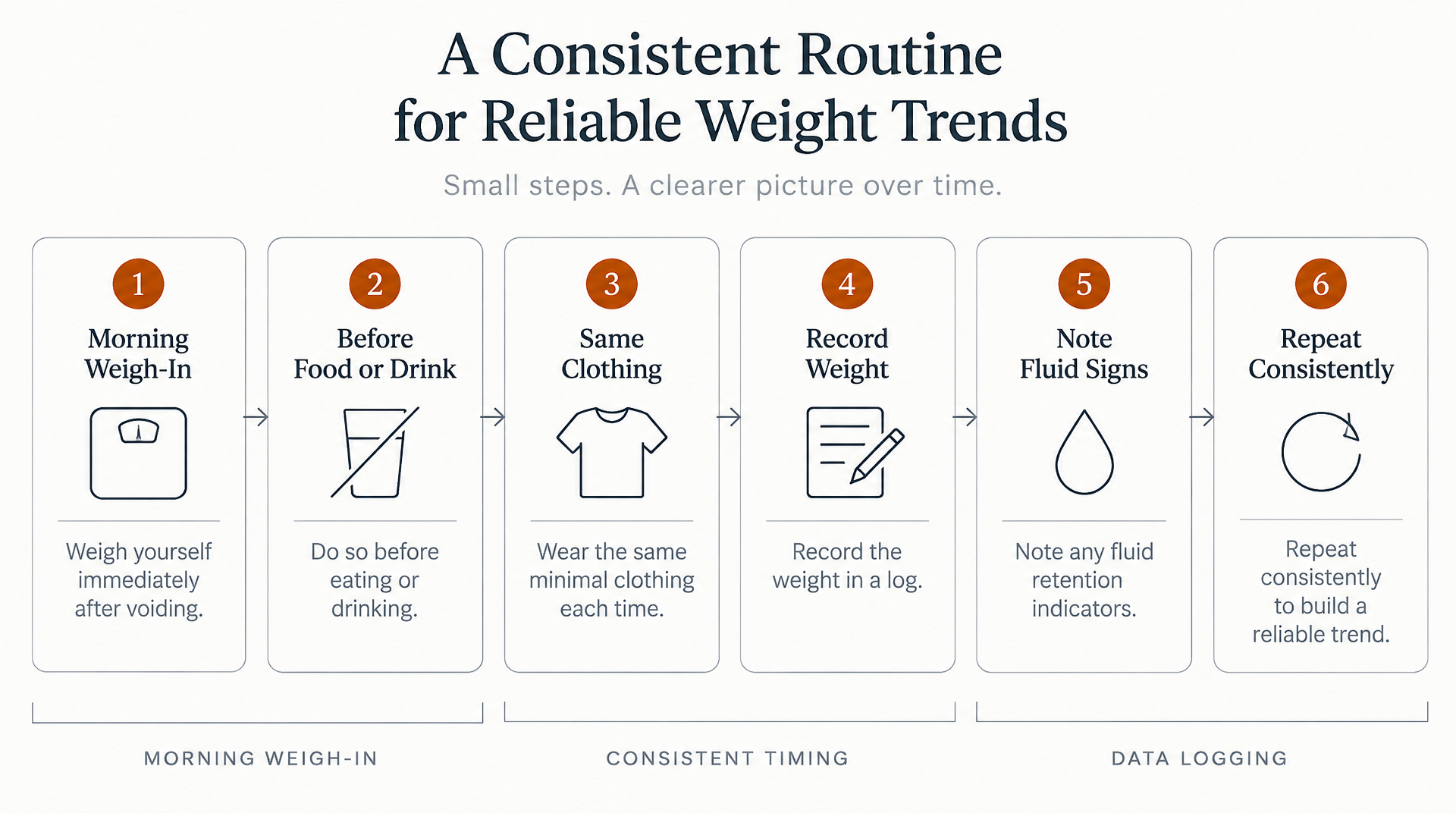
The anchor rule: weigh yourself every morning, right after you void, before food or water, in the same minimal clothing. That single habit removes most of the day-to-day noise. Once the scale is honest, the rest of the checklist tells you whether an early bump is water or tissue.
What to record every morning
These numbers move first when sodium retention kicks in, so they belong in your log before you eat.
- Morning body weight, post-void, same scale, same time. A sudden overnight jump is more likely fluid than muscle.
- Waist circumference at the navel. This catches central puffiness the scale alone can miss.
- Wrist and ankle measurements. These distal points may swell earlier, so a creeping wrist number can be an early flag.
- Calf and biceps once a week. Slower-moving sites help you confirm genuine lean-mass change over months.
How to score swelling and intake
Numbers tell you what changed. A symptom rating tells you how it feels, and diet tells you why. Log all three together so a pattern can emerge.
- Swelling and stiffness on a 0 to 10 scale. Rate hands, face, and ankles each morning. A rising score over several days is a titration cue, not a reason to panic.
- Total fluid intake in liters. Big swings distort your morning weight and make trends unreadable.
- Sodium and potassium intake. Sodium may drive retention; potassium may help offset it. Keeping sodium moderate while your IGF-1 is climbing is a sensible ceiling.
- Sleep hours and quality. Poor sleep may worsen fluid handling and muddy your readings.
- Training load and session type. Hard lifting and DOMS cause their own transient swelling, so note it to avoid false alarms.
Can a wearable close the loop for you?
Manual logs are good. Some people add a wearable or smart scale that estimates body water, but it is best treated as a trend tool rather than a precise medical measurement. Accuracy can vary with hydration, device placement, and the specific reading the device displays. A clinician would likely use such data only alongside daily weights, limb measurements, symptoms, and labs—not as a standalone diagnostic.
Remember that early scale changes may reflect fluid rather than tissue, but individual timing varies. At BiohackNow, protocols can pair daily inputs with lab-based biomarker tracking, including IGF-1, so a provider can adjust CJC-1295 dose under medical supervision while a trend is still developing. You can see how that monitoring is structured on our blog.

- If you use a device, record its reading in the same daily log. One dashboard beats scattered notes when you are deciding whether to hold or lower the dose.
Reading the Data: Thresholds, Trends, and Red Flags
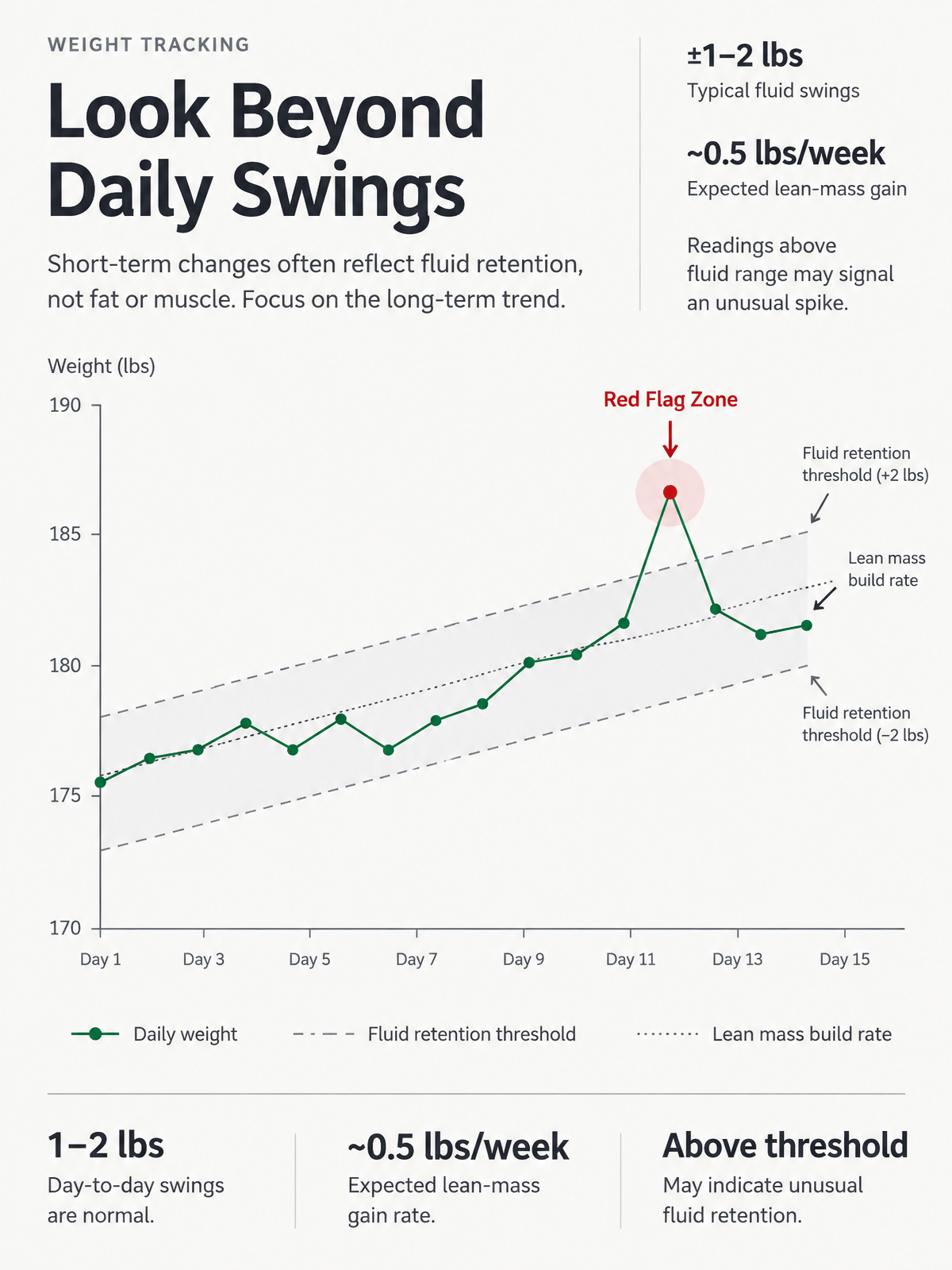
Numbers only mean something once you know where the lines are. A single morning reading is a snapshot. A slope across several days tells you far more. That shift from snapshot to trend is where your log earns its keep.
Here is the discriminator to anchor on. Fluid can change quickly, while genuine lean mass tends to build slowly. So an early jump on the scale leans heavily toward fluid, not tissue. The timing of the change matters as much as the size. A large overnight gain is more consistent with fluid than muscle.
A simple score beats a single bad morning
One puffy morning is noise. A pattern is signal. Track each day across weight change, ankle or hand swelling, ring or shoe tightness, and morning stiffness. Then read the trend, not the outlier.
- Log a daily total from your four markers, and treat any single spike as noise until it repeats. Real retention often shows up as a rising floor across consecutive days.
- Flag a run of days where your score climbs instead of settling. That sustained slope is the cue to act.
- Watch for a rapid gain on the scale with no change in training or diet. Fast fluid shifts deserve attention, especially paired with visible puffiness.
Safety panel: metabolic monitoring and stop/review triggers
Before you start, ask your clinician to define the metabolic monitoring limits you will follow. Do not rely on a general number you found online.
- Fasting glucose: ask what cutoff or change from your own baseline should trigger a repeat check, a dose change, or stopping the peptide.
- Repeat-testing: ask how often fasting glucose, IGF-1, and any other labs should be repeated while your dose is stable.
- Cortisol change: if your clinician includes cortisol in follow-up labs, ask what change is meaningful for you and what action it would trigger.
- Stop/review triggers: persistent facial or ankle edema, breathlessness or chest tightness, glucose above your clinician-set cutoff, new or worsening wrist/hand numbness, or rapid one-sided swelling.
The red flags that skip the waiting period
Most retention is mild and manageable. A few signals are not, and they warrant a specialist look rather than another day of logging.
- Escalate swelling that spreads past ankles and hands into the face, or comes with breathlessness or chest tightness. Rapid fluid gain can point to heart or kidney involvement, so this is a same-day medical question.
- Check fasting glucose if your clinician has asked you to. A meaningful rise from your baseline, or readings approaching your clinician-set threshold, is the point to review whether the peptide comes off.
- Note persistent wrist or hand numbness. Some people report this with GH-related peptides, and it may reflect fluid pressing on the nerve.
Titrate early, before the face puffs
The trap is waiting for visible edema. By then you may have missed the window where a small dose cut would have kept sodium from building. Dose reduction or a brief washout, guided by a clinician, is a usual route to clearing retention.
At BiohackNow, this feedback loop can be built around daily records rather than waiting for visible symptoms. Bring your score log, any glucose readings, and your baseline weight to any tele-consult. That single page turns a vague „I feel puffy“ into a decision a clinician can act on faster.
Managing Unwanted Retention: Diet, Lifestyle, and OTC Supports
Most people wait until the ankles puff before doing anything. By the time water retention is visible in your face and hands, the sodium-related buildup may have been building quietly for a while. Acting early beats reacting late.
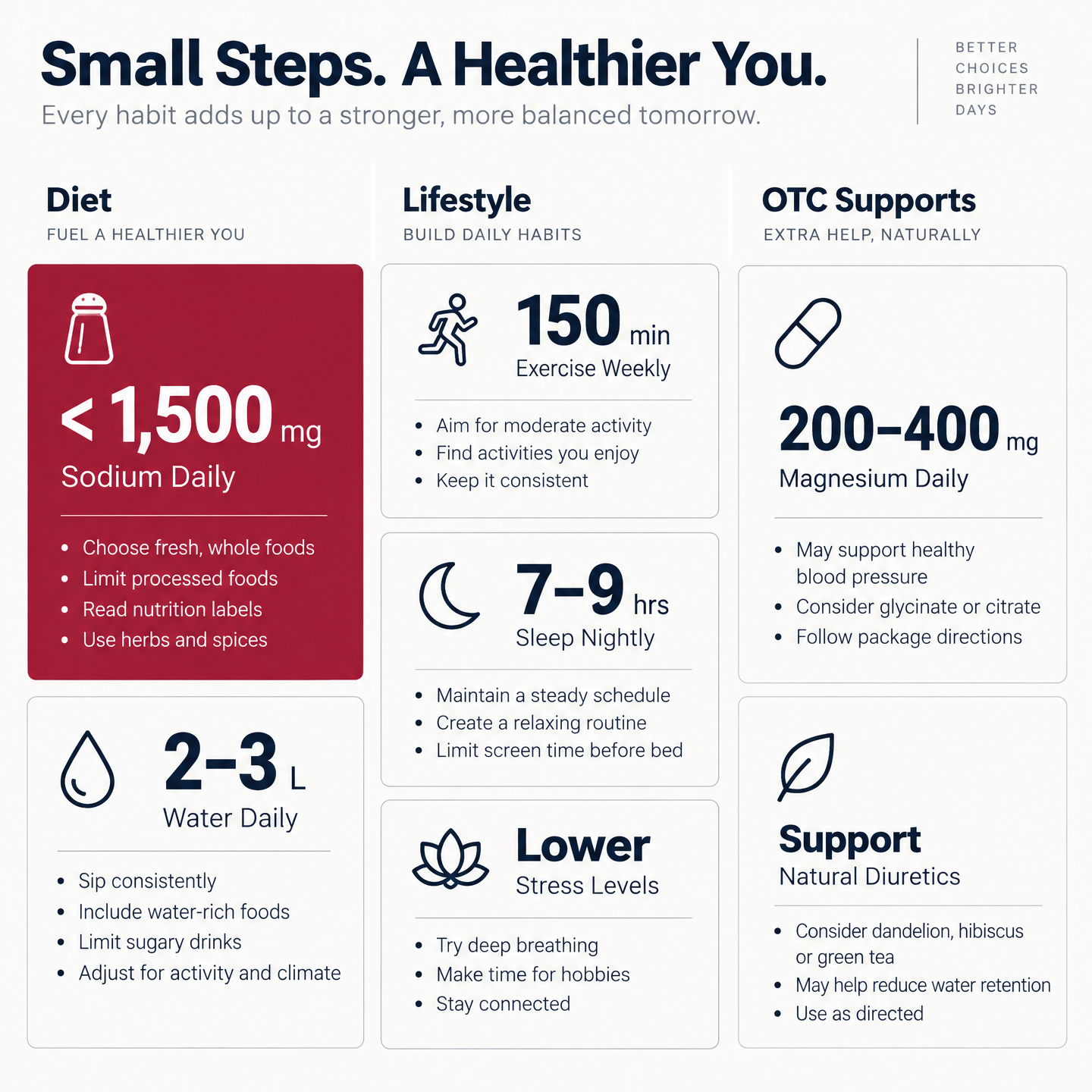
That is where diet and lifestyle earn their place. They work best as a steady dampener on fluid buildup, not a rescue after swelling shows up. Pair them with daily records or a wearable estimate and you get a feedback loop: when your trend line drifts up, you tighten these levers before edema becomes a dose-change problem.
How to eat for steady fluid balance
CJC-1295 may promote sodium retention in some people, and diet is your most direct counterweight. These habits may help with sodium-related fluid retention.

- Cut added sodium, not all salt. Restaurant meals, processed snacks, and sauces carry the hidden load that may drive water into the extracellular space.
- Load up on potassium-rich whole foods. Leafy greens, avocado, beans, and bananas help offset sodium and support normal fluid balance.
- Keep hydration consistent, not front-loaded. Sip steadily through the day rather than chugging late; erratic intake can muddy morning readings.
- Log a sodium note next to your fluid data. A salty dinner explains a puffy morning, and that context stops you from misreading noise as a real trend.
What kind of movement actually moves fluid
Muscle contraction is a pump. When your calves and thighs work, they push venous blood and lymph back toward the heart instead of letting it pool in your lower legs.
- Add low-impact cardio most days. Walking, cycling, or swimming drives venous return and helps clear fluid that gravity parks in your ankles.
- Keep resistance training in the mix. The same contraction that builds lean mass also works the muscle pump that fights swelling.
- Break up long sitting or standing. Stagnant posture is when peripheral edema is worst; a few minutes of movement each hour keeps things circulating.
- Try graduated compression socks on heavy-fluid days. They give the venous system mechanical help when your records flag an upward drift.
Are OTC diuretics and magnesium worth it?
Reach for lifestyle levers first, and treat over-the-counter supports as a targeted backup, not a daily crutch.
- Consider magnesium before anything stronger. It may support fluid and electrolyte balance and rarely causes the rebound problems harsher options do.
- Be cautious with OTC diuretics. They can flush fluid fast, but they may also strip electrolytes and mask the underlying signal your monitoring is trying to catch. Use sparingly and short-term.
- Skip aggressive water pills for routine puffiness. If the swelling is mild and trends with a known dose, dose titration is often the cleaner fix.
- Treat sudden or one-sided swelling as a stop sign. Fluid that jumps fast, sits in one limb, or hits the face hard warrants a medical check, not another supplement.
The real payoff comes from stacking these against your daily data. When the numbers creep and diet plus movement do not hold the line, that is your cue to talk with a clinician about trimming the dose before visible edema develops.
Common Questions
Does drinking less water reduce CJC-1295 fluid retention?
Cutting water backfires. Consistent hydration works better—sip steadily through the day rather than front-loading, since erratic intake distorts your morning weight reading. Sodium is often the bigger driver of retention. Reducing added sodium from restaurant meals, processed snacks, and sauces targets the more likely cause of extra fluid.
Why does the DAC version cause different retention than daily CJC-1295?
The DAC form is generally described as long-acting and often dosed weekly. With longer-acting dosing, any fluid-related effects may be more continuous between doses rather than spiking and clearing. A single before-and-after injection weigh-in may be less informative here; daily trend data can matter more because the fluid signal may never fully switch off.
Can I skip the wearable monitoring entirely?
Skipping extra device monitoring may be reasonable for a short, low-dose test cycle with no history of edema or renal issues. The tracking earns its value when doses climb, cycles run long, or your baseline already leans toward fluid retention. Daily morning weight, limb measurements, and baseline plus follow-up IGF-1 labs remain the minimum for anyone.
What if swelling shows up in only one limb?
One-sided swelling is a stop sign, not a routine dose issue. Fluid that jumps fast, sits in a single limb, or hits the face hard warrants a medical check rather than another supplement. Same-day evaluation matters especially if the swelling comes with breathlessness or chest tightness, which can point to heart or kidney involvement.
Should I take OTC diuretics or magnesium for the puffiness?
Magnesium is the gentler first choice—it may support fluid and electrolyte balance and rarely causes the rebound problems harsher options do. OTC diuretics can flush fluid fast but may strip electrolytes and mask the signal your monitoring is trying to catch. For mild retention trending with a known dose, clinician-guided dose titration is often cleaner than chasing it with water pills.
Why does my age or kidney function change how retention appears?
The same dose lands differently person to person. Some people with lower baseline GH may see a larger relative rise in IGF-1, and older kidneys may clear a sodium load less efficiently, so retention may show up faster and linger. At BiohackNow, protocols can be calibrated against your own daily numbers rather than guessing where you fall on that spectrum.
Is hand or wrist numbness on CJC-1295 something to worry about?
Persistent wrist or hand numbness deserves attention. Some people report numbness with GH-related peptides, possibly from fluid pressing on the nerve. Log it alongside your daily swelling score instead of ignoring it. If it persists, it belongs in a clinician review, since it may reflect the same fluid dynamics driving visible puffiness elsewhere.
Free 15-Minute Discovery Call
Ready to take the guesswork out of your health?
Book a free 15-minute call with Monika to talk through your goals, what testing makes sense for you, and the right next step. No pressure, just clarity.
Book Your Free CallFor educational purposes only. Not medical advice.