
Key Takeaways
- FOXO4-DRI is a senolytic peptide built to remove senescent endothelial cells by cutting the survival signal that keeps damaged cells alive.
- In aged mouse models, treatment improved aortic structure and arterial elasticity.
- A premature-aging mouse model pointed the same direction, suggesting the effect isn’t tied to natural aging alone.
- Treated animals showed lower inflammatory and oxidative-stress signals in vascular tissue.
- In human endothelial cells starved of oxygen and glucose, FOXO4-DRI restored tube formation and migration while sparing non-senescent cells.
- Mouse safety chemistry showed no detectable liver or kidney toxicity in the reported experiments.
Quick Summary
FOXO4-DRI is a senolytic peptide under study for clearing senescent endothelial cells, the damaged vessel-lining cells that pile up with age and stiffen arteries. In aged and progeroid mice, that clearance tracked with better vascular structure, more functional elasticity, and quieter inflammatory signaling. Every FOXO4-DRI benefit so far is preclinical.

The strongest vascular data come from a recent endothelial-senescence study, built on earlier work that established FOXO4-DRI as a selective senescent-cell clearance tool in other tissues. Read together, the vascular findings extend a known mechanism rather than inventing a new one.
What Do the Studies Actually Show?
The evidence spans in-vitro human cells and two mouse aging models. Each points the same way: less endothelial senescence, less inflammatory burden, better vascular behavior.
| Model | Peptide dose | Duration | Primary vascular outcome | Safety note |
|---|---|---|---|---|
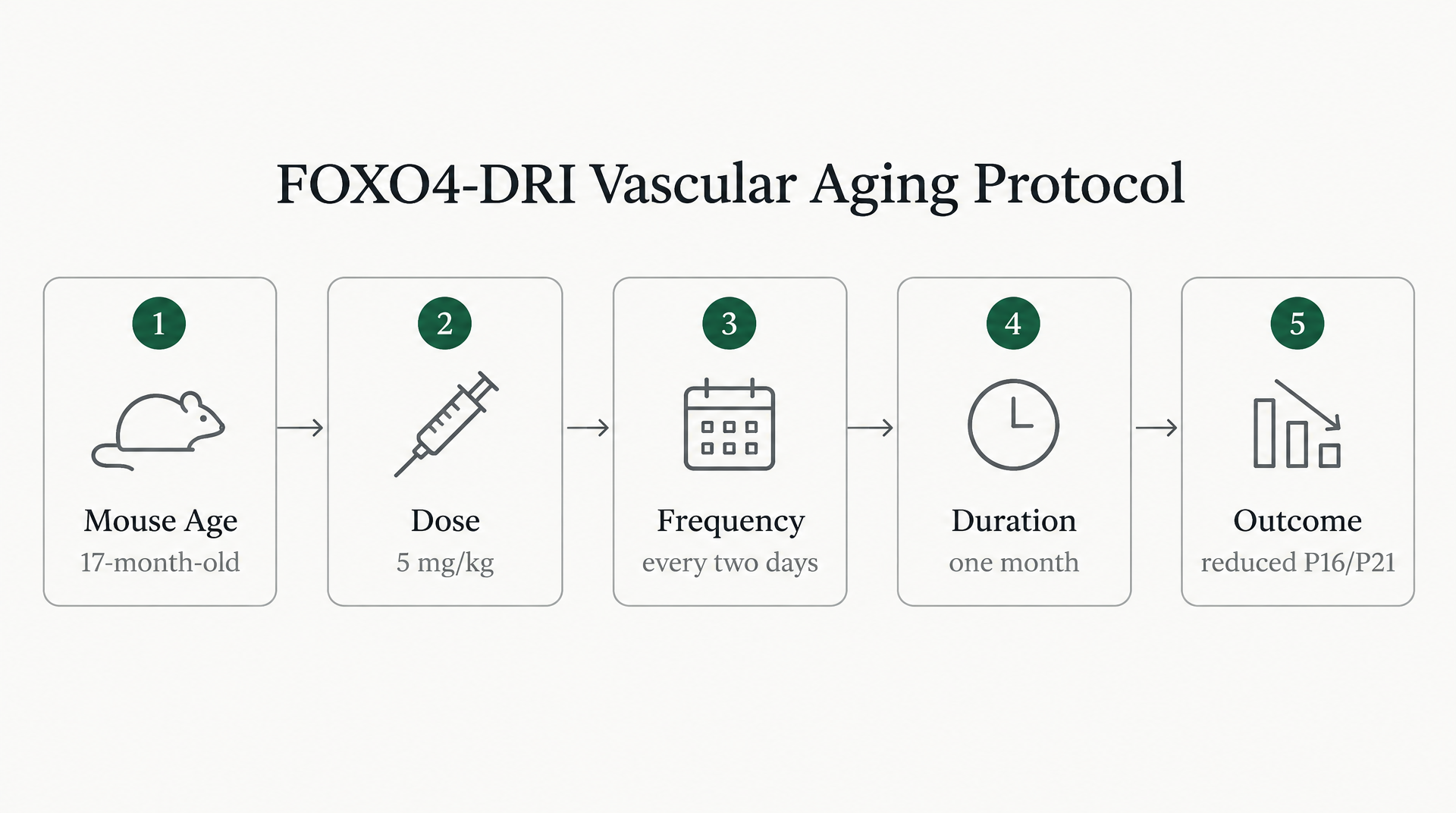
| Naturally aged mice (17 mo) | 5 mg/kg i.p., every 2 days | 1 month | ↓ pulse-wave velocity, thinner aorta, ↓ ROS | Normal ALT/AST, BUN/creatinine |
| D-galactose progeroid mice | 5 mg/kg i.p., every 2 days | 4 months | Improvements matched natural-aging cohort | No liver/kidney toxicity |
| HUVECs under oxygen-glucose deprivation | 50 µM, 3 h | Single exposure | Restored tube formation and migration | No harm to non-senescent cells (CCK-8) |
A quick note on a data trap. Some digests confuse the D-galactose induction dose with the peptide dose. The high-dose figure you may see refers to the D-galactose used to induce aging, not the peptide. The FOXO4-DRI therapeutic dose is 5 mg/kg every 2 days across both mouse models. We anchor to the 17-month, 1-month regimen because that cohort is reported consistently.
Which Vascular Benefits Show Up Most Often?
Three outcomes recur across the record. They also map cleanly onto measurements a clinic can follow over time.
- Arterial stiffness improved in treated aged mice.
- Endothelial repair behavior returned in cultured cells after hypoxic stress.
- Inflammatory and oxidative markers dropped after senescent-cell clearance.
Selectivity is what makes the peptide interesting. FOXO4-DRI wasn’t simply toxic to endothelial cells. It preferentially hit cells already pushed into senescence. That separates it from blunt senolytic strategies that can take out healthy tissue along with the target.
Where the Evidence Runs Out
Be honest about the gap. There’s no monitored human vascular trial showing FOXO4-DRI improves cardiovascular outcomes. The case rests on animal endothelium and cultured cells.
That leaves three practical conclusions for longevity work:
- The mechanism is cross-tissue supported, so the vascular findings are plausible rather than random.
- The preclinical readouts sketch a clear monitoring framework for future human work.
- The strongest current argument for FOXO4-DRI is selective senescent-cell clearance, not proven disease treatment.
Why FOXO4‑DRI Benefits for Vascular Aging Matter
Vascular aging is one of the highest-use targets in longevity work, and it rarely announces itself. Arteries stiffen, endothelial cells stop dividing, and vessels lose the flexibility that keeps blood pressure and perfusion steady. For athletes, executives, and health-focused people, that quiet decline shows up as slower recovery, blunted circulation, and creeping cardiovascular risk long before any diagnosis lands.
That’s why the FOXO4-DRI benefits coming out of endothelial research caught our attention. The peptide doesn’t chase downstream symptoms. It targets senescent endothelial cells, an upstream driver of arterial stiffening, which reframes vascular aging as a biological process you can measure and study directly.
Why Vascular Aging Earns Top Billing
Senescent endothelial cells are the problem cells here. They stop proliferating, leak inflammatory signals, and blunt the vessel’s ability to dilate. Over time that pushes arteries toward stiffness and chronic low-grade inflammation, the shared soil for atherosclerosis, hypertension, and metabolic disease.
The endothelial study made the unmet need plain: strategies to selectively remove these cells and restore vascular function have been lacking. That gap is the whole reason a targeted senolytic matters. You’re not blunting a symptom. You’re trying to remove the cells that help generate the damage.
What Makes These Benefits Worth Building a Protocol Around
Two things set this peptide apart from broad senolytics: selectivity and a defined molecular target. Conventional agents like doxorubicin can damage proliferating and healthy tissue. FOXO4-DRI, by contrast, was reported to spare normal cells in the preclinical endothelial work.
That selectivity traces to the interaction between FOXO4 and p53. In senescent cells, that pairing keeps damaged cells alive. FOXO4-DRI disrupts the complex and lets the cell-death program run in the population that’s already dysfunctional.
Put those together and the vascular result rests on a defined route, not a hopeful guess. The peptide reversed senescence markers, cut inflammatory and oxidative signals, and improved arterial measures in aged animals through a mechanism the authors describe in detail.
Where This Leaves the Reader Who Wants to Act
The scope limit is straightforward: these are cell and animal findings. If you want proof from a randomized human cardiovascular study, this isn’t it, and we won’t pretend otherwise.
What the preclinical work does hand us is a monitoring blueprint. The readouts that proved efficacy and safety in animals resemble tests you can track in a clinic. Pulse-wave velocity is non-invasive. Inflammatory cytokines are standard blood markers. Liver and kidney chemistry is routine.
That’s the through-line for the rest of this guide. The animal data turns the field’s „no monitored human evidence“ complaint into an actionable pre/post framework, which is what a data-driven approach needs to stay defensible. At BiohackNow, every protocol is guided by data and tailored to the individual, with core biomarkers tracked to inform the care we deliver.
FOXO4‑DRI: Molecular Mechanism and Senescent Cell Targeting
What makes this peptide work comes down to a clever bit of protein engineering. The „DRI“ stands for D-retro inverso, a modification that reverses the sequence of D-amino acids to boost potency and resist enzymatic breakdown. That stability matters if you want a peptide to survive long enough to reach senescent endothelial cells and out-compete the body’s own FOXO4.
Most of what people cite traces back to a single molecular event: the peptide pries apart the FOXO4-p53 complex. In senescent cells, FOXO4 binds p53 and holds it in the nucleus, keeping the cell alive when it should have self-destructed. FOXO4-DRI competes for that binding site with higher affinity than native FOXO4, and it wins.
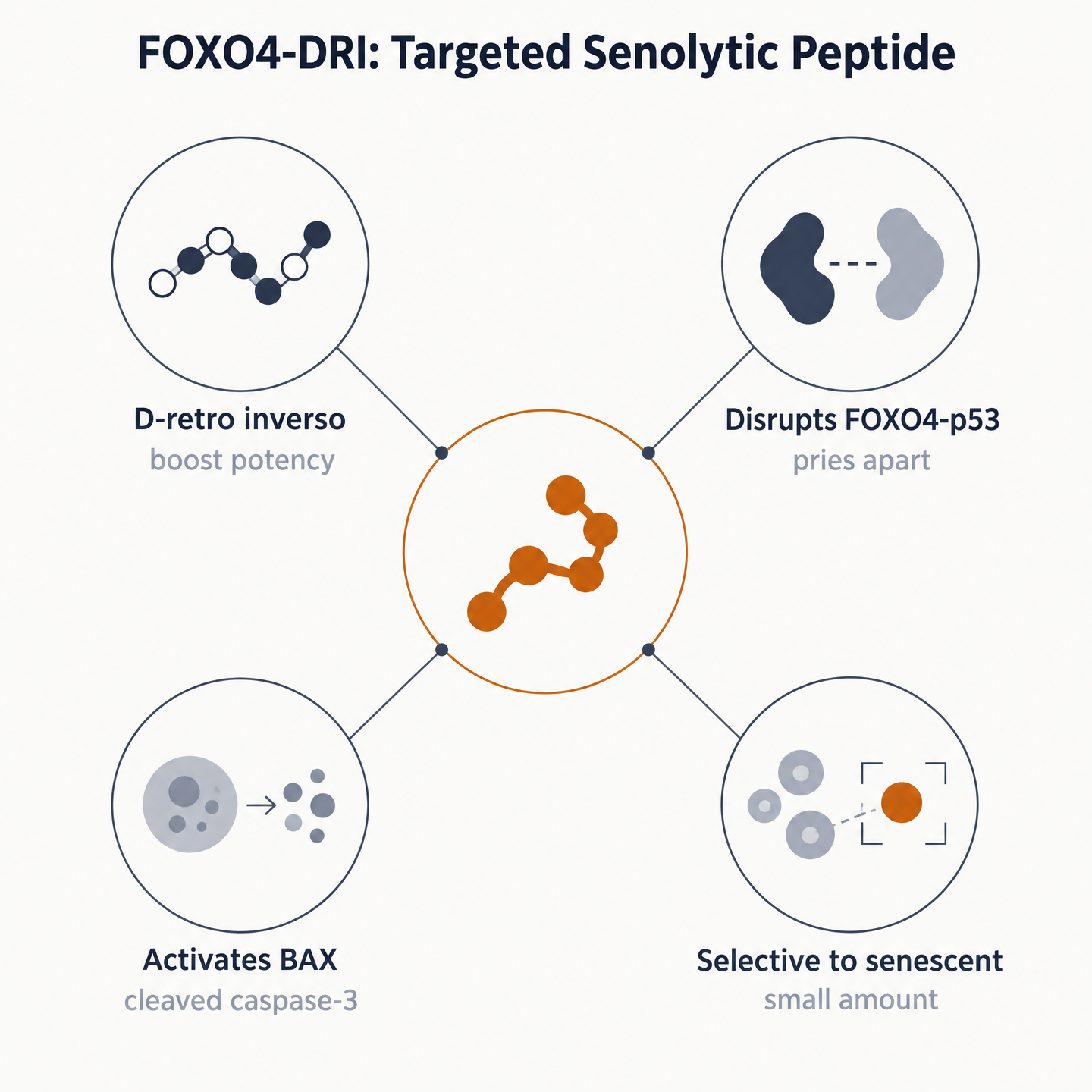
How FOXO4-DRI Breaks the FOXO4-p53 Bond
The peptide is a cell-penetrating design, so it crosses the membrane and reaches the nucleus where the action happens. Co-immunoprecipitation on treated cells confirmed the disruption directly: less FOXO4-p53 binding, more phosphorylated p53, lower total p53.
p53 then moves out of the nucleus after phosphorylation at Ser46. Immunofluorescence tracked it moving into the cytoplasm. This is the counterintuitive part. P53 is famous as a nuclear transcription factor, but here it kills through a transcription-independent route.
Cytoplasmic phosphorylated p53 activates BAX, which triggers cleaved caspase-3, and the senescent cell undergoes apoptosis. The endothelial study pinned this down as a p53/BAX/caspase-3 axis, backed by TUNEL, Annexin-V flow cytometry, and caspase-3 staining that lit up in senescent cells.
Why It Doesn’t Kill Healthy Cells
Selectivity is the point. Healthy cells don’t seem to lean on the same FOXO4-p53 survival crutch, so breaking that complex doesn’t push them over the apoptotic edge the same way. Senescent cells, propped up by the interaction, are more vulnerable once the signal is cut.
The data hold up here. Viability testing showed no toxicity to non-senescent cells, and treated mice didn’t show the liver or kidney injury signals that would have raised immediate red flags. That’s a sharp contrast with conventional senolytics like doxorubicin, which can hit proliferating and healthy tissue indiscriminately.
Is the Vascular Mechanism Actually New?
The endothelial study frames FOXO4-DRI as a selective senolytic working through the same FOXO4-p53 disruption first described for senescent-cell clearance more broadly. What this research adds is direct evidence in the blood vessel lining, applying that molecular logic to endothelial cells in a vascular-aging model.
The value of that continuity is confidence in the pathway itself. When the same mechanism behaves consistently across aging models and stressed endothelial cells, it looks less model-specific.
One limitation belongs here: the researchers warned against permanent FOXO4 inhibition, since FOXO proteins also participate in DNA-damage repair. That argues for intermittent exposure as the preclinical design principle, not continuous suppression.
In‑Vitro Evidence: Senescent Endothelial Cell Clearance and SASP Modulation
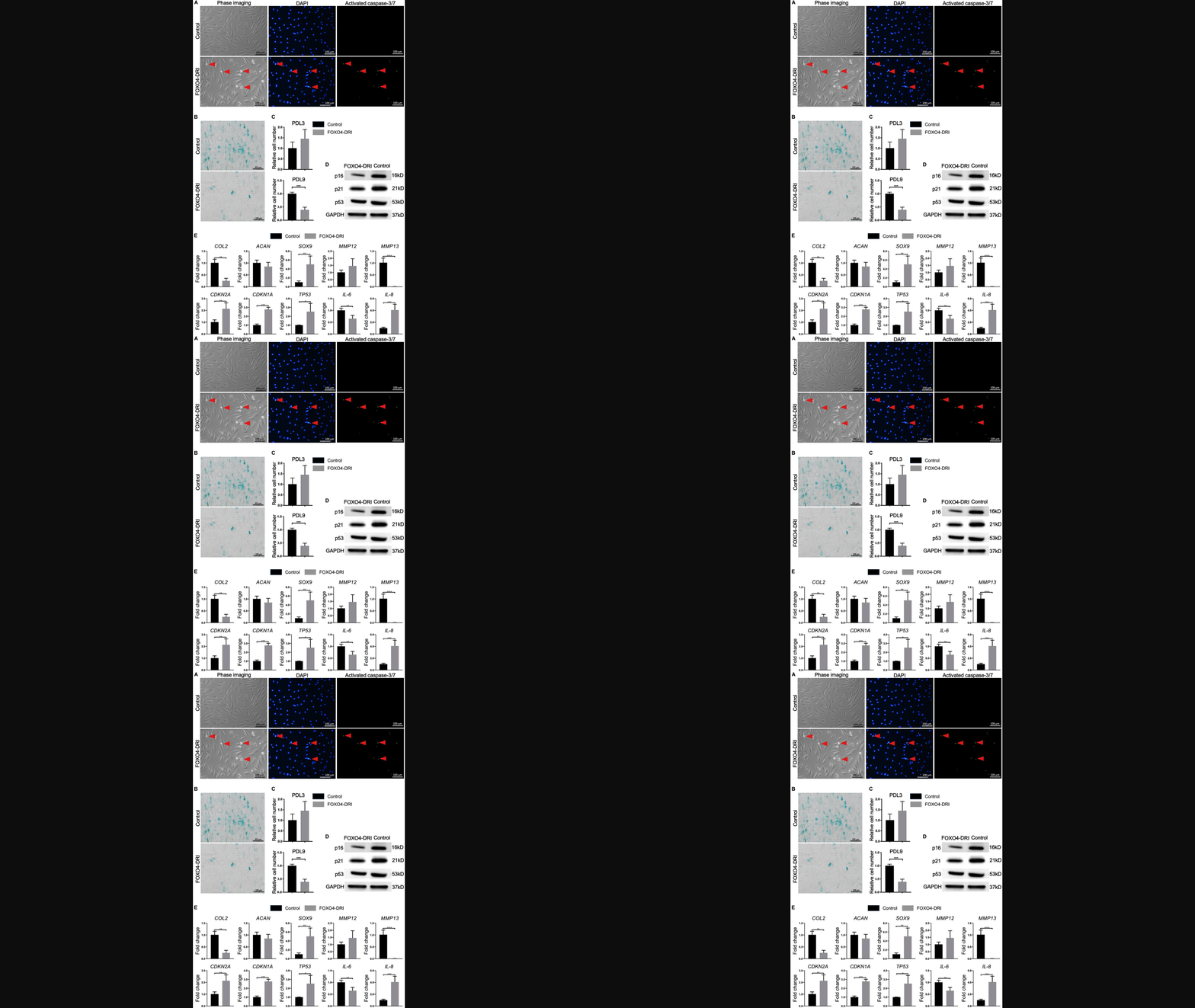
The cleanest window into how this peptide behaves comes from the dish, not the mouse. Researchers took human umbilical vein endothelial cells and starved them of oxygen and glucose for three hours. That short insult flipped the cells into senescence: p53, P21, P16, and γ-H2AX climbed, FOXO4 rose, while proliferation markers Ki-67 and Lamin B dropped and SA-β-galactosidase staining lit up. A fast, repeatable way to manufacture aged endothelium on demand.
Add FOXO4-DRI at 50 µM and the picture reverses. Senescence markers fall back toward baseline, and the cells start behaving like functional endothelium again.
The OGD Model Recreates Vascular Aging You Can Watch in Real Time
Two functional assays make the recovery concrete. In tube-formation tests, senescent cells fail to build the branching networks that mimic new vessel growth. After treatment, tube length and network structure return. Wound-healing migration, tracked over the assay period, shows the same rebound. Cells that had stalled start closing the gap again.
The mechanism isn’t abstract. It restores two things aging endothelium loses early: the ability to sprout new vessels and the ability to migrate and repair. That’s exactly what our data-driven protocols are built to track.
SASP Cytokines Drop After Treatment
Senescent cells don’t just sit there. They leak inflammatory signals that age the tissue around them. The oxygen-glucose stress drove up IL-1β, IL-6, IL-8, and TNF-α in the cultures. FOXO4-DRI knocked those SASP factors down, with the key cytokine mRNAs falling significantly.
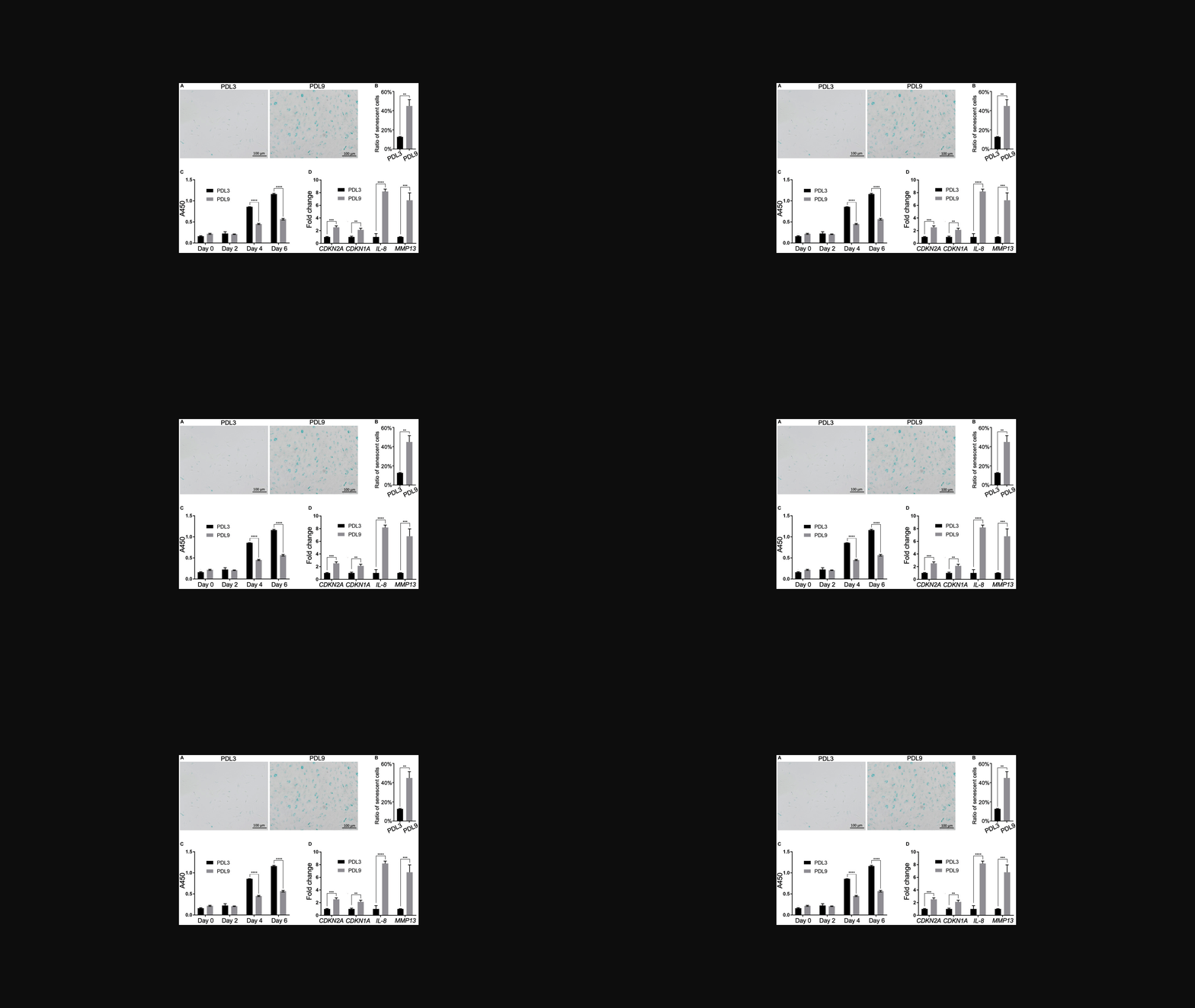
That matters because the same inflammatory family measured in the dish can be followed in blood work. It gives clinicians a practical way to ask whether a senescence-focused intervention is moving the biology it claims to, rather than leaning on subjective impressions.
Selectivity Is the Real In-Vitro Headline
The apoptosis data is where FOXO4-DRI separates from blunt-instrument senolytics. TUNEL, Annexin-V flow cytometry, and cleaved caspase-3 staining all showed the same pattern: cell death rose in the senescent population. BAX rose and BCL-2 fell in the cells that needed clearing, while viability assays confirmed healthy, non-senescent endothelium wasn’t broadly harmed. As the authors put it, „FOXO4-DRI selectively induces apoptosis in senescent cells without adversely affecting normal cells.“
Compare that to chemotherapeutic senolytics like doxorubicin or trametinib, which can injure healthy tissue on the way through.
One more point ties this together. The FOXO4-p53 apoptotic mechanism was first proven in fibroblasts, hepatocytes, and renal tubular cells years before anyone tested it on endothelium. So the vascular result isn’t a lucky one-off. It’s the same validated pathway extended to a new cell type, which is why we treat the in-vitro endothelial data as a reasonable foundation rather than a fluke.
In‑Vivo Animal Studies: Vascular Function Improvements in Aged Rodents
The firmest number in the whole animal record is the dose. In naturally aged 17-month-old C57BL/6 mice, researchers gave 5 mg/kg of FOXO4-DRI by intraperitoneal injection, once every two days, for one month. That regimen produced the vascular benefits everyone now cites: reduced P16 and P21 in aortic tissue, thinner vessel walls, and better arterial elasticity on ultrasound.
Hold onto that regimen, because the dosing story gets muddy fast. A second cohort was made prematurely old with D-galactose, a standard aging-induction agent delivered subcutaneously to drive oxidative damage and premature senescence. Treatment duration for the progeroid arm is reported inconsistently in secondary summaries, so treat the naturally aged 17-month, one-month course as your reliable anchor and the progeroid data as confirmation that the effect holds across two separate aging triggers.
One Mechanism, Proven Across Four Tissues Before It Reached Arteries
The vascular findings didn’t appear out of nowhere. The original FOXO4-DRI work showed selective senescent-cell clearance in human fibroblasts, in doxorubicin-stressed hepatocytes, and in the renal tubular cells of fast-aging mice. In each case the peptide killed only senescent cells and spared healthy ones.
Endothelium is simply the fourth tissue to follow the same FOXO4-p53-to-caspase-3 script. When you see the aortic data, you’re not looking at a novel unproven pathway. You’re watching an established mechanism extend one tissue outward, which is why the vascular result reads as predictable rather than speculative.
The Secondary Outcomes Point Toward Function, Not Just Histology
The earlier aging models tracked more than cell markers. Fast-aging mice showed accelerated hair loss and blunted exploratory behavior, and both improved after treatment. Kidney function recovered too, with elevated plasma urea and renal inflammatory signaling falling as senescent tubular cells cleared.
That matters for anyone thinking about vascular aging as a whole-body problem. Clearing senescent cells restored measurable behavior and organ function, not just a cleaner biopsy slide.
The Animal Readouts Double as Your Monitoring Panel
The animal work quietly hands you a protocol framework. The same experiments followed arterial stiffness, oxidative stress, inflammatory signaling, and routine organ-safety chemistry.
Every one of those categories has a human equivalent you can order or measure non-invasively. PWV is a standard arterial-stiffness test. Oxidative-stress load can be assessed with established clinical markers. Liver and kidney labs are basic bloodwork. So the field’s complaint that no monitored human data exists yet comes with its own answer built in: the mouse efficacy and safety readouts map onto a pre-and-post panel you can actually track.
Comparative market: FOXO4‑DRI vs Other Senolytic Peptides and Small‑Molecule Senolytics
Most senolytics fall into two camps: small molecules that force senescent cells to die, and peptides that target the survival machinery keeping those cells alive. FOXO4-DRI sits firmly in the second camp, and that placement drives much of what sets it apart.
The clearest way to see the difference for vascular work is mechanism against mechanism. Small-molecule senolytics tested in humans so far tend to hit broader survival pathways. FOXO4-DRI does something narrower. It breaks one specific protein interaction, which is why its preclinical profile centers on targeted clearance rather than generalized cytotoxic pressure.
FOXO4-DRI Clears Senescent Cells Selectively
This distinction matters clinically. Small-molecule senolytics can act on pathways many cell types use, which makes their effects harder to confine. FOXO4-DRI interferes with a survival interaction that senescent cells rely on more heavily.
That’s a sharper claim than „more selective.“ Line FOXO4-DRI up against agents that act indiscriminately on proliferating cells, and it isn’t just gentler. Its appeal is that it targets the cell state you want gone while leaving surrounding tissue comparatively protected in the available models. For vascular aging, where you want to preserve endothelial function rather than stress it further, that matters more than any single potency number.
The Selectivity Advantage Comes With a Data Cost
Selectivity buys FOXO4-DRI a cleaner safety story, at least on paper. But the peptide carries a real handicap the small molecules don’t: almost no rigorous human data. A handful of small-molecule senolytics have already gone through small human trials. FOXO4-DRI hasn’t.
The reason is structural, not scientific. Peptides that can be locked down with intellectual property attract the funding needed to run trials. FOXO4-DRI can’t be effectively monopolized, so it stays outside the drug-development pipeline, without the strong human data that greater investment would generate.
Cheap and unpatentable is a genuine advantage for clinic-level cost, and a genuine barrier to the trials that would validate it. Both are true at once.
Why Monitoring, Not the Molecule, Closes the Gap
The same community that dismisses unmonitored self-injection as data you can never learn from also floats structured pre/post experiments as the fix. Those two views only look contradictory. The difference is monitoring.
This is where a defined protocol earns its keep. Structured tracking before and after treatment, mapped onto standard clinical tests, turns anecdotal self-experiment into something you can actually read. That’s the piece the field keeps saying is missing.
Run FOXO4-DRI against small-molecule senolytics on that basis and its edge isn’t exotic pharmacology. It’s that a careful, monitored protocol can begin to address the „no monitored human data“ complaint rather than adding to it.
Safety, Dosage, and Pharmacokinetics in Pre‑Clinical Models
The most reassuring part of the vascular data isn’t the efficacy. It’s what the safety labs didn’t show. In the aged-mouse work, liver enzymes and kidney markers stayed flat after the reported dosing course. Cell viability testing in healthy cells backed the selectivity claim.
That matters because the whole promise of a selective senolytic rests on hitting sick cells and sparing everything else. The findings here come with direct evidence of that selectivity from apoptosis assays showing cell death rising in senescent endothelial cells rather than their healthy neighbors.
The Safety Signal Is Narrow but Genuinely Clean
No detectable hepatotoxicity. No nephrotoxicity. No viability loss in normal cells.
Read honestly, that’s a clean acute and sub-chronic picture in rodents. It is not a full toxicology package. There’s no reported half-life, no plasma concentration-time curve, no biodistribution map, and no antibody or immunogenicity screen from repeated dosing. Anyone selling certainty on those points is filling gaps the data doesn’t cover.
One more caveat belongs in the safety discussion: every dose in this record went in by intraperitoneal injection, not intravenously. Route changes absorption and peak exposure. So the mouse safety numbers don’t automatically transfer to an IV protocol, and we treat them as a floor for caution rather than a green light.
Keep the Induction Agent Separate From the Peptide Dose
This is the dosing detail most likely to be misread. In the progeroid arm, one compound created the premature-aging model and a different compound served as the senolytic intervention. Mixing those up leads to the wrong conclusion.
The FOXO4-DRI therapeutic dose was the lower, consistent regimen in the table above. If you’re building a protocol off secondary write-ups, separate the induction agent from the drug or you’ll design around a figure that was never the peptide at all.
The Mouse Readouts Point to Measurable, Real-World Endpoints
The preclinical work gives clinics something useful: the categories that tracked efficacy and safety in mice correspond to standard clinical measures.
Pulse-wave velocity is a standard non-invasive arterial stiffness measure. Because the peptide’s clearance profile is still unmapped, a sensible pre/post panel leans on repeatable safety chemistry: serial liver markers with a bilirubin check for hepatic load, kidney chemistry paired with estimated glomerular filtration rate so renal drift shows up early, and oxidative-stress and senescence-associated markers to round out the picture.
Since human data on this peptide is still limited, tracking those same endpoints before and after is a sensible way to stay grounded in measurement rather than assumption. That fits how we work at BiohackNow: science-backed, data-driven, and always personalized, with protocols guided by the biomarkers we track rather than dosed blind. For how we think about layering this with other interventions, see our longevity blog.
Translational Pathway: From Bench to Human Clinical Trials for Vascular Aging
The uncomfortable truth about moving this peptide into people is simple: there are no registered human trials for FOXO4-DRI in vascular aging. Search the public trial registries and you find senolytic small molecules in early testing, but nothing for this peptide. The vascular benefits everyone cites still come entirely from cells and rodents.
Why the gap? Money, not biology. As researchers and commentators in the longevity field have noted, peptides that can’t be locked down with intellectual property rarely attract the funding needed to clear regulators, so the human data that would validate the findings never gets generated. That’s the wall between bench and clinic here.
The Mechanism Is Already Validated Across Tissues
A human vascular trial wouldn’t be starting from zero. The original work validated selective senescent-cell clearance, and the newer endothelial study applies that mechanism to blood-vessel cells. The pathway logic is already established. The open question is whether the same biology translates safely and meaningfully in people.
That matters for trial design. When the same core mechanism has been demonstrated across multiple tissue types and aging models, a vascular application reads as a predictable extension rather than a leap into the unknown. A phase I safety study can lean on that cross-tissue record instead of re-proving the pathway from scratch.
Preclinical Readouts Hand You a Ready-Made Human Panel
The strongest reason to run structured protocols rather than blind self-dosing is that the animal studies already point to what’s worth measuring. The efficacy and safety endpoints from those experiments map onto tests any longevity clinic can run.
A practical pre/post panel for a monitored protocol would logically include:
- Pulse-wave velocity and arterial elasticity by ultrasound as functional vascular endpoints
- Circulating SASP factors as the inflammatory signature senescent cells shed
- Oxidative stress markers tied to endothelial dysfunction
- Standard safety labs to confirm organ tolerance during follow-up
For inclusion, the logical candidate is an older adult with subclinical arterial stiffening, elevated pulse-wave velocity but no diagnosed cardiovascular disease. Exclude anyone with active malignancy, since FOXO proteins do real work in DNA-damage repair and permanent inhibition carries risk.
Monitoring Is the Whole Difference
The longevity community debate here holds a sharp contradiction. One view says the many people already self-injecting FOXO4-DRI from peptide sellers will never produce useful data. The other argues that even a small, structured group measuring defined biomarkers before and after could generate real signal.
Both are right about different things. Unmonitored dosing generates noise. A structured protocol with defined pre/post biomarkers generates signal. The peptide is identical in both cases. What separates them is measurement.
That gap between random self-experimentation and monitored, biomarker-tracked protocols is exactly where a disciplined clinic approach earns its place while the formal trials stay stalled.
What We’d Actually Do With FOXO4‑DRI Right Now
The most useful thing this research hands us isn’t a green light. It’s a reminder of why measurement matters. The rodent studies leaned on objective readouts: arterial stiffness, inflammatory signaling, oxidative stress, and standard organ-safety labs. That kind of repeatable data separates real signal from wishful thinking. At BiohackNow, that philosophy already shapes how we work, tracking core biomarkers from telomere length and hormones to toxins and gut health to guide every protocol.

That mapping turns the field’s biggest complaint into something workable. The vascular benefits so far live in cells and mice, with no monitored human vascular outcomes. A protocol built on pre and post biomarkers is how you start closing that gap responsibly, without pretending the peptide is proven.
What Turns Self-Experimentation Into Usable Data?
Individual results, even well-documented ones, don’t carry the weight people assume. One person feeling sharper after a dosing cycle tells you almost nothing. Placebo effects, seasonal shifts, and unrelated lifestyle changes all muddy the picture. What separates anecdote from evidence is controlled conditions and a fixed measurement schedule.
The design details decide the outcome. A one-time blood draw after dosing generates noise. Timed baselines, consistent assay methods, and a defined follow-up window generate signal. The only difference is whether someone captured baseline biomarkers first, then held the conditions steady. That’s exactly what a disciplined protocol fills.
It’s the same principle behind everything we do here: baseline data first, personalized protocol second, measured results after. No baseline, no meaningful before-and-after.
How Should FOXO4-DRI Fit Within a Longevity Protocol?
We don’t treat any peptide as a standalone fix. Senescent-cell clearance pairs logically with the interventions that already slow vascular aging. Exercise and calorie restriction both carry real evidence for cardiovascular benefit, and they cost nothing but discipline. Those go in first.
Any senolytic peptide belongs on top of that foundation, not as a substitute, and only ever as experimental, unproven work. Clearing senescent endothelial cells makes more sense when the lifestyle inputs feeding new senescence are already handled. Stacking a peptide onto a sedentary, inflammatory baseline is chasing your tail.
We’re candid about scope too. Skip FOXO4-DRI entirely if you want proven, guideline-backed cardiovascular care. This is early-stage, human-unvalidated work. It belongs to people who understand they’re volunteering for an n-of-1 experiment, not filling a prescription.
Why Screening and Consent Carry Extra Weight Here
The translational bottleneck is economic, not scientific. The peptide can’t be locked down with intellectual property, so trial funding never arrives, which means a monitored cohort with a real biomarker panel may be the only realistic path to human data at all.
That reality raises our bar for honesty. Anyone considering this peptide needs to hear plainly that efficacy rests on rodents, safety labs were clean in those rodents, and the human record is blank. The field’s frustration is real. The science looks promising while the human data stays stuck. But promise is not proof.
Our commitment stays with science-backed, data-driven, always personalized care, shared for educational purposes and never as a substitute for proven medical treatment.
Quick Questions, Straight Answers
Can I use FOXO4-DRI to treat existing cardiovascular disease?
No. FOXO4-DRI should not be treated as a validated therapy for cardiovascular disease. The current evidence is useful for hypothesis-building and protocol design, but it does not replace guideline-backed cardiovascular care, diagnosis, or treatment.
Why do the researchers warn against continuous FOXO4 inhibition?
FOXO proteins are not disposable targets. They participate in protective cellular maintenance, including DNA-damage responses. That is why the preclinical logic favors short, carefully timed exposure rather than around-the-clock pathway suppression.
I’ve seen a much higher dose cited somewhere. Which number is correct?
Be careful with secondary summaries. Some mix up the compound used to create the premature-aging model with the senolytic peptide being tested. For the peptide itself, use the reported therapeutic regimen from the primary study rather than figures tied to the aging-induction agent.
Do the clean mouse safety labs mean an IV protocol would be safe?
No. The route used in the animal work was not IV, and changing the route can change absorption, peak exposure, and risk. The clean rodent labs are reassuring for the reported model, but they do not establish IV safety in humans.
How does FOXO4-DRI stack up against small-molecule senolytics that already have human trials?
FOXO4-DRI has the more targeted preclinical selectivity story, while several small-molecule senolytics have the stronger human-evidence trail. That is the trade-off: cleaner mechanism on one side, more clinical validation on the other.
What could I actually track before and after if I pursued this?
A responsible panel would focus on vascular function, inflammatory burden, oxidative stress, and organ-safety chemistry. At BiohackNow, that kind of tracking fits our broader approach: baseline biomarkers first, personalized protocol design second, and follow-up data to determine whether anything meaningful changed.
Free 15-Minute Discovery Call
Ready to take the guesswork out of your health?
Book a free 15-minute call with Monika to talk through your goals, what testing makes sense for you, and the right next step. No pressure, just clarity.
Book Your Free CallFor educational purposes only. Not medical advice.