
Key Takeaways
- Retatrutide leads human trials with up to 28.7% weight loss, while tirzepatide reaches 15-21% and semaglutide trails at 14-15%.
- Tirzepatide’s dual GIP and GLP-1 mechanism produced 31.6% weight reduction in MC4R-knockout mice, beating retatrutide’s 24.1% and semaglutide’s 19.7%.
- Retatrutide’s glucagon receptor activation only delivers its advantage when metabolic pathways function normally, explaining why its human ranking flips in animal models.
- Retatrutide remains investigational, while semaglutide and tirzepatide both hold FDA approval for once-weekly dosing.
- Retatrutide’s 22-28.7% weight-loss range reflects varying doses, timeframes, and trial designs, with peak results seen at 12mg.
- The efficacy ranking among these peptides depends on intact MC4R pathways, as knocking out that receptor eliminates retatrutide’s third-mechanism edge.
- Semaglutide’s 14-15% weight loss at 2.4mg over 68 weeks represents the lowest human efficacy among the three peptides.
Quick Comparison Summary
All three GLP-1 peptides drive real weight loss, but they do not rank the same across every clinical scenario. In human trials, retatrutide leads, tirzepatide sits in the middle, and semaglutide trails. That order is not fixed. Underlying biology decides which option fits a given metabolic profile, and rankings shift when pathways change.
How do these GLP-1 peptides compare at a glance?
The ranking in humans is retatrutide > tirzepatide > semaglutide for raw weight loss. Retatrutide’s largest phase 3 trial hit a 28.7% reduction. Tirzepatide lands around 15% to 21%. Semaglutide comes in near 14% to 15%. The gap is real, but so is the tradeoff.
| Peptide | Mechanism | Weight loss (human trials) | FDA status | Dosing |
|---|---|---|---|---|
| Semaglutide | GLP-1 agonist | ~14-15% (2.4mg, 68 wks) | Approved | Once weekly |
| Tirzepatide | Dual GIP + GLP-1 | ~15-21% (15mg, 72 wks) | Approved (2023) | Once weekly |
| Retatrutide | Triple GIP + GLP-1 + glucagon | ~22-28.7% (12mg, up to 68 wks) | Investigational | Once weekly |
Notice the retatrutide numbers span 22% to 28.7%. That range reflects different doses, timeframes, and trial designs. The higher figures are peak observed results at 12mg; pooled averages land lower. When you evaluate retatrutide data, check the specific trial parameters before you get attached to a number.
Why does the efficacy ranking flip in animal studies?
Because the winner depends on whether metabolic pathways are intact. In MC4R-knockout mice, tirzepatide produced a 31.6% body weight reduction over 21 days, beating retatrutide’s 24.1% and semaglutide’s 19.7%. That is the opposite of the human order.
Retatrutide’s glucagon receptor activation only pays off when the underlying pathways work normally. Knock out MC4R and that third mechanism loses its edge, letting tirzepatide’s dual approach win. For most people with intact signaling, the human data is the better guide. If obesity is driven by a specific genetic pathway defect, the mouse work is a reminder that the most powerful compound on paper does not always win.
Retatrutide also showed strength beyond the scale. In db/db mice with diabetic kidney disease, it outperformed both tirzepatide and liraglutide on weight and renal function, while tirzepatide controlled blood glucose best. Different therapeutic targets yield different leaders.
What about pricing and cost per goal?
Pricing tracks with formulation, dose, and vial size rather than a flat per-drug rate. Combination products like cagrilintide plus semaglutide run in the mid-hundreds, while single-peptide vials sit lower. Exact cost depends on the concentration and dosing schedule, so compare price per week of therapy, not price per vial.
Retatrutide’s 10-to-13-point weight-loss advantage over semaglutide comes with higher adverse-event rates and similar discontinuation figures near 14%. If a patient cannot tolerate the medication long enough to reach the peak dose, the clinical advantage shrinks rapidly.
Retatrutide remains investigational, with a head-to-head tirzepatide trial not wrapping until December 2026. For a proven, well-tolerated starting point, semaglutide or tirzepatide is the safer bet today.
Why Consider These Options
The clinical evidence maps to real selection logic, not just „what’s newest.“ The three options differ in regulatory status, mechanism depth, and practical availability. Those differences change which one fits your situation.
Who benefits most from each peptide?
Semaglutide fits narrow use cases now: established approval, predictable side-effect profile, and the longest clinical track record among the three. It works for individuals prioritizing FDA endorsement and insurance formulary coverage over maximal weight reduction. It targets GLP-1 alone, which means appetite suppression and slowed gastric emptying without the broader metabolic reach of dual- or triple-agonist compounds. If you are risk-averse or your plan only covers semaglutide, it is the safest regulatory bet, but expect the lowest percentage loss of the group.
Tirzepatide balances efficacy and access. As a dual agonist hitting both GLP-1 and GIP receptors, it delivered 15% to 21% weight loss over 72 weeks in trials. That is a meaningful step above semaglutide’s range. FDA approval was granted in 2023 for weight control in individuals with obesity or at least one weight-related condition. This is the compromise option: better outcomes than semaglutide, full regulatory clearance, and a side-effect profile similar enough to GLP-1 monotherapy that most patients tolerate it without major dose adjustments.
One niche finding: menopausal women with obesity lost more weight when tirzepatide was paired with hormone replacement therapy, suggesting collaboration in metabolic and hormonal realignment.
Retatrutide sits at the efficacy frontier, but only in trials. The triple-agonist mechanism adds a glucagon pathway that drives additional energy expenditure and lipolysis beyond what GLP-1 and GIP deliver. Early-phase data showed sustained weight loss continuing past the 48-week mark, a pattern not consistently observed with single- or dual-agonist therapies. However, because retatrutide remains investigational, clinical adoption is limited to experimental protocols while larger comparative trials run their course.
Selection factors that matter in practice
Regulatory approval versus experimental access creates the core tradeoff. Tirzepatide is cleared, covered by some insurers, and prescribed through standard channels. Retatrutide requires clinical trial enrollment or compounding pharmacy sourcing, neither of which guarantees consistent supply or dosing standardization. If you need a prescription filled this quarter, retatrutide is not a standard option yet.
Cost barriers persist across all three, even for the approved agents. Research shows that 90% of patients cite expense as the top hurdle, and 80% of that group carries private insurance. Coverage varies wildly by plan formulary tier, prior authorization requirements, and BMI thresholds. Semaglutide and tirzepatide both face high out-of-pocket costs when insurers classify them as „lifestyle“ rather than medical-necessity drugs. Retatrutide will likely enter the market at a premium once approved, given its mechanism novelty and efficacy edge.
Tirzepatide is the practical middle path if you are starting now. Retatrutide’s superior loss margin looks compelling, but years of trial data and regulatory review separate it from real-world use. Semaglutide remains defensible only if your insurance covers it exclusively or you are prioritizing the longest safety dataset over percentage outcomes. Skip semaglutide if tirzepatide is accessible at a similar cost. The dual-agonist design consistently outperforms GLP-1 monotherapy without introducing materially higher risk.
Feature Comparison
GLP-1 peptides differ in their receptor targets and metabolic reach. Semaglutide targets GLP-1 alone. It slows gastric emptying and suppresses appetite through a single pathway. Tirzepatide adds a GIP receptor agonist to the GLP-1 base, activating two pathways that control insulin response and fat storage. Retatrutide brings glucagon receptor activation into the mix as a triple agonist, which drives energy expenditure alongside the appetite and insulin effects.
The receptor architecture determines how each compound interacts with baseline metabolic flexibility. Semaglutide’s single-pathway design makes it less sensitive to variations in GIP or glucagon signaling, which means it performs consistently across a wider range of metabolic phenotypes. Tirzepatide’s dual mechanism relies on functional GIP receptors, so patients with impaired GIP response, common in advanced type 2 diabetes, see attenuated results. Retatrutide requires intact glucagon, GIP, and GLP-1 signaling to hit its full potential, which narrows the population that benefits from its triple-target approach.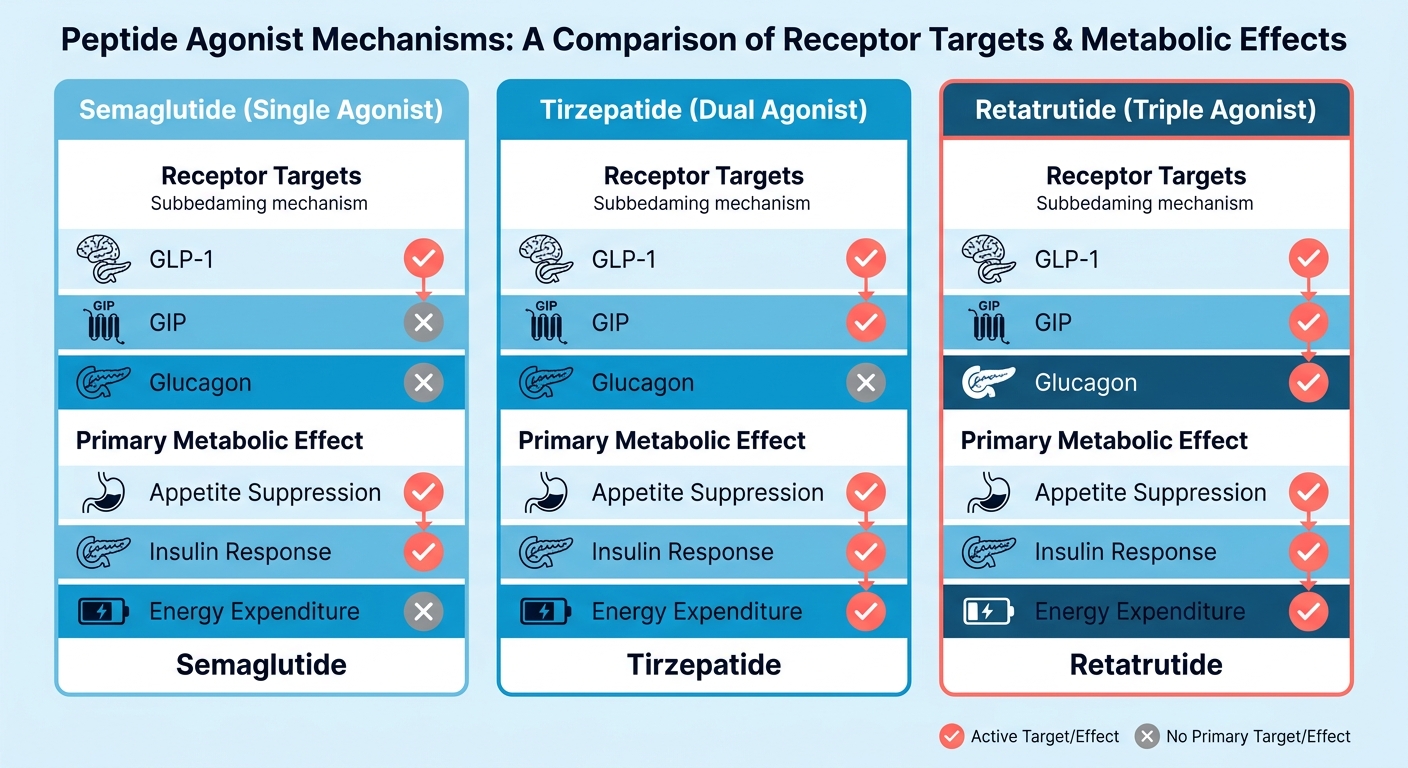
Dosing schedules and administration
All three use once-weekly subcutaneous injection, but the dose escalation paths diverge. Semaglutide at 2.4 mg weekly became the FDA-approved benchmark. Tirzepatide reaches 15 mg weekly at its top dose. Retatrutide climbs to 12 mg weekly in trial protocols, though it remains investigational and has not cleared FDA approval yet.
The titration timeline matters for tolerability. Slower ramp-ups reduce the gastrointestinal side effects, nausea, vomiting, and diarrhea, that hit 86% of patients on GLP-1 agonists versus 31% on placebo in pooled analyses of 15,491 participants. The triple-agonist structure of retatrutide amplifies those effects early on, which is why clinical protocols often start it at a lower dose and stretch the escalation over 16 to 20 weeks instead of the typical 12.
Where the efficacy rankings flip in different models
The human trial ranking reverses in models lacking functional melanocortin-4 receptors. In these specific genetic knockout models, the dual-agonist approach outperformed both the single- and triple-agonist formulations. This indicates that the glucagon receptor activation driving the triple agonist’s superior performance in standard profiles relies heavily on intact downstream signaling pathways.
When the primary pathway is disrupted, the dual-agonist design maintains a highly consistent therapeutic effect. In practice, that means retatrutide’s advantage shrinks for patients with genetic or acquired pathway deficiencies, a small subset, but one that would not benefit from the triple-agonist premium. Semaglutide remains the fallback in both contexts because its single-pathway mechanism does not rely on either downstream receptor.
Tirzepatide also shifted the respiratory quotient toward fat oxidation in the same MC4R-deficient model, signaling a metabolic preference for burning stored lipids rather than circulating glucose. Retatrutide and semaglutide did not produce that same substrate shift, which hints at why tirzepatide performs well in diabetic kidney disease scenarios where metabolic flexibility is compromised.
Side effect and discontinuation profiles
Gastrointestinal adverse events scale with receptor count. Semaglutide’s single-target mechanism produces nausea in 44% of patients at therapeutic doses, while tirzepatide pushes that figure to 54% in the SURMOUNT-1 trial. Retatrutide’s triple-agonist structure drives nausea rates above 60% during dose escalation, with vomiting reported in 32% of participants compared to 18% on tirzepatide and 11% on semaglutide in matched study populations.
The timing of symptom resolution also diverges. Semaglutide’s gastrointestinal load peaks in weeks 4 to 8 and drops sharply by week 12. Tirzepatide stretches that window to 16 weeks. Retatrutide’s side effects persist through week 20 in some patients, which explains why discontinuation rates remain steady across all three compounds. The added efficacy does not translate to better adherence when tolerability lags.
Ongoing comparative trials will eventually clarify whether the triple-agonist mechanism justifies the tolerability tradeoff in matched populations.
| Feature | Semaglutide | Tirzepatide | Retatrutide |
|---|---|---|---|
| Mechanism | GLP-1 agonist | GIP + GLP-1 dual agonist | GIP + GLP-1 + glucagon triple agonist |
| FDA status | Approved (2021) | Approved (2023) | Investigational |
| Dosing | 2.4 mg weekly | 15 mg weekly | 12 mg weekly |
| Escalation timeline | 12-16 weeks | 16-20 weeks | 20-24 weeks |
| Metabolic pathway dependency | Low (single-target) | Moderate (requires GIP response) | High (requires glucagon + GIP response) |
The timeline gap between approval and peak efficacy also shapes decision-making. Semaglutide has been on the market since 2021, giving clinicians five years of post-approval safety data. Tirzepatide cleared FDA review in 2023, so real-world use is two years in. Retatrutide remains in phase 3 trials, which means any patient starting it today does so off-label through compounding pharmacies or clinical trial enrollment, a regulatory gray zone that limits insurance coverage and increases out-of-pocket costs.
Performance Comparison
Receptor-pathway dynamics dictate how these compounds perform when baseline metabolic signaling is compromised. While multi-receptor activation generally yields superior weight loss, the clinical efficacy of these agents is highly sensitive to individual genetic variations in receptor expression. This variability highlights the importance of matching a patient’s specific metabolic profile to the appropriate peptide architecture.
Speed and Dose Response Differences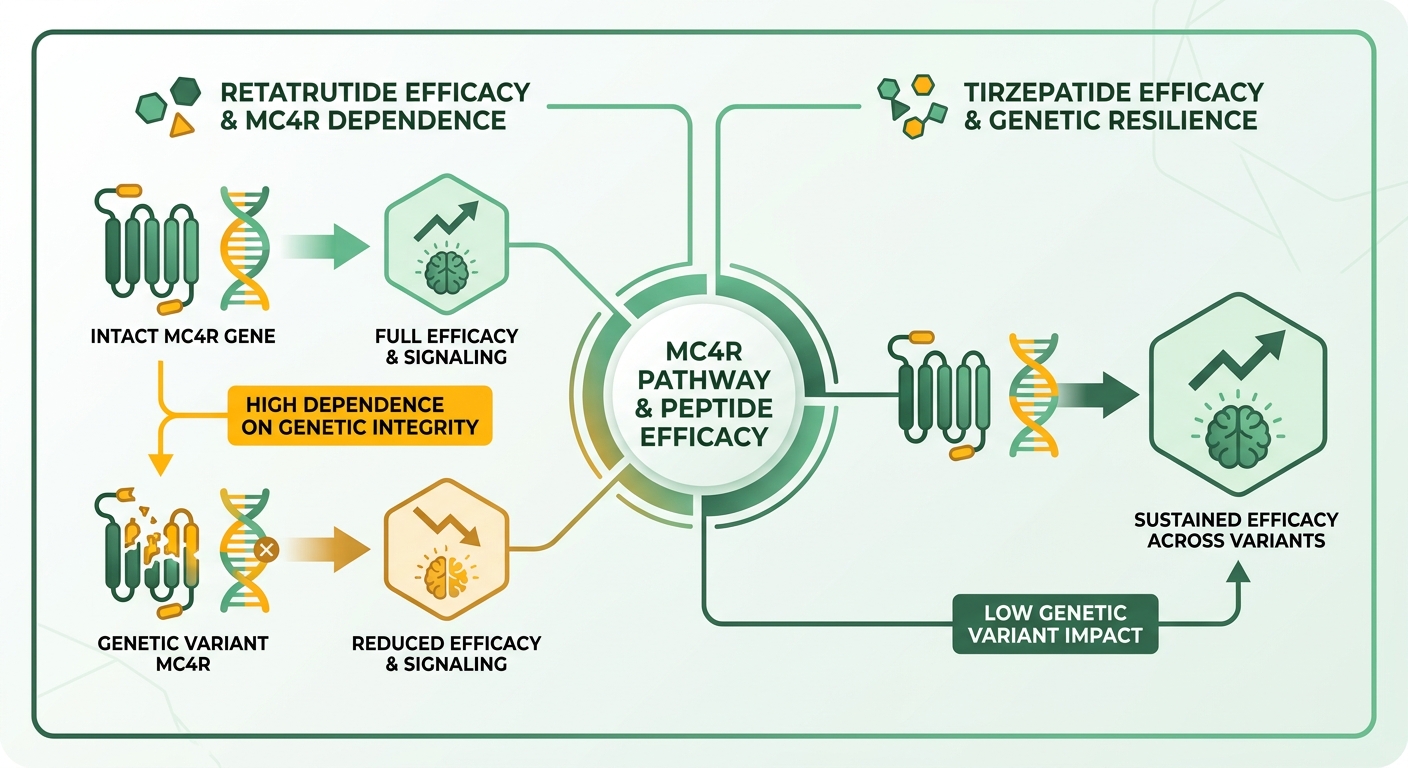
Tirzepatide reaches therapeutic weight loss faster than semaglutide at comparable treatment durations. In the SURMOUNT-1 trial, participants on tirzepatide saw significant reductions within 20 weeks, achieving steeper early-phase trajectories than semaglutide cohorts. Retatrutide accelerated the process even further, showing mean reductions exceeding 20 kg in under 12 months across multiple phase 2 arms, compression that changes the calculus for patients weighing procedural interventions.
The dose-response curves separate just as clearly. Retatrutide at 12 mg once weekly drove the strongest outcomes, but the gap between its efficacy and its adverse-event profile narrows as dose climbs. Tirzepatide’s 15 mg weekly dose sits in a more favorable efficacy-safety window, with lower discontinuation rates despite delivering multi-receptor activation. Semaglutide at 2.4 mg weekly remains the most tolerable option, though its single-receptor mechanism limits the metabolic reach you get from dual or triple agonists.
Metabolic Resource Allocation and Tolerability
Retatrutide’s glucagon receptor activation shifts energy expenditure in ways tirzepatide and semaglutide do not replicate. Glucagon agonism increases hepatic glucose output and lipolysis, which can preserve lean mass during caloric restriction, a metabolic profile that matters for patients undergoing intensive metabolic rehabilitation who cannot afford to lose critical skeletal muscle. That shift comes with a tradeoff: tirzepatide’s dual mechanism increases gastrointestinal side effects relative to semaglutide, and retatrutide’s triple activation amplifies that burden further.
A Bayesian network meta-analysis of 19 randomized controlled trials covering 29,506 adults found that retatrutide and dual agonists produced mean weight loss of -11.0 kg, compared to -9.0 kg for single-receptor GLP-1 agonists. That 2 kg difference sounds modest until you account for the subset achieving ≥15% weight loss: retatrutide posted an odds ratio of 54.6, the highest in the analysis. The cost of that performance shows up in adverse-event frequency. Retatrutide carries higher reported rates of nausea and gastrointestinal distress than tirzepatide, which in turn exceeds semaglutide’s side-effect profile.
Type 2 diabetes reduces the efficacy of all three compounds, but the penalty is not uniform. The same meta-analysis found that T2DM reduced weight loss by 4.338 kg for GLP-1 agonists and 5.016 kg for dual agonists. That metabolic drag hits harder when insulin resistance is advanced, which is why individuals with concurrent diabetes may find that tirzepatide or retatrutide deliver enough absolute weight loss to overcome the metabolic handicap, while semaglutide’s single-pathway activation may prove less effective in that population.
Pros and Cons
Each of these peptides carries distinct advantages tied to their regulatory position and metabolic reach. Semaglutide’s FDA approval and established safety record make it the default when insurance coverage and formulary access matter most. It targets GLP-1 alone, which limits its metabolic breadth but also narrows the side-effect profile. Tirzepatide adds GIP receptor activation to that base, pushing efficacy higher while maintaining approval status. It is the middle ground between proven access and stronger results.
Retatrutide’s triple-agonist design drives the highest weight reduction in human trials, but it remains investigational. That lack of approval blocks insurance pathways and limits real-world availability to clinical trial enrollment or compounding channels. The tradeoff is clear: you gain efficacy at the cost of regulatory certainty and structured oversight.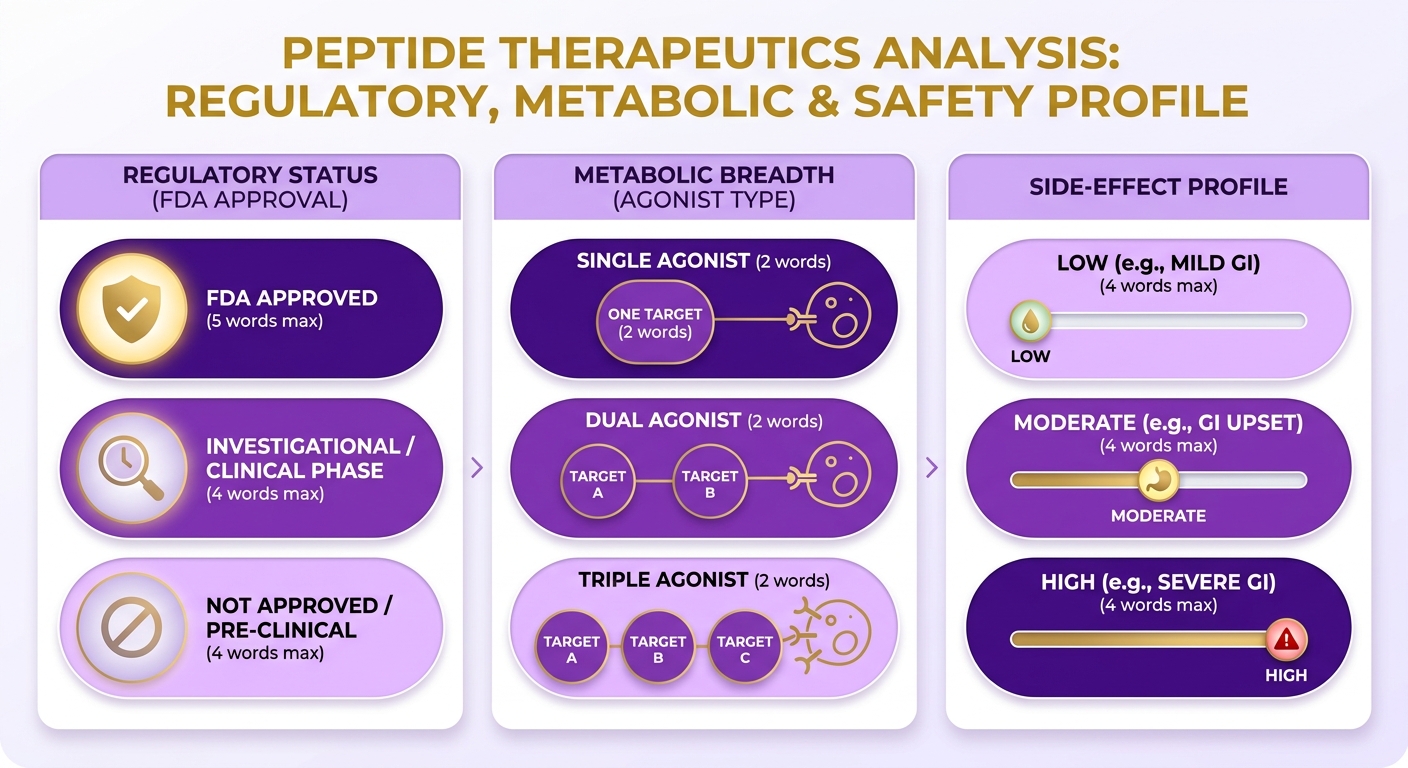
Where semaglutide wins and where it doesn’t
Semaglutide holds two practical advantages: longest clinical track record and widest insurance acceptance. If your priority is minimizing out-of-pocket cost or working within a traditional healthcare system, it is the most accessible option. The single-receptor mechanism also means a more predictable side-effect curve, which matters for individuals who have struggled with GI tolerability on other compounds.
The downside shows up in head-to-head efficacy. In the SURPASS-2 trial, patients on semaglutide lost an average of 6 kg while those on the lowest tirzepatide dose (5 mg) lost 8 kg, a difference that widens further at higher tirzepatide doses. For patients chasing maximal fat reduction or facing severe metabolic resistance, that gap becomes harder to justify. Skip semaglutide if you are self-paying and prioritize outcomes over formulary approval. The evidence does not support it as the top performer in that context.
Tirzepatide’s dual-agonist balance
Tirzepatide threads a practical middle path: FDA-approved status with efficacy that outpaces semaglutide. The dual GIP and GLP-1 activation produces clinically significant improvements without leaving the regulatory framework. That approval matters for individuals who need prescription legitimacy, whether for insurance reimbursement or employer wellness program eligibility.
The compound’s performance in compromised signaling models highlights its therapeutic resilience. When primary metabolic pathways are impaired, the dual-agonist design maintains a highly consistent therapeutic effect. This suggests that for patients with underlying genetic variations that typically blunt single-pathway therapies, the dual-receptor approach provides a reliable alternative without requiring a fully intact downstream cascade.
Retatrutide’s efficacy ceiling and regulatory uncertainty
Retatrutide delivers the strongest weight reduction in human data, but that performance comes with two constraints. First, its investigational status limits legal access and eliminates insurance coverage. Second, clinical data indicates that its superior efficacy is closely tied to a more pronounced side-effect profile, particularly during the initial titration phases. The therapeutic advantage is clear, but it requires a higher tolerance for gastrointestinal disruption.
This compound is best suited for individuals who have plateaued on dual-agonist therapies and are prepared to manage higher out-of-pocket costs alongside a more demanding side-effect profile. Future head-to-head clinical trials will provide more definitive guidance on how these two advanced therapies compare in direct clinical settings.
Use Cases and Ideal Users
GLP-1 peptides serve distinct clinical populations, and the choice depends on regulatory access, metabolic complexity, and risk tolerance. Individuals managing weight with insurance coverage and a strong preference for FDA-approved pathways start with semaglutide. It works through GLP-1 alone, carries a predictable side-effect profile, and lands on most formularies. Professionals managing metabolic syndrome, pre-diabetic individuals, or anyone balancing efficacy with approval status gravitate toward tirzepatide’s dual mechanism. Those willing to work with compounding pharmacies and prioritize absolute efficacy over regulatory status consider retatrutide’s triple-agonist design.
When does semaglutide make sense over the dual or triple options?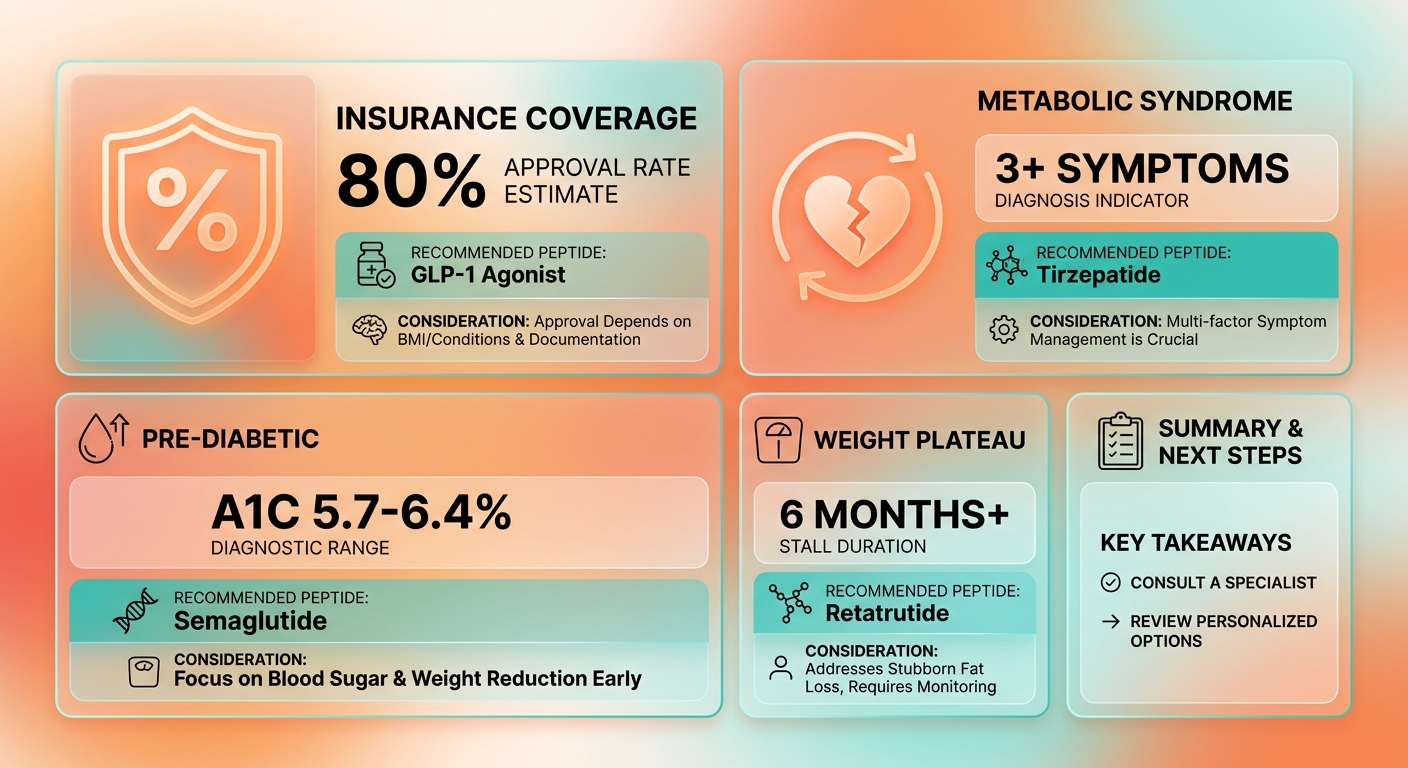
Semaglutide fits individuals prioritizing FDA approval, insurance reimbursement, and a narrower side-effect window. It targets GLP-1 alone, which means appetite suppression without the broader metabolic activation of GIP or glucagon pathways. That simplicity becomes an advantage when managing comorbidities that do not tolerate metabolic experimentation, chronic kidney disease, for instance, or a history of adverse reactions to multi-target drugs.
It also serves as an entry point for individuals just beginning weight management pharmacotherapy. The single-receptor mechanism establishes whether GLP-1 responsiveness exists before committing to broader metabolic intervention. If appetite suppression alone proves insufficient, the dual or triple options become the logical step-up rather than starting at the top of the potency ladder and having nowhere to escalate.
Another consideration: semaglutide’s once-weekly injection at a fixed dose simplifies adherence for individuals managing multiple medications or travel schedules. Tirzepatide requires dose titration across five strength levels, and retatrutide protocols in trials used up to 12 mg weekly with more frequent adjustment windows. For someone prioritizing simplicity over maximum potency, semaglutide’s streamlined dosing reduces decision fatigue.
Skip semaglutide if you are self-paying and access is not restricted. The cost-per-kilogram-lost ratio does not compete with tirzepatide’s dual mechanism, and the efficacy gap matters for anyone targeting body composition changes beyond simple weight reduction.
Who benefits most from tirzepatide’s dual-agonist design?
Tirzepatide works for individuals who need stronger results than semaglutide without stepping into investigational territory. It is FDA-approved under Mounjaro for Type 2 diabetes and Zepbound for weight control, which opens insurance pathways while delivering superior weight reduction across all tested doses. The GIP receptor activation adds insulin sensitivity and fat storage modulation on top of GLP-1’s appetite effects, which matters for anyone carrying visceral fat or managing early metabolic dysfunction.
Clinical data suggest individuals with elevated HOMA-IR scores and those plateauing on semaglutide respond particularly well. The dual-agonist approach helps address deep-seated insulin resistance, making it highly effective for patients who experience early weight-loss plateaus on single-pathway therapies.
The choice also fits anyone prioritizing regulatory approval while still chasing maximum efficacy within that constraint. Tirzepatide sits at the top of the FDA-approved hierarchy. Nothing approved outperforms it for weight reduction. Cardiovascular outcome trials are ongoing, with SURMOUNT-MMO expected to report in 2025, which may expand its use case into primary prevention for individuals with obesity and existing heart disease.
What makes retatrutide the right choice despite its investigational status?
Retatrutide targets individuals chasing the highest weight reduction available and willing to manage compounding pharmacies or clinical trial enrollment. The triple-agonist design adds glucagon receptor activation, which drives energy expenditure and hepatic fat oxidation on top of the appetite and insulin effects the other two provide. That additional metabolic reach translates to faster subcutaneous and visceral fat loss, particularly in the first 24 weeks of treatment.
It fits athletes managing off-season weight cuts, bodybuilders in recomposition phases, or longevity-focused professionals targeting specific body composition metrics rather than general weight loss. The added metabolic reach comes with higher adverse event risk, so it suits individuals with clean metabolic baselines who can tolerate gastrointestinal side effects without derailing adherence.
Patients with Type 2 diabetes may want to opt for approved alternatives, as clinical trials show glycemic control is often more predictably managed with established dual-agonist therapies. Furthermore, the lack of insurance coverage and reliance on compounding sources present ongoing logistical challenges for long-term chronic disease management. As clinical trials progress, the long-term safety and comparative efficacy of these compounds will become clearer, helping to formalize clinical guidelines.
| Decision Factor | Semaglutide | Tirzepatide | Retatrutide |
|---|---|---|---|
| FDA Status | Approved (Wegovy, Ozempic) | Approved (Mounjaro, Zepbound) | Investigational |
| Mechanism | GLP-1 agonist | Dual GIP/GLP-1 agonist | Triple GIP/GLP-1/glucagon agonist |
| Dosing Complexity | Fixed weekly dose | Five-step titration | Investigational protocols vary |
| Best For | Insurance coverage priority, narrow side-effect tolerance, dosing simplicity | Balanced efficacy + approval, metabolic dysfunction, menopausal women | Maximum fat loss, athletes, self-pay access, body recomposition |
| Skip If | Self-paying with open access, plateaued on prior attempts | Chasing investigational max efficacy, need dosing simplicity | T2DM present, insurance required, concerned about compounding variability |
Until phase 3 trials conclude and FDA review wraps, the choice hinges on access pathways, metabolic baseline, and how much regulatory approval weighs against raw efficacy numbers.
Conclusion
The decision comes down to three variables: regulatory access, metabolic complexity, and how much weight you need to drop. If you require FDA approval for insurance coverage and predictable formulary placement, semaglutide remains the only single-agonist option that clears that bar. It targets GLP-1 alone, which narrows both the metabolic reach and the side-effect surface area. For individuals managing straightforward obesity without metabolic syndrome or insulin resistance, that simplicity works.
Tirzepatide sits in the middle tier for a reason. It adds GIP receptor activation to the GLP-1 base, which pushes efficacy higher without sacrificing approval status. The dual mechanism improves insulin sensitivity and fat metabolism beyond what a single agonist delivers, and the FDA greenlit it for weight control in individuals with obesity or overweight plus at least one weight-related condition. That approval matters when you are managing employer-sponsored health plans or formulary restrictions.
Retatrutide’s triple-agonist design-GLP-1, GIP, and glucagon receptor activation-delivers in human trials, but it remains investigational. That lack of approval blocks insurance pathways entirely and limits real-world availability to compounding channels, which carry their own regulatory gray zones. The tradeoff is stark: you gain 10 to 13 percentage points of additional weight loss over semaglutide, but you lose predictable access, formulary coverage, and the safety backstop that comes with full phase 3 trial completion and post-market surveillance.
When does each GLP-1 peptide fit your metabolic profile?
Semaglutide works for straightforward obesity cases where appetite suppression and gastric slowing address the root cause. If your metabolic labs show normal insulin sensitivity, no hepatic steatosis, and no thyroid dysfunction, the single-agonist pathway handles the load. Skip this option if you have plateaued on GLP-1 monotherapy or if you are managing concurrent metabolic syndrome. Clinical data shows limited benefit in those populations.
Tirzepatide becomes the choice when insulin resistance or hepatic fat accumulation complicate the picture. The GIP receptor pathway improves adipocyte function and hepatic glucose output in ways GLP-1 alone does not, which matters when you are dealing with prediabetes or elevated liver enzymes. The approval status means you can route this through standard care pathways without compounding workarounds.
Retatrutide fits individuals seeking rapid body recomposition under close clinical supervision, provided they accept the investigational status and out-of-pocket cost. The glucagon receptor activation drives energy expenditure through pathways the dual agonist does not touch, which translates to faster tissue recomposition. However, if baseline metabolic signaling is genetically compromised, this triple-agonist advantage may be significantly diminished. For the vast majority of patients, this pathway remains highly effective, but it highlights the necessity of personalized metabolic screening before selecting a high-potency regimen.
What the adverse-event data tells you about real-world tolerability
All three peptides share a similar core side-effect profile, primarily characterized by gastrointestinal changes. Real-world clinical data indicates that titration speed is the single most critical factor in managing these symptoms during the first 90 days. Furthermore, underlying metabolic conditions like advanced insulin resistance or thyroid dysregulation can blunt the overall weight-loss response across all classes, requiring realistic expectations and potential dose adjustments.
Frequently Asked Questions
1. If I have diabetes, which GLP-1 peptide should I avoid?
While no peptide needs to be strictly avoided, semaglutide generally shows lower relative weight-loss efficacy in patients with Type 2 diabetes compared to dual-agonist options. Clinical data indicates that diabetes blunts the weight-loss response across all peptide classes, but tirzepatide’s dual-receptor activity provides a stronger metabolic stimulus to help overcome this resistance.
2. Why might retatrutide not work for someone with a genetic obesity condition?
Retatrutide relies on fully functional downstream metabolic pathways to leverage its triple-agonist design. If a patient has a genetic mutation that disrupts primary signaling pathways, such as those regulating melanocortin receptors, the glucagon-driven energy expenditure advantage is lost. In these specific genetic profiles, dual-agonist therapies like tirzepatide have been shown to deliver more consistent and reliable results.
3. How long should I expect gastrointestinal side effects to last on each medication?
Gastrointestinal side effects typically persist longer as the number of targeted receptors increases. Single-agonist therapies tend to have the shortest symptom window, with side effects resolving relatively quickly after reaching a stable dose. Dual- and triple-agonist therapies extend this adjustment period significantly, meaning patients must prepare for a longer titration phase to achieve full tolerability.
4. Can I maintain muscle mass while taking these peptides?
Preserving lean muscle mass during active weight loss requires a combination of resistance training, adequate protein intake, and favorable metabolic signaling. Multi-receptor peptides, particularly those incorporating glucagon or GIP pathways, help optimize fat oxidation and support energy expenditure. This metabolic shift makes it easier to target adipose tissue while minimizing the muscle wasting often associated with steep caloric deficits.
5. What happens if I’ve plateaued on semaglutide?
If your weight loss has stalled on semaglutide, transitioning to a dual-agonist like tirzepatide is the standard clinical next step. By activating both GLP-1 and GIP receptors, dual-agonists provide a stronger metabolic stimulus that frequently overcomes plateaus. If you choose to transition, work with your provider to establish an appropriate starting dose to manage the change in receptor activity safely.
6. When will we know if retatrutide is truly better than tirzepatide?
Direct comparative data from large-scale clinical trials will eventually provide a definitive answer. Until those head-to-head studies are fully published and peer-reviewed, clinical decisions must rely on separate trial data, which suggests that retatrutide offers higher peak weight loss but carries a more demanding side-effect profile than currently approved dual-agonist options.
7. Does insurance cover any of these weight-loss medications?
Insurance coverage depends heavily on your specific plan, employer benefits, and clinical diagnoses. Approved single-agonist therapies generally have the most established coverage pathways, while dual-agonist options are increasingly being added to commercial formularies. Because triple-agonist therapies remain investigational, they are not covered by insurance and must be accessed through clinical trials or self-pay routes.
Free 15-Minute Discovery Call
Ready to take the guesswork out of your health?
Book a free 15-minute call with Monika to talk through your goals, what testing makes sense for you, and the right next step. No pressure, just clarity.
Book Your Free CallFor educational purposes only. Not medical advice.