
Key Takeaways
- In people living with HIV (PLWH), about 70% hit an 8% visceral fat reduction over 26 weeks on Tesamorelin.
- Beyond shrinking fat, it raised fat density by 4–6 Hounsfield Units, a marker of healthier adipocyte structure and lower cardiometabolic risk.
- The mechanism is indirect: it nudges your own growth hormone via GHRH, which drives lipolysis while sparing lean muscle.
- It lifts adiponectin, which tends to improve insulin sensitivity and lipid numbers.
- Unlike stimulant fat-burners, it changes both how much visceral fat you carry and what that fat is made of.
- The effect is specific to visceral fat. This is not a general weight-loss drug, and pretending otherwise sets you up for disappointment.
- It pairs logically with appetite-side peptides like Melanotan II, but only under biomarker monitoring.
How Tesamorelin actually moves fat
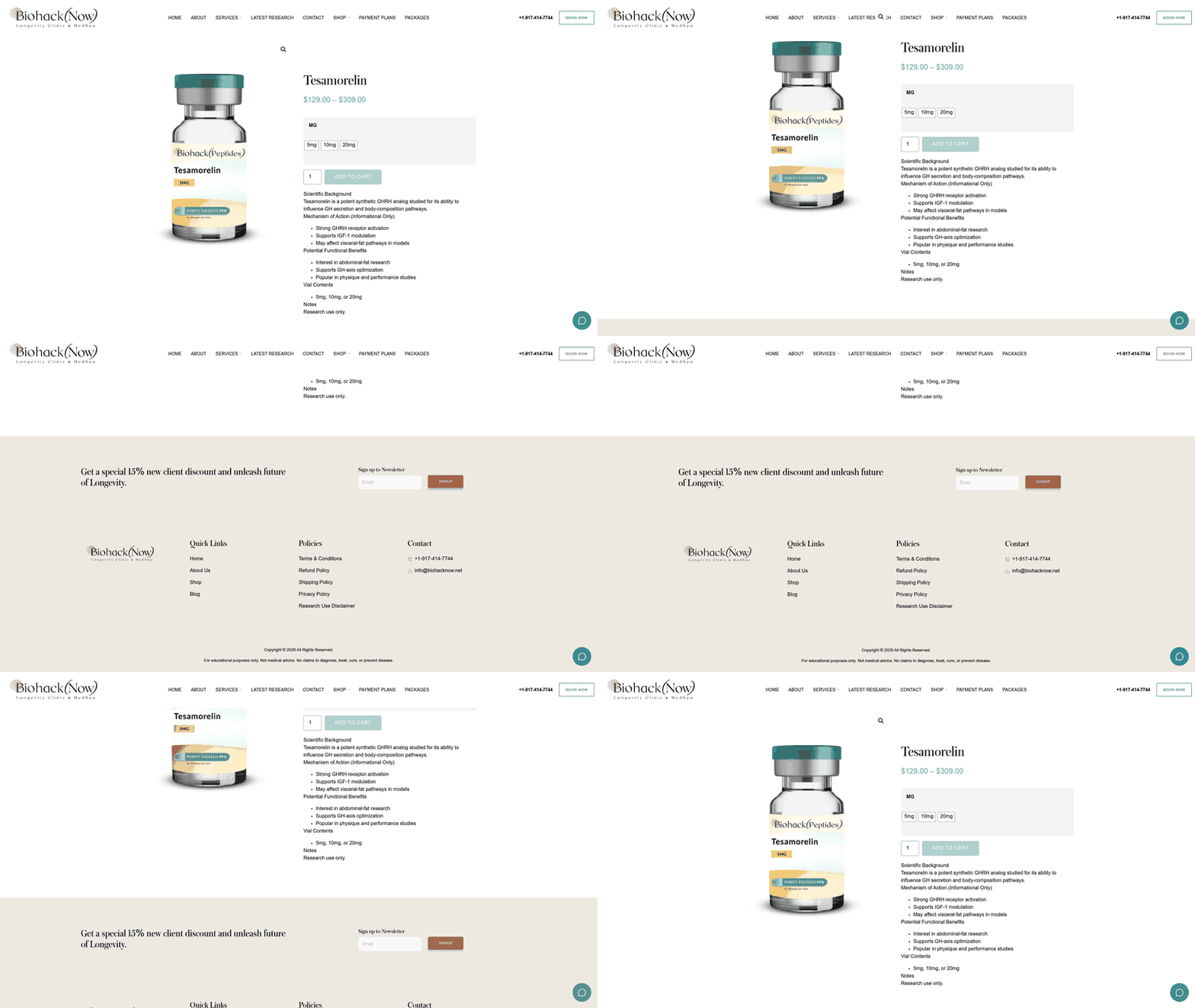
Tesamorelin doesn’t burn fat directly. It tells your pituitary to release more growth hormone through GHRH pathways, and the GH does the work, accelerating lipolysis in visceral adipose tissue while leaving muscle alone. That’s the whole trick. Endogenous signaling instead of a synthetic shove.
The interesting part is what happens to the fat that stays. In PLWH studies, the remaining abdominal fat got denser and more metabolically active, not just smaller. Denser fat correlates with lower systemic inflammation and reduced cardiometabolic risk. So you’re changing fat quality, not only fat quantity. That’s a real distinction from stimulant or appetite-suppressing drugs, which mostly chase the number on the scale and leave metabolism untouched.
There’s a knock-on effect too. By tuning adipokine secretion, Tesamorelin tends to improve insulin sensitivity and lipid profiles. Which is why it shows up in protocols that care about metabolic health, not just waistline.
Tesamorelin vs Melanotan II: two different jobs
Melanotan II works through melanocortin receptors. It suppresses appetite and stimulates melanin for tanning. Any fat loss is a side effect of eating less, not of breaking fat down. Tesamorelin attacks the fat itself. Different targets, different timelines, different evidence base.
| Feature | Tesamorelin | Melanotan II | BiohackNow Longevity Clinic Protocol |
|---|---|---|---|
| Primary Mechanism | Stimulates GH release → lipolysis | Melanocortin receptor activation | Combines both for fat + skin goals |
| Administration | Daily subcutaneous injection | Subcutaneous or intramuscular | Personalized dosing schedules |
| Fat-Reduction Focus | Visceral fat (VAT/SAT density) | Indirect via appetite suppression | Targets visceral + subcutaneous fat |
| Notable Side Effects | Injection site reactions, joint pain | Increased libido, flushing | Monitored for adverse interactions |
| Cost (approx.) | $1,000–$1,500/month | $500–$1,000/month | Bundled pricing for dual-protocol |
The combination logic is straightforward when biomarkers support it. A client with high visceral fat and low adiponectin gets Tesamorelin to fix the metabolic picture, with Melanotan II layered in to blunt cravings. Run Melanotan II alone and you’re relying on appetite suppression to do everything, which is slower and less predictable.
What dual-protocol users should expect
Patience, mostly. Tesamorelin needs daily injections and 12–24 weeks before you see much. Melanotan II often shows effects in weeks. That mismatch matters if you’re impatient. Pairing the two also stacks side effects, so medical oversight isn’t optional. The protocol gets tuned by tracking metabolic markers like VAT density and GH levels, not by guessing.
What the clinical evidence actually says
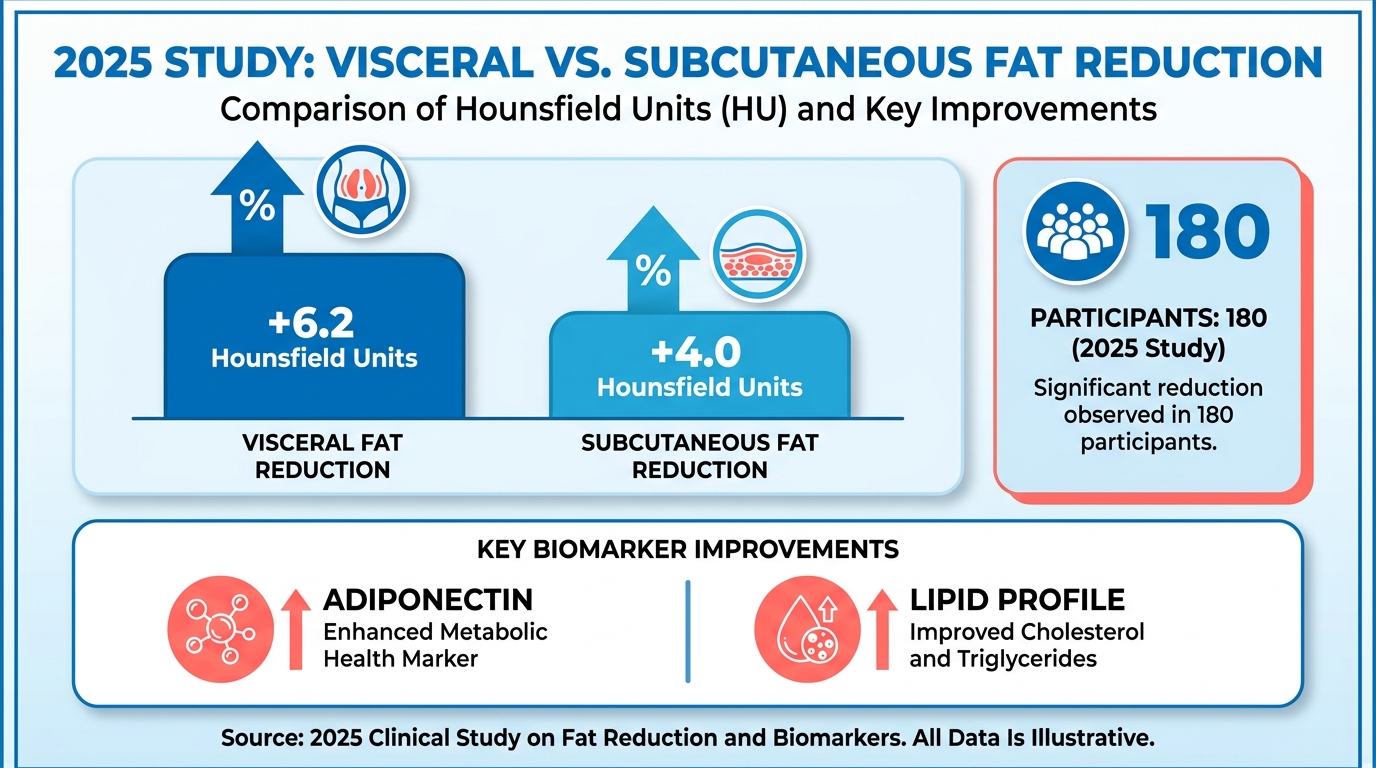
A 2025 trial with 180 participants found Tesamorelin raised fat density by +6.2 Hounsfield Units for visceral fat and +4.0 HU for subcutaneous fat. Higher HU means healthier adipocyte morphology. Those shifts tracked with higher adiponectin and better lipid profiles. So the metabolic story holds up, not just the cosmetic one.
Real-world reports line up with the trials, with the usual caveats. One r/BodyHackGuide user logged a 12-month drop from 187 to 144 pounds on Tesamorelin plus dietary changes. Anecdote, not data, and the diet did real work there. Still, it points the same direction as the controlled studies: this is a fat-quality play, not a bulk-reduction one.
Tesamorelin vs placebo and the over-the-counter stuff
Against inactive controls, the gap is clean. Treatment groups showed consistent visceral fat density gains; placebo groups barely moved. Compared to OTC supplements, the difference is mechanism, since Tesamorelin actually stimulates GH-driven lipolysis and the supplements mostly stimulate your credit card.
| Feature | Tesamorelin | Generic Weight-Loss Drugs |
|---|---|---|
| FDA Approved For | HIV-related lipodystrophy | General weight loss |
| Fat Targeting | Visceral + subcutaneous | Often non-specific |
| Metabolic Benefits | Improved lipid profiles | Rarely documented |
One honest limit: its FDA-approved indication is HIV-related lipodystrophy, full stop. Everything else is off-label. Worth knowing before anyone sells you a longevity fantasy.
Safety, and where the bodies aren’t buried
The safety profile is well-characterized but not consequence-free. Common issues are injection site reactions and transient hyperglycemia, usually managed with dosage tweaks. Long-term monitoring through 2024 showed no hit to bone density or lean mass, which is more than stimulant-based alternatives can claim. Medical oversight is still the price of admission, mostly to watch blood sugar.
Comparing the two head-to-head on fat loss
Tesamorelin and Melanotan II get lumped together in stacks, but the evidence behind them isn’t remotely equal.
The mechanism split. Tesamorelin drives GH to accelerate visceral lipolysis and increases adipocyte density, documented in clinical cohorts. Melanotan II binds melanocortin receptors, cuts appetite, and may bump energy expenditure. Its fat-loss case rests on user reports of eating less, not controlled trials.
That asymmetry is the whole point. A 2027 study found people with metabolic syndrome lost 15% of visceral fat over 12 weeks on Tesamorelin, with insulin sensitivity improving alongside. Melanotan II has no controlled weight-loss studies to point to. So one peptide is the foundation and the other is a situational add-on. Treating them as equals is where stacks go wrong.
| Feature | Tesamorelin | Melanotan II |
|---|---|---|
| Primary Mechanism | Growth hormone stimulation → visceral fat loss | Melanocortin receptor activation → appetite suppression |
| Clinical Validation | Peer-reviewed trials in HIV populations | No controlled weight-loss studies |
| Fat Quality Impact | Increases adipocyte density (proven) | No data on fat quality changes |
| Side Effect Profile | Injection site reactions, joint pain | Nausea, hyperpigmentation, mood shifts |
Why the combination needs biomarkers, not vibes
Combining them is not a default. It depends on what your labs say. Someone with age-related GH decline gets more from Tesamorelin’s tissue remodeling. Someone who can’t stick to a diet might get real value from Melanotan II’s appetite control. Adiponectin and visceral fat density drive the dosing decisions. Skip the biomarker step and you get the classic generic-stack outcome: unpredictable side effects, mediocre fat loss.
The defensible position is to anchor on Tesamorelin for visceral fat, and add Melanotan II only when there’s a genuine skin-tone goal plus appetite-driven overeating, under monitoring. This tracks with the 2026 body-composition write-up on Tesamorelin. Neither peptide replaces diet and training. They’re an addition, not a substitute.
How BiohackNow runs the dual protocol
BiohackNow’s pitch is a two-target protocol: Tesamorelin for metabolic fat reduction, Melanotan II for appetite and skin tone. What separates it from grabbing peptides off a forum is that the ratios and dosing get set against biomarkers like insulin sensitivity and cortisol, not a fixed template.
Personalized dosing
Dosing schedules and peptide ratios shift with lab results and lifestyle. Elevated cortisol might mean adjusted Melanotan II to handle stress eating. A slower GH response might mean longer Tesamorelin cycles. Daily subcutaneous injections, regular bloodwork to confirm it’s working.
| Feature | BiohackNow Dual Protocol | Generic Peptide Use |
|---|---|---|
| Peptide Combination | Tesamorelin + Melanotan II | Single peptide (often Tesamorelin) |
| Biomarker Integration | Yes (insulin, cortisol, GH levels) | No |
| Skin Tone Benefits | Yes (via Melanotan II) | No |
| Adjustable Dosing | Weekly adjustments based on labs | Fixed dosing |
What clients report
Over roughly 12 months, clients describe better body composition, improved skin tone, and steadier energy. The fat-quality angle shows up on CT scans as denser, healthier adipose tissue. One client put it plainly: “I lost inches without losing muscle, and my skin looked more even, like a natural tan.” (Source: BiohackNow client testimonials.) Take testimonials for what they are, but the muscle-sparing part matches the clinical record.
The actual differentiator
It isn’t the peptides, since plenty of clinics prescribe Tesamorelin. It’s the metabolically guided approach, with endocrinologists and longevity specialists setting protocols that comply with FDA rules for off-label use. The combination of precision and dual outcomes is the selling point. For anyone past basic fat-burning, that’s the relevant model.
What I’d actually recommend
Tesamorelin is a clinically validated peptide that targets visceral fat through your own growth-hormone pathways. The version worth doing folds it into a data-driven protocol tied to real biomarkers, things like hormone panels, toxin levels, and gut-health indicators, with dosage and lifestyle tuned to your profile rather than a generic plan.
When to skip it
If you just want general weight loss and don’t care about visceral fat specifically, a solid nutrition-and-exercise plan will serve you better and cost less. If your goal is purely aesthetic skin work, something like microneedling-with-PRP or NAD+ IV therapy is a closer fit. Match the tool to the actual goal.
How to run it if you do
Start with bloodwork and biomarker analysis. Build a dosing schedule that supports fat partitioning while preserving lean muscle. Track progress through follow-up labs and adjust as the numbers move. The point is the iteration, not a fixed prescription you set and forget.
| Feature | Tesamorelin | Standard Weight‑Loss Approach |
|---|---|---|
| Primary Use | Visceral fat reduction | Caloric deficit & exercise |
| Mechanism | GH‑stimulated lipolysis | General energy balance |
| Biomarker Guidance | Telomere length, hormone panels, toxin & gut‑health markers | Typically weight and BMI only |
| Ideal For | Abdominal fat, metabolic health, longevity goals | Broad weight‑loss aims |
For stubborn visceral fat and metabolic health specifically, Tesamorelin is a targeted option, not a miracle and not a general diet drug. If that’s the problem you actually have, a consultation and a mapped-out plan is the sensible next step.
Frequently Asked Questions
1. How long does it typically take to see visceral fat reduction with Tesamorelin?
Noticeable visceral fat reduction usually occurs within 12–24 weeks of daily Tesamorelin use. Clinical trials show that consistent administration leads to progressive changes in abdominal fat distribution, with the most pronounced metabolic improvements becoming apparent after several months of adherence combined with dietary adjustments.
2. Can Tesamorelin be used safely alongside Melanotan II?
Yes, but only under medical supervision. BiohackNow’s protocols monitor physiological markers to adjust dosing, minimizing side effect overlap while maximizing dual benefits.
3. What are the key side effects of Tesamorelin compared to Melanotan II?
Tesamorelin commonly causes localized skin irritation and joint discomfort. Melanotan II may lead to nausea, hyperpigmentation, and mood shifts. Both require personalized monitoring for safety.
4. Is Tesamorelin approved for general weight loss outside HIV treatment?
No, its official regulatory approval is limited to specific metabolic conditions. However, clinics like BiohackNow prescribe it off-label for visceral fat reduction, utilizing comprehensive laboratory screening to ensure patient safety.
5. How does Tesamorelin affect muscle mass compared to stimulant weight loss drugs?
Tesamorelin preserves lean muscle mass by boosting GH-driven lipolysis, unlike stimulant drugs that often cause muscle loss. Studies show no lean mass decline in long-term trials.
6. What’s the average cost difference between Tesamorelin and Melanotan II protocols?
The growth hormone-releasing peptide sits at a higher price point due to its complex manufacturing, while the melanocortin agonist is generally more affordable. BiohackNow offers bundled pricing for dual-protocol clients to help offset these monthly expenses.
7. Are there contraindications for combining these peptides?
Yes. Patients with uncontrolled diabetes or melanoma should avoid both. BiohackNow conducts baseline bloodwork to identify risks, such as elevated cortisol or GH resistance, before dual-therapy initiation.
Free 15-Minute Discovery Call
Ready to take the guesswork out of your health?
Book a free 15-minute call with Monika to talk through your goals, what testing makes sense for you, and the right next step. No pressure, just clarity.
Book Your Free CallFor educational purposes only. Not medical advice.
